
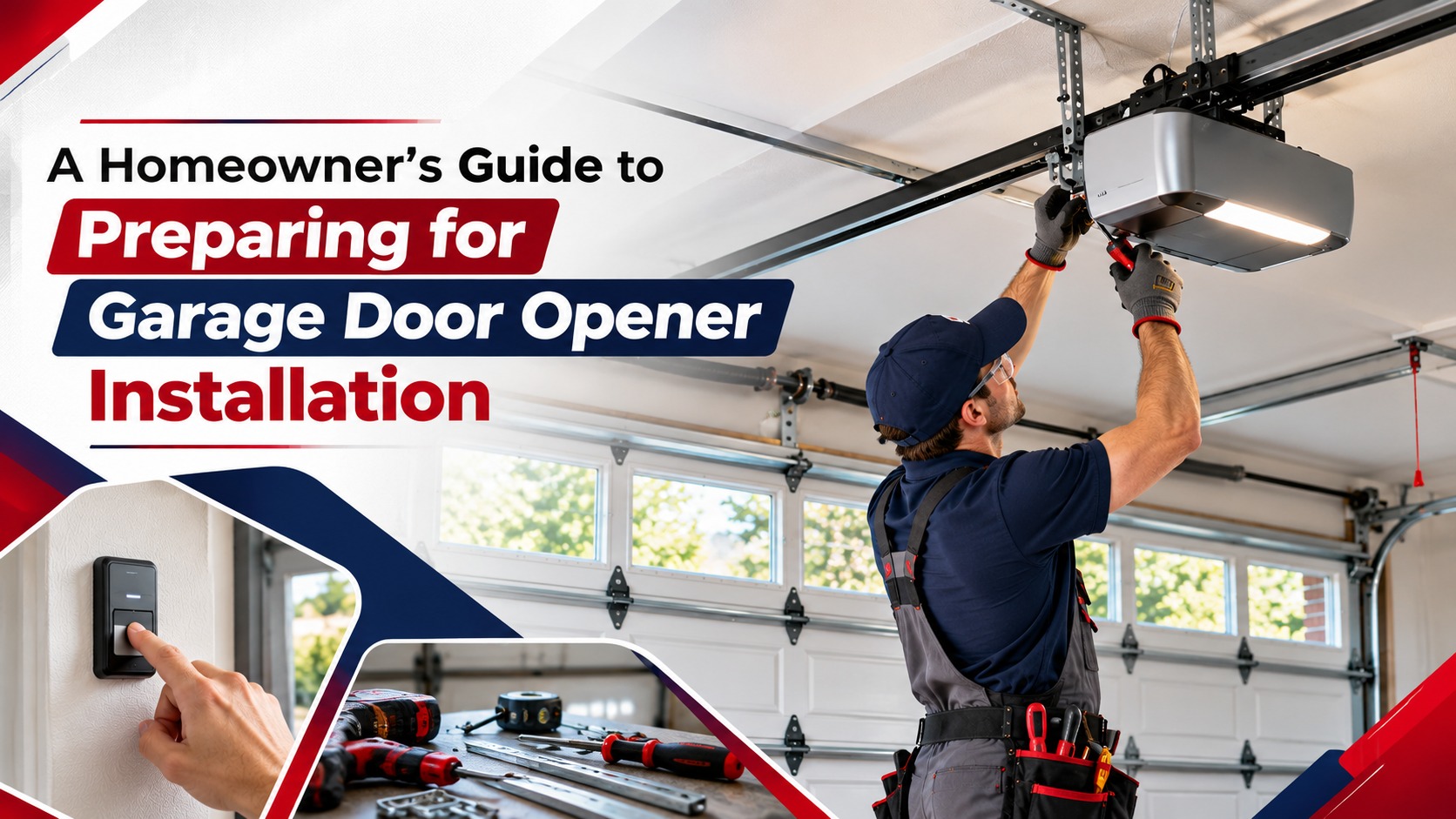
Garage door opener installation can bring some convenience into your daily routine, but a hassle-free experience begins even before the specialist arrives at your home. From cleaning up your garage entryway to assessing your existing opener and remotes, there are several things that you should do to be prepared for the job.
For homeowners planning garage door opener installation in Triangle, the best approach is to understand what the technician may need, which details to share beforehand, and how to prepare the space for safe, efficient work.
Before Installation Day: Five Things Worth Checking
Viewing installation day as an upgrade to your home rather than just replacing your motor can be beneficial. Your old garage door, the amount of ceiling space available, and the needs of your family can have an impact on the process.
Use this quick checklist before your appointment.
Clear the garage entrance: Move vehicles, bicycles, storage boxes, and other items away from the garage door and opener area.
Check the existing equipment: Note any unusual noises, inconsistent movement, or problems with your current remote.
Gather essential details: Keep your appointment confirmation, opener model information, and any relevant warranty documents handy.
Plan access: Make sure the technician can reach the garage, electrical outlet, ceiling-mounted equipment, and control panel.
Think about daily use: Consider how often the door opens, who uses it, and whether you need additional remotes or keypad access.
These steps may seem minor, but they can make the initial inspection more productive and help the installer understand your household’s needs.
1. Give Your Garage a Quick Safety Check:
Your garage door opener does more than lift a heavy door. It works with springs, cables, rollers, tracks, and other components to move the door safely.
Before the installation, study the way your current door opens or closes. Is its movement unbalanced? Do you hear some grinding sounds? Or have you seen that your tracks are bent? Did the door become somewhat crooked when being opened or closed?
Tell about these aspects to the installer, instead of trying to repair them yourself.
The garage door springs and lifting cables work under high tension. Do not release these cables, disconnect the door, or adjust the springs yourself. The professional will need to check for any mechanical issues.
You may also point out if the door has become heavier and harder to handle lately. Your opener cannot fix a broken or imbalanced door. It would be good to find out about the cause of the problem.
2. Know What You Want From Your New Opener:
Not every household needs the same garage door opener. The right choice depends on your door, garage layout, preferred noise level, usage patterns, and budget.
Consider these common options before the appointment.
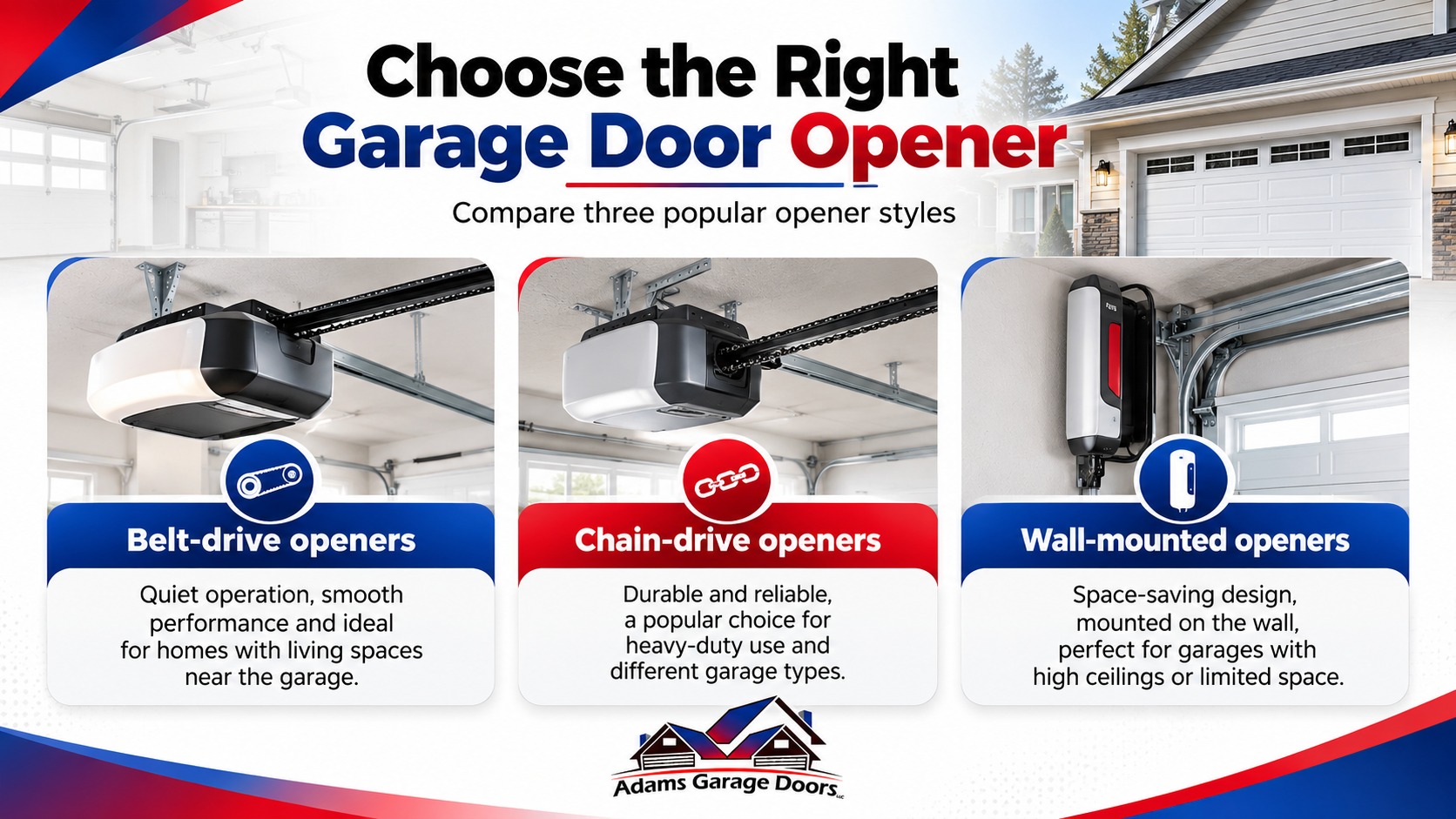
Belt-drive openers: These typically use a reinforced belt and are popular with homeowners who want quieter operation, particularly when a bedroom sits above or beside the garage.
Chain-drive openers: These use a metal chain to move the door. They can be a practical option for homeowners who prioritize functionality and value, although operation may be noisier.
Wall-mounted openers: These attach beside the garage door rather than occupying the center of the ceiling. They may suit certain garages with limited overhead clearance, provided the door and installation conditions are compatible.
Other amenities might include battery backup, smart home integration, lighting that turns on with motion detection, and wireless keypads.
It is not necessary for you to select a particular model prior to discussing it with the installation technician. You simply need to communicate what is important to you.
3. Check the Space Above and Around the Door:
The garage layout can influence which opener will work best.
Take a look at the ceiling above the garage door and see if there are any obstacles such as shelves, hanging racks, light fixtures, etc. It would be good to let the professional know if your ceiling is low, or if there are beams visible, as well as if you have any special garage arrangement.
It might be that the installer needs to check your headroom height, mounting points, door travel distance, and the location of your electrical power supply source. This information will help decide how the opener and the hardware required for installation will be mounted.
It is also important to make sure that there are no stored items near the door tracks, which would make it more difficult for the installer to examine the entire system.
If there is a special outlet for your garage, do not use the extension cords as a replacement. Your electrical requirements need to be assessed by a specialist.
4. Prepare Your Questions Before the Technician Arrives:
An installation appointment is a perfect time for you to learn how your new unit works and what is included in the service.
Instead of trying to recall all questions right away, just jot down the key ones.
For example, find out if you can reuse the current mount or if replacement components are needed. See if programming remotes, installing a keypad, testing safety devices, and instructing on maintenance procedures are included in the price.
Also, don’t hesitate to ask about the warranty and guarantee of craftsmanship, along with any possible additional fees if there are damages found during the inspection.
For a clearer understanding of the installation process, read our related guide: What a professional garage door opener installer should include during the installation.
Knowing what to expect helps you compare service options more confidently and understand the value of professional installation beyond simply connecting a motor.
5. Make Access and Household Arrangements:
A technician needs a reasonably clear workspace to inspect the door, install equipment, and complete operational tests.
Move vehicles out of the immediate work area when possible. Keep children and pets away from the garage during the appointment, especially while tools and moving door components are in use.
If you rely on the garage for daily entry and exit, plan an alternative route in case the door cannot be used temporarily during installation.
It is also helpful to have an adult available to answer questions about the existing system and confirm preferences for remotes, keypad placement, or smart controls.
For homeowners who work from home, consider whether drilling, testing, or repeated door operation could interrupt meetings. You do not need to rearrange your entire day, but knowing when the work will happen can make things easier.
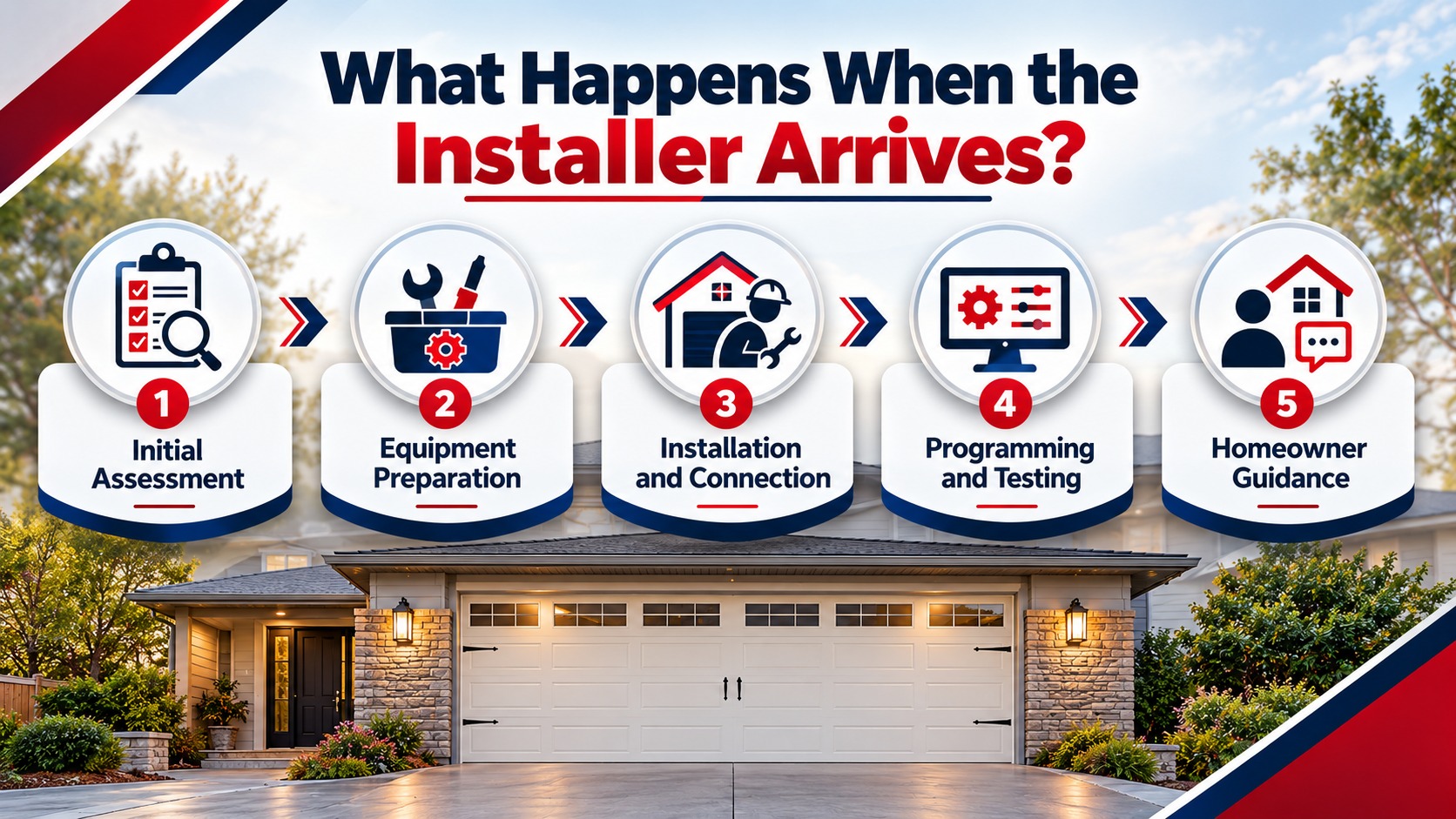
6. What Happens When the Installer Arrives?
Understanding the likely sequence of work can help you feel prepared without needing to manage the technical details yourself.
Although the exact process depends on the equipment and condition of the door, a professional appointment commonly involves several stages.
Initial assessment: The technician examines the garage door, tracks, springs, mounting area, and electrical arrangements to identify compatibility or safety concerns.
Equipment preparation: The installer confirms the selected opener, required hardware, and any additional components needed for the job.
Installation and connection: The old equipment may be removed when necessary, followed by mounting the new opener and connecting its operating components according to the manufacturer’s instructions.
Programming and testing: The installer configures compatible remotes or other controls and checks door travel, operation, and relevant safety features.
Homeowner guidance: You should have an opportunity to ask how the controls work, what routine maintenance involves, and whom to contact if a problem develops.
The time required varies according to the existing setup, opener type, and whether repairs or additional work are necessary. Ask your installer for an estimated duration before the appointment rather than relying on a fixed time expectation.
7. After Installation: Do Not Skip the Final Walk-Through
Once the installation of the new door opener is completed, spend some time learning how it functions.
Let the technician show you how it normally opens and closes, teach you how to operate it using the wall control and remote, as well as other backup options available for your model.
Ensure that the safety sensors are installed properly and are tested following the requirements of the manufacturer. Learn how the emergency release mechanism functions and how to use it properly. Make sure that you have the owner’s manual, warranty card, and servicing information available.
Never assume that a door is safe simply because it opens and closes. The completed system should be checked by the installer, including the required safety features.
If you are replacing an aging unit, our companion article, Factors to consider when replacing an older garage door opener in Alexandria. can help you understand the considerations involved in deciding whether replacement makes sense.
Why Local Experience Matters for Triangle Homeowners:
Choosing a garage door professional involves more than comparing prices. You want someone who understands the equipment, checks the existing door, explains the available options, and treats safety as part of the job.
Homeowners arranging garage door opener installation near you in Triangle should look for clear estimates, appropriate licensing and insurance where applicable, transparent communication, and an installation process that follows the manufacturer’s requirements.
Before booking, confirm the service area, appointment availability, equipment compatibility, and what the quoted price includes. Ask whether the provider can address additional mechanical issues if the inspection reveals a problem.
Meet Adams Garage Doors LLC: Your Trusted Partner for Garage Door Services in VA
Adams Garage Doors LLC is the right place to turn to for all garage door-related services via the company’s own communication channels. In the case of a new opener, this conversation will allow homeowners to specify the dimensions of their garage, the issues with the current installation & the functions they wish to have in the replacement one.
For service details or to request an appointment, visit the website. Sharing your concerns and expectations in advance can help the company determine the appropriate next steps for your garage.
Frequently Asked Questions :
1.How do I prepare my garage for opener installation?
Clear the garage door area, remove obstacles, and ensure access to the power supply and mounting space before installation.
2Which garage door opener is best for my home?
The best opener depends on your door’s weight, size, noise level, available space, and daily usage.
3.How long does garage door opener installation take?
Installation time varies by opener type, garage setup, and any additional repairs required.
4.Can a new opener be installed on an old garage door?
Yes, if the existing door is compatible and in good working condition. Damaged or unbalanced doors should be inspected first.
5.Does garage door opener installation require an electrical outlet?
Most automatic openers require a suitable power source. Check the manufacturer’s requirements and have electrical work assessed by a qualified professional.
Final Thoughts:
A successful garage door opener installation starts with a few sensible decisions: clear the workspace, identify your needs, share existing problems, and prepare questions about equipment, safety, and service coverage.
With the right preparation, Triangle homeowners can approach installation day with greater confidence and a clearer understanding of what their new opener should deliver.
Why wait? Contact our team now.