
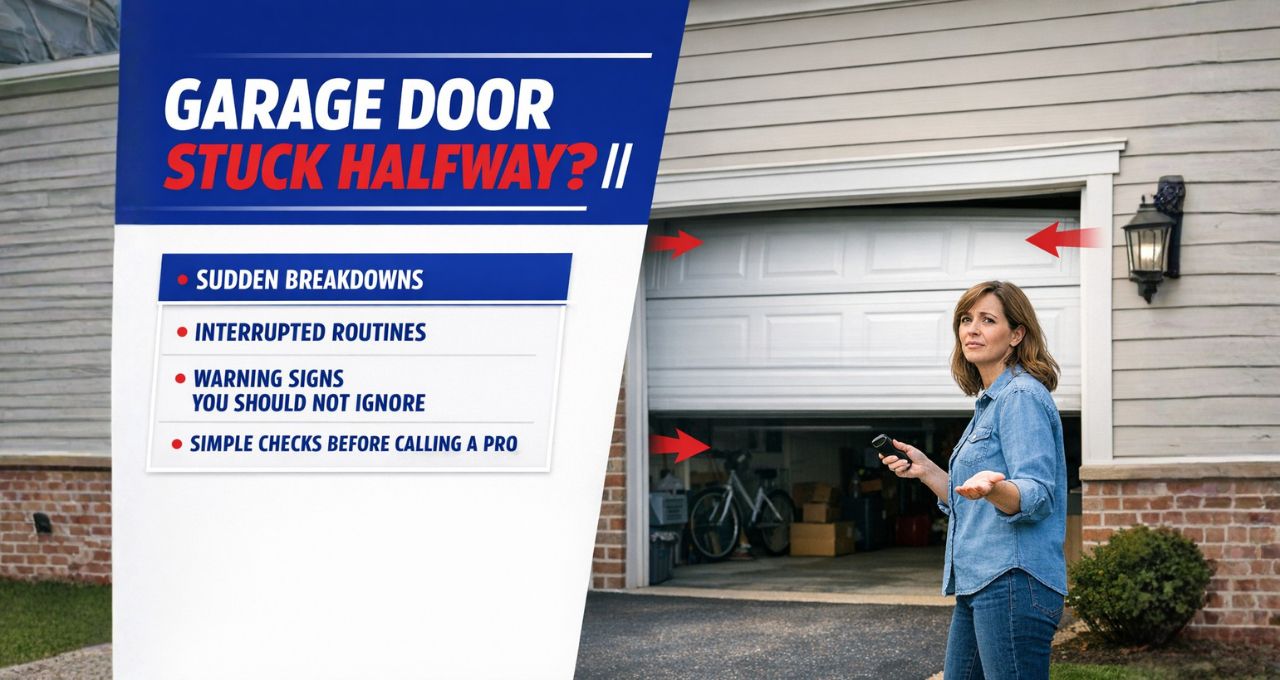
You don’t really think about your garage door until it stops working.
One moment, it’s part of your routine. You press the remote, it opens, you drive out, and your day moves on. Then suddenly, something changes. You press the button… and nothing happens. Or maybe you hear the motor, but the door refuses to move.
It’s a small moment, but it disrupts everything.
For homeowners across Virginia, this is one of the most common home issues, and it often happens without much warning. What feels like a sudden failure is usually the result of gradual wear that has finally reached its limit.
The key is understanding what your garage door is trying to tell you before the problem gets worse.
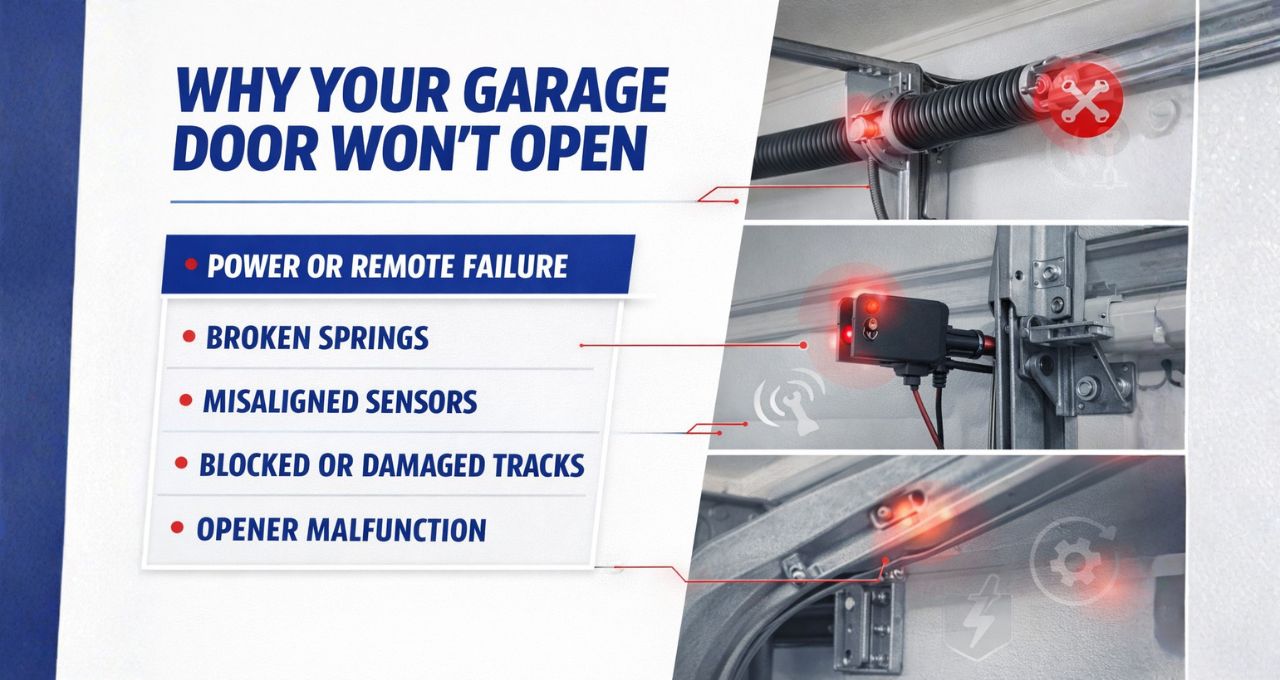
Quick Answer: Why Your Garage Door Won’t Open
If your garage door is not opening, the issue usually comes down to one of these causes:
- Power supply or remote failure.
- Broken springs.
- Misaligned safety sensors.
- Blocked or damaged tracks.
- Garage door opener malfunction.
If the door feels unusually heavy or completely stuck, it may require broken garage door repair right away.
Step Back for a Second: What Exactly Is It Doing?
Before jumping into fixes, it helps to pause and observe.
Your garage door rarely fails without leaving clues. The way it behaves can quickly point you in the right direction.
Ask yourself:
- Do you hear the opener running?
- Does the door try to move at all?
- Did you notice any unusual sounds before it stopped working?
These small details can save time and help you understand whether the issue is simple or something more serious.
When Nothing Happens at All:
If you press the button and there’s no sound, no movement, and no response, the problem is often electrical.
Start with the basics:
- Check if the opener is plugged in.
- Look for a tripped circuit breaker.
- Replace the remote batteries.
It might feel too simple, but many service calls begin with issues like these. Fixing them takes minutes, not hours.
When the Motor Runs but the Door Doesn’t Move:
This is where things shift from minor to mechanical.
You can hear the motor working, which means power is not the issue. But the door itself stays in place.
In most cases, this points to a broken spring.
Garage door springs handle the heavy lifting. When one fails, the opener can no longer raise the door on its own. This is one of the most common reasons homeowners end up needing broken garage door repair, especially after years of regular use.
That Loud Snap You Heard? It Matters
Many homeowners describe the same moment.
A sudden, sharp noise, like something snapping under tension.
That sound is often a torsion spring breaking. It can happen without warning and usually leaves the door completely inoperable.
At that point, the system is no longer safe to use. Trying to force the door open can cause further damage or even injury.
When the Door Starts… Then Stops:
Sometimes the door begins to open or close, then suddenly stops midway.
This type of behavior usually points to alignment or obstruction issues.
You might be dealing with:
- Bent or misaligned tracks
- Worn or damaged rollers
- Objects blocking the path
- Sensor interference
Even a small obstruction can prevent the system from completing its movement.
When the Door Reverses Unexpectedly:
If the door starts moving but then reverses direction, the safety system is likely stepping in.
Garage doors are designed to stop if something feels wrong.
Check the sensors near the base of the door:
- Are they aligned properly?
- Are they clean and free of dust?
- Is anything blocking the beam?
In many cases, a simple adjustment can resolve the issue.
When the Door Feels Heavier Than Usual:
If you try to lift the door manually and it feels much heavier than normal, that’s a strong warning sign.
It usually means the spring system is no longer supporting the door properly.
This is not just inconvenient; it can be dangerous. A heavy, unbalanced door can fall unexpectedly or put excessive strain on other components.
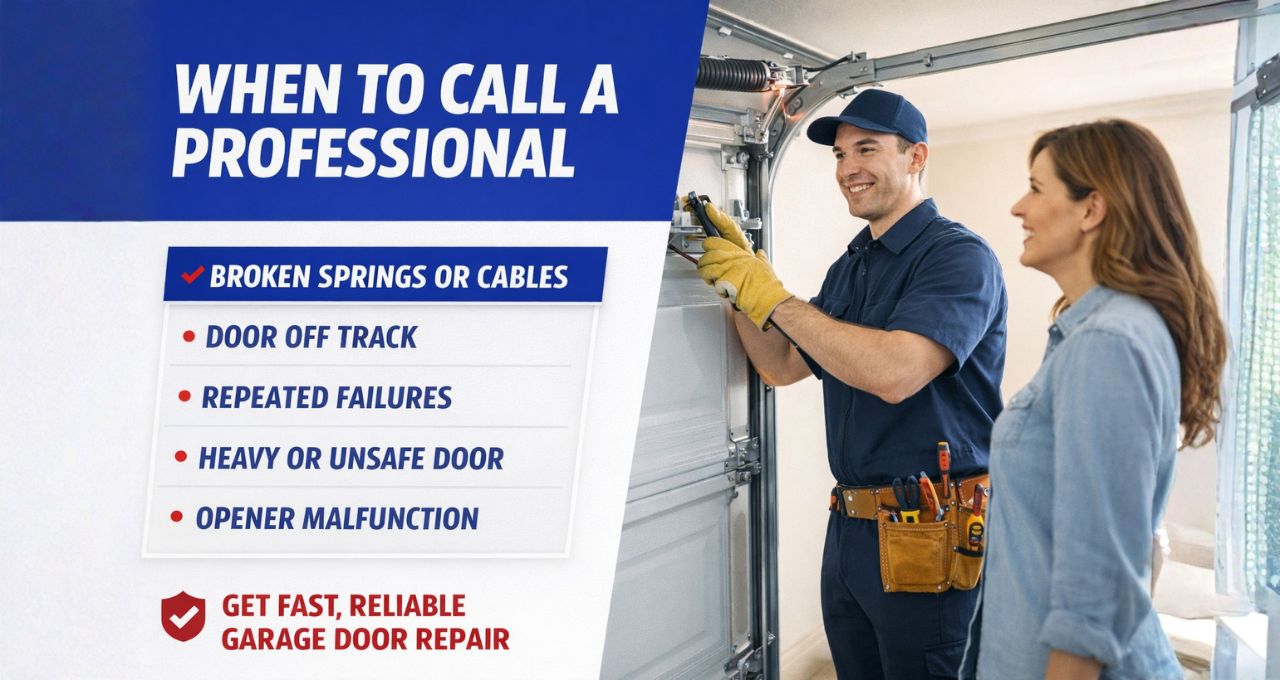
When Troubleshooting Isn’t Enough:
There’s a point where basic checks stop being helpful.
If your issue involves:
- Broken springs
- Snapped cables
- Doors coming off the track
- Repeated system failures
It’s time to step back.
Garage door systems operate under high tension, and attempting to repair these components without proper tools and training can lead to serious problems.
Why These Problems Happen Over Time:
Garage doors go through daily use, often multiple times a day.
Over the years:
- Springs lose tension
- Parts wear down
- Alignment shifts
- Motors work harder than they should
In a place like Virginia, seasonal temperature changes also affect metal components, causing them to expand and contract. This adds stress to the system and speeds up wear.
So when your garage door stops working, it’s usually not random.
It’s the result of long-term strain finally catching up.
Preventing the Next Breakdown:
While you can’t avoid wear completely, you can reduce the chances of sudden failure.
A few simple habits make a difference:
- Pay attention to new or unusual sounds.
- Address small issues early.
- Keep tracks clear and clean.
- Schedule periodic inspections.
Catching problems early often means smaller repairs and fewer disruptions.
Why Homeowners Turn to Adams Garage Doors LLC:
When a garage door stops working, the situation quickly becomes urgent. Cars get stuck. Schedules shift. Security becomes a concern.
That’s why many homeowners rely on Adams Garage Doors LLC when they need fast and reliable help.
We offer:
- Same-day and emergency repair services
- Licensed and insured technicians
- Clear, upfront pricing
- Experience with all major garage door systems
More importantly, they focus on identifying the root cause of the issue, not just fixing the surface problem.
Because a quick fix only helps if it lasts.
Quick Troubleshooting Checklist:
Before calling for service, it helps to quickly check:
- Power supply and remote batteries.
- Sensor alignment and cleanliness.
- Any visible obstructions in the track.
- Unusual sounds or resistance.
If the issue involves heavy lifting or broken components, it’s best not to attempt a fix yourself.
Frequently Asked Questions:
Why won’t my garage door open even though I hear the motor?
This usually means a broken spring or a disconnected mechanism that prevents the door from lifting.
Can I still open my garage door with a broken garage door spring?
It’s not recommended. The door becomes very heavy and unsafe to operate.
What is the most common reason a garage door stops working?
Worn or broken springs are one of the most common causes.
How long does broken garage door repair take?
Most professional repairs can be completed within one to two hours.
Should I try fixing the problem myself?
Basic troubleshooting is fine, but structural or tension-related issues should be handled by a professional.
Final Thought:
Garage doors don’t usually stop working without warning.
They give small signs, subtle changes that are easy to overlook during a busy day.
But those signs matter.
Paying attention early can save time, money, and stress later on.
And when the door finally refuses to open, the right response isn’t guesswork.
It’s getting the right help, at the right time, to fix the problem properly.