Adams Garage Doors LLC

How Often Should Virginia Homeowners Schedule Professional Garage Door Maintenance?

Your garage door- this is one item which you might use on a daily basis and which does not give you second thoughts when using. Just like any other machine in your house, it requires regular maintenance for effective operation. Over time, some parts may break down, springs become loose, and the tracks misaligned.

So, how often should you schedule professional garage door maintenance in Virginia?

In general, yearly professional maintenance is highly advisable for all garage doors. In any case, garage doors which are used very often, generate noises, or have visible wear and tear need more frequent inspections to be made. Such services will help detect any minor issues and prevent their development in the future.

Let’s discuss the frequency of such service and what you can expect from garage door maintenance.

How Often Should You Schedule Professional Garage Door Maintenance?

Residential garage doors are best maintained at least once in every 12 months. Maintenance of your garage door will help ensure that the door, opener, springs, cables, rollers, and tracks are running properly.

But the right maintenance schedule is dependent on how often the garage door is used.

Here is a simple maintenance guide:

  • Once a year: Recommended for most residential garage doors with regular daily use.
  • Every six months: A good option for frequently used garage doors or properties with multiple users.
  • After unusual noises or movement: Schedule an inspection if your door starts shaking, moving unevenly, or making grinding sounds.
  • After severe weather: Have your garage door checked if strong winds, heavy rain, or storms may have affected its operation.

Following a regular garage door maintenance schedule can help improve performance, reduce unexpected breakdowns, and extend the life of your garage door system.
Professional Garage Door Service

Why Is Regular Garage Door Maintenance Important?

Garage doors have various parts which are interconnected, and work every time when opening or closing the door. When one of these parts breaks down, then the whole mechanism stops working.

There are some major reasons to maintain your garage door regularly.

1. Helps Prevent Unexpected Repairs:

Small defects become easier to fix when caught early. In this case, loose parts, worn-out rollers, and track misalignment could interfere with the movement of the door if left unchecked.

It is possible for a professional technician to identify these defects and suggest repair work that needs to be done.

2. Improves Garage Door Safety:

These garage doors are heavy and work on springs that function under tension. Failure in any component could pose safety threats to you and your family members.

The technician during an inspection can test the following:

  • Balance of the door.
  • Safety sensors.
  • Cables.
  • Springs.
  • Reverse feature.

3. Extends the Life of Your Garage Door:

Servicing regularly makes it possible to avoid putting stress on moving parts unnecessarily. Greasing of appropriate parts, tightening loose bolts, and inspection of the opener can go a long way in maintaining the system.

This may also reduce the need for premature garage door replacement.

4. Keeps the Garage Door Running Smoothly:

Do you experience jerking, slow movement, or noise when opening your garage door? All of these can be a result of old rollers, hardware loosening, or an opener problem.

Professional servicing will help find out the reasons and fix the problems.

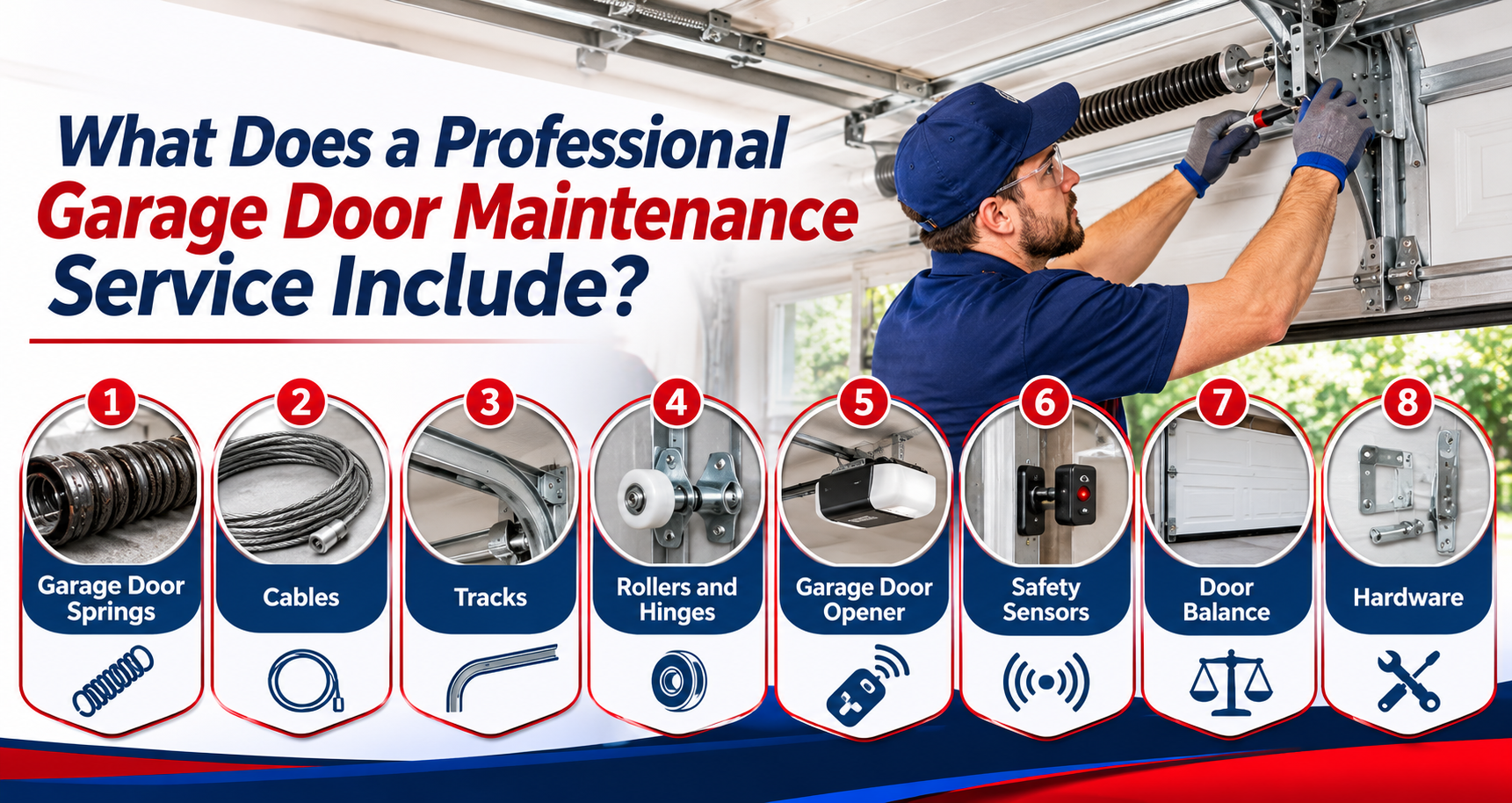
What Does a Professional Garage Door Maintenance Service Include?

Professional maintenance will include inspection of the components that make up the garage door system. This will vary according to the age of the door and its current state.

Generally, technicians check the following:

  • Garage door springs: Inspecting for visible wear, damage, or loss of tension.
  • Cables: Checking for fraying, corrosion, and other signs of damage.
  • Tracks: Looking for bends, obstructions, or alignment problems.
  • Rollers and hinges: Checking their condition and movement.
  • Garage door opener: Testing the motor, chain or belt drive, and other operating components.
  • Safety sensors: Ensuring that the sensors respond correctly.
  • Door balance: Checking whether the door moves evenly and stays balanced.
  • Hardware: Inspecting bolts, brackets, and other fittings for looseness.

If any component needs repair or replacement, the technician can explain the problem and suggest the appropriate solution.

Homeowners should avoid adjusting torsion springs, repairing cables, or attempting other high-tension repairs themselves. These jobs require proper tools and professional experience.

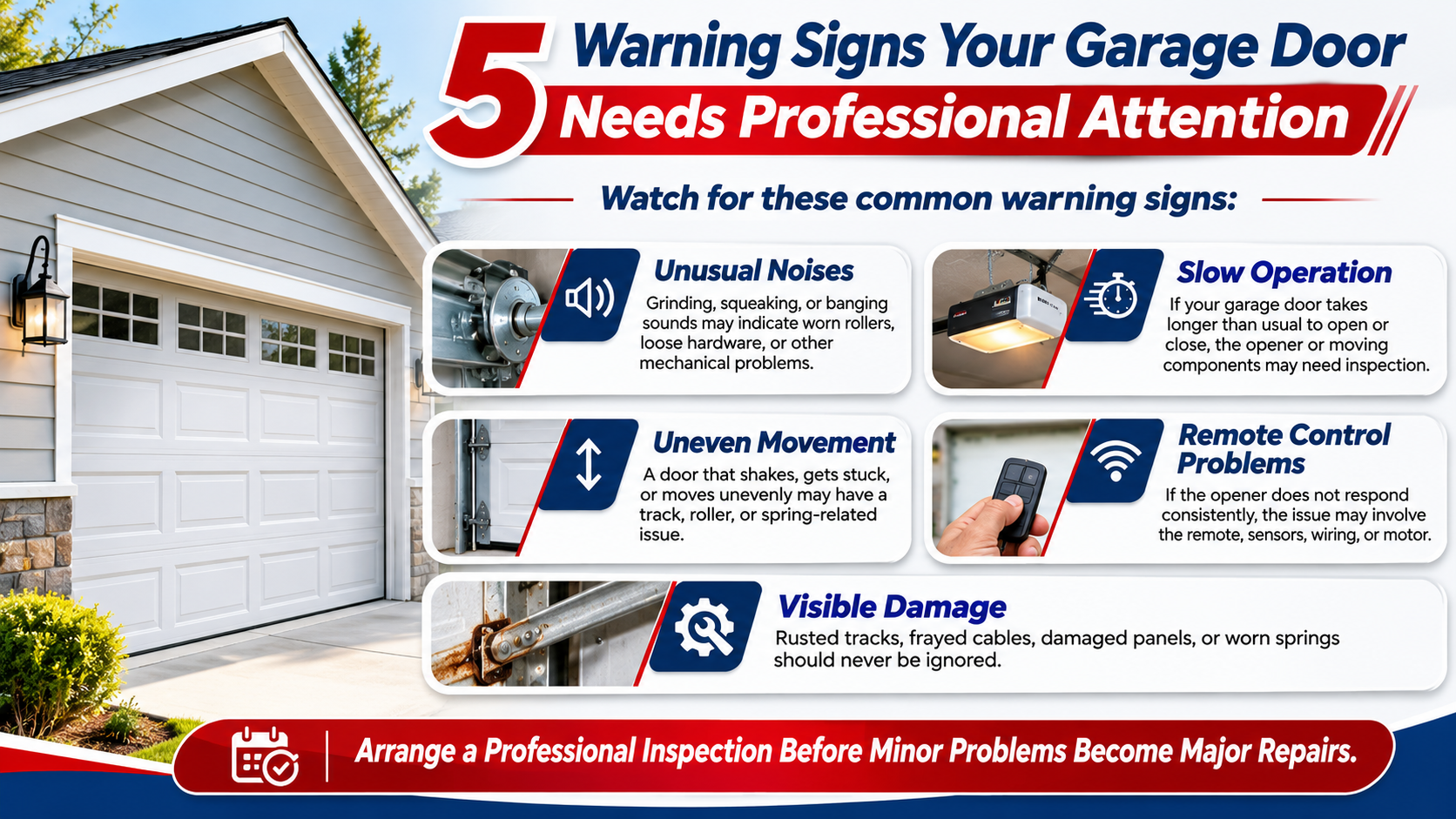
5 Warning Signs Your Garage Door Needs Professional Attention:

You do not always have to wait for your annual inspection. Your garage door may show signs that it needs attention sooner.

Watch for these common warning signs:

  1. Unusual noises: Grinding, squeaking, or banging sounds may indicate worn rollers, loose hardware, or other mechanical problems.
  2. Slow operation: If your garage door takes longer than usual to open or close, the opener or moving components may need inspection.
  3. Uneven movement: A door that shakes, gets stuck, or moves unevenly may have a track, roller, or spring-related issue.
  4. Remote control problems: If the opener does not respond consistently, the issue may involve the remote, sensors, wiring, or motor.
  5. Visible damage: Rusted tracks, frayed cables, damaged panels, or worn springs should never be ignored.

If you notice any of these problems, arrange a professional inspection instead of waiting for the next scheduled maintenance visit.
Garage Door Warning Signs

Does Virginia Weather Affect Garage Door Maintenance?

Yes. Weather conditions can affect the performance and condition of garage door components.

Virginia experiences seasonal temperature changes, humidity, rainfall, and occasional severe storms. These conditions may contribute to rust, moisture-related wear, and changes in how certain materials perform.

For example, moisture can contribute to corrosion on metal components, while temperature fluctuations may affect some moving parts and weather seals.

Homeowners should pay attention to:

  • Rust or corrosion on metal tracks and hardware.
  • Cracked or damaged weatherstripping.
  • Unusual noises during seasonal temperature changes.
  • Loose components after strong storms.
  • Water enters the garage around the door.

A yearly professional inspection is a sensible starting point. Depending on your garage door’s exposure and usage, your technician may recommend additional checks.

How Much Does Professional Garage Door Maintenance Cost in Virginia?

The cost of professional garage door maintenance in Virginia depends on the door type, its condition, and the work required.

A basic inspection may cost less than a service visit involving lubrication, adjustments, or replacement of damaged components.

Before scheduling a service, consider asking:

  • What does the maintenance inspection include?
  • Are minor adjustments included in the quoted price?
  • Will replacement parts cost extra?
  • Is there a warranty on the work?
  • Are there any additional service charges?

Comparing written estimates can help you understand what you are paying for. To make a better decision, click here to read how homeowners can compare affordable garage door repair estimates in Virginia. 

Why Choose Adams Garage Doors LLC for Professional Maintenance?

When it comes to maintaining your garage door, choosing an experienced service provider makes a difference.

Adams Garage Doors LLC is a leading garage door installation and repair company serving residential and commercial customers across the greater Virginia area.

Every team member is well-trained and highly experienced, with the tools required to install and repair different types of garage doors.

The company specialises in replacing garage door opener chains, opener motors, rusted tracks, springs, and other components. Whether you need a routine inspection, a repair, or a completely new garage door, our team can help you find the right solution.

Customers across Fairfax, Woodbridge, Lorton, Alexandria, Springfield, Chantilly, and other Virginia communities can count on us for any garage door needs.

We also offers:

  • A wide selection of steel and wooden garage doors.
  • Garage door opener services.
  • Garage door repairs and replacements.
  • Professional garage door installation.
  • Warranty coverage on every job performed.

If you are considering a new garage door, explore the available new garage door installation services to learn more about your options.

For opener-related work, you can also click here to read what homeowners should expect during a professional garage door opener installation.

For dependable garage door maintenance near you in Virginia, contact Adams Garage Doors LLC and see available service options.

Frequently Asked Questions:

How often should a garage door be professionally serviced?

Most residential garage doors should be professionally inspected once a year. However, frequently used doors or systems showing signs of damage may require inspections every six months or sooner.

Can I maintain my garage door myself?

Homeowners can perform basic visual checks, keep the door area clean, and observe unusual sounds or movement. However, spring adjustments, cable repairs, and other high-tension work should always be handled by trained professionals.

What happens if I do not maintain my garage door?

Without regular maintenance, components may wear out faster, the door may become noisy or unbalanced, and unexpected breakdowns may occur. Neglecting safety components can also increase the risk of accidents.

How long does a professional garage door maintenance visit take?

The time depends on the door’s condition and the inspection required. A routine maintenance visit may take around 30 to 60 minutes, while additional repairs can require more time.

When should I replace my garage door instead of repairing it?

Replacement may be worth considering if your garage door has extensive structural damage, repeated mechanical problems, or several failing components. A professional technician can inspect the system and help you compare repair and replacement options.

Final Thoughts:

Regular garage door maintenance is a simple way to keep your system working safely and reliably. For most Virginia homeowners, an annual professional inspection is a good starting point. If your garage door is used frequently or shows signs of wear, do not hesitate to schedule an earlier check.

With professional care from Adams Garage Doors LLC, you can address minor issues, maintain smooth operation, and make your garage door last longer.

Call us today to discuss your garage door maintenance and repair needs.
Is Virginia Weather Ruining Your Garage Door? Warning Signs Every Homeowner Should Know

Imagine leaving for work on a chilly Virginia morning. You grab your coffee, press the garage door remote, and wait for the familiar hum.

Instead, the door shudders.

It groans louder than usual, rises halfway, and then stops.

You press the remote again. This time it opens, but something doesn’t feel right.

Most homeowners assume the garage door is simply getting older. They promise themselves they’ll look into it later, especially if the door still works.

Here’s what many people don’t realize.

Your garage door doesn’t suddenly decide to fail one morning. In many cases, Virginia’s changing weather has been quietly wearing it down for months. Every heat wave, heavy rain, freezing night, and humid afternoon puts stress on the largest moving part of your home. By the time the warning signs become obvious, small maintenance issues may have turned into expensive repairs.

If you’ve been wondering whether the weather is affecting your garage door, the answer is probably yes.

This guide explains how Virginia’s climate impacts garage doors, the warning signs you should never ignore, and the simple garage door maintenance habits that can help your system last longer.

Why Virginia’s Weather Is Hard on Garage Doors:

Your roof protects your home.

Your siding shields your walls.

But your garage door is different.

It moves several times a day while being exposed to sunlight, humidity, rain, wind, freezing temperatures, pollen, and dust throughout the year. Every season asks the door to expand, contract, flex, and perform under changing conditions.

Over time, those changes affect almost every component, including:

  • Springs
  • Rollers
  • Hinges
  • Tracks
  • Weather seals
  • Cables
  • Garage door opener

Even if the door appears to be working normally, hidden wear may already be developing.

That is why garage door maintenance Virginia homeowners schedule before each major season often costs far less than emergency repairs later.

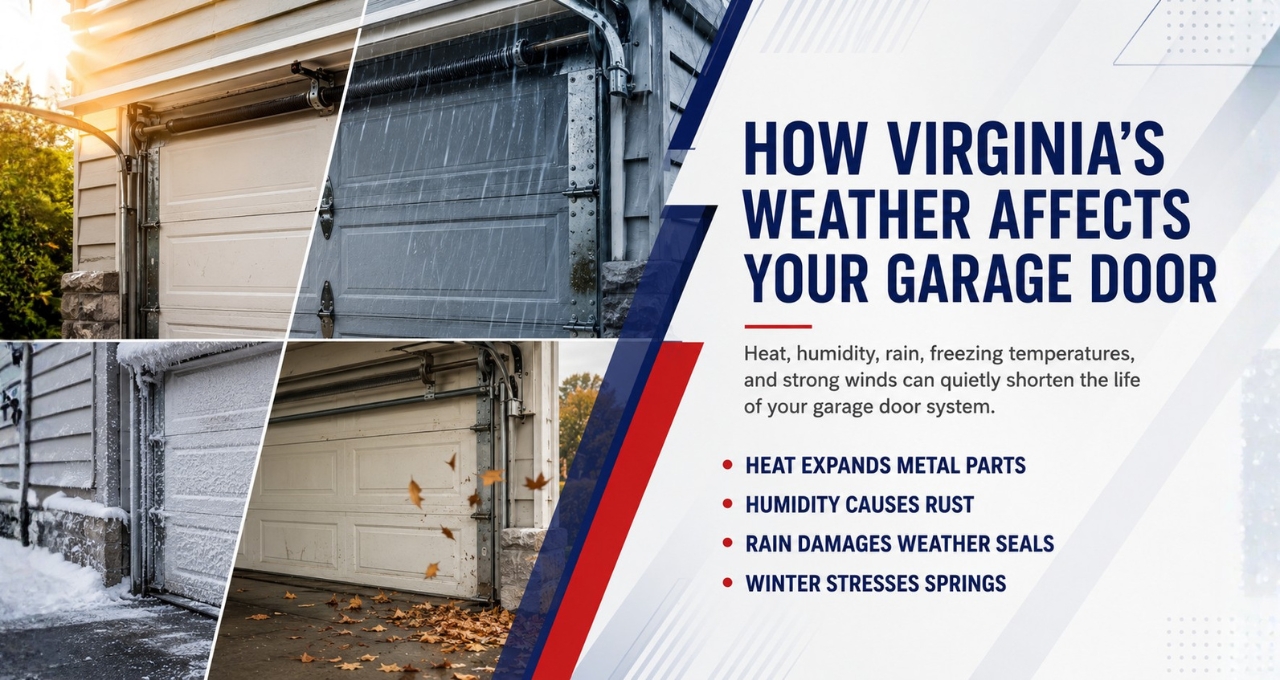
Weather effects of Virginia Garage Door

Seven Ways Virginia Weather Slowly Damages Your Garage Door:

1.Summer Heat Causes Metal Parts to Expand:

Virginia summers can be hot and humid.

While you may notice the temperature, your garage door feels it even more.

Metal tracks, springs, and hinges naturally expand when temperatures rise. Although the expansion is small, it happens repeatedly throughout the season. Over time, these changes can affect alignment and increase friction between moving parts. Heat also dries out lubricants, making rollers and hinges work harder than they should.

You may notice:

  • A noisier garage door
  • Slower movement
  • Jerky operation
  • Increased strain on the opener

These symptoms often seem minor at first, but they can shorten the life of several components if ignored.

2.Humidity Encourages Rust in Places You Can’t See:

Humidity is another challenge for Virginia homeowners.

Moisture doesn’t just affect wooden decks and fences. It also finds its way into garage door hardware.

Springs, cables, rollers, and brackets are all vulnerable to corrosion. Rust increases friction, forcing the system to work harder every time the door opens or closes.

The problem is that rust usually starts where homeowners rarely look.

By the time visible corrosion appears, internal wear may already be well underway.

Routine lubrication and seasonal inspections help slow this process and protect moving parts from unnecessary stress.

  1. Heavy Rain Can Damage More Than the Door:

Many homeowners think rain only affects the outside surface of the garage door.

Actually, one of the biggest concerns is the weather seal.

The rubber seal along the bottom and sides of the door keeps out rain, drafts, dust, insects, and debris. After years of exposure to moisture and sunlight, these seals become brittle, crack, or pull away from the frame. Once gaps appear, water can enter the garage and affect flooring, stored belongings, and even nearby walls. Worn seals also allow outside air to enter, reducing energy efficiency.

A quick way to check is simple.

Close the garage door during daylight and step inside the garage. If you can see light coming through the edges of the door, outside air and water can enter through those same gaps.

4.Winter Cold Places Extra Stress on Garage Door Springs:

Cold weather changes the way metal behaves.

As temperatures drop, steel contracts. Lubricants become thicker, rollers move less freely, and garage door springs experience greater stress than they do during warmer months. A spring that is already worn may finally break on one particularly cold morning because the lower temperature increases the strain on the metal.

If your garage door suddenly becomes slower, louder, or harder to lift during winter, don’t assume it’s simply reacting to the cold.

Those changes often indicate that garage door maintenance is overdue.

5.Wind Can Knock Your Garage Door Out of Alignment:

Strong winds are not uncommon in Virginia, especially during thunderstorms and seasonal weather changes. While your garage door is built to handle everyday conditions, repeated exposure to strong wind pressure can gradually affect how it operates.

Wind-driven debris may collect in the tracks. Branches, leaves, and dirt can interfere with the rollers, making the door less stable as it moves. Over time, this extra resistance can cause unnecessary wear on the tracks, rollers, and opener.

You might notice signs like:

  • The door shakes while opening or closing.
  • It moves unevenly.
  • You hear rubbing or scraping sounds.
  • The opener seems to work harder than before.

These aren’t just minor annoyances. They often indicate that the system is no longer operating as smoothly as it should.

6.UV Rays Slowly Wear Down Weather Seals:

Many homeowners think rain is the biggest threat to their garage door.

Surprisingly, sunlight can be just as damaging.

Virginia’s summer sun exposes your garage door to ultraviolet (UV) rays for hours every day. Over time, that constant exposure dries out the rubber weather seals around the door. Once those seals become brittle, they begin to crack, shrink, or pull away from the frame.

Here’s a simple test.

Close your garage door during the day, turn off the garage lights, and look around the edges.

If you can see daylight, you probably have gaps that are letting in outside air, moisture, dust, and even pests. Those same gaps can also reduce your home’s energy efficiency.

7.Changing Temperatures Can Affect Your Garage Door Opener

Garage door openers contain mechanical and electronic components that react to changing temperatures.

Cold weather can make lubricants thicker and moving parts slower. Heat can affect sensors, while moisture may interfere with electrical connections. Although the opener itself isn’t usually damaged by one weather event, years of seasonal changes can shorten its lifespan if the rest of the garage door system isn’t properly maintained.

If your opener suddenly seems unreliable during certain seasons, the problem may not be the opener alone. The entire garage door system should be inspected.

Warning Signs That Virginia Weather Is Already Damaging Your Garage Door:

Weather damage rarely appears overnight. Instead, your garage door usually gives small warnings before a major breakdown occurs.

Watch for these signs:

  • Grinding, squeaking, or popping noises.
  • Slow opening or closing.
  • Uneven movement.
  • Rust on springs, hinges, or cables.
  • Cracked weather seals.
  • Water enters the garage after rain.
  • Light is visible around the edges of the closed door.
  • The garage feels hotter in summer or colder in winter.
  • The opener struggles to lift the door.
  • Higher heating or cooling bills.

It happens more often than you think.

Many homeowners ignore these warning signs because the door still works. Unfortunately, waiting until something breaks usually means a larger repair bill.

Why Ignoring Weather Damage Can Cost More Later

A garage door works as a complete system. When one part begins to wear out, the remaining components often have to work harder.

For example:

  • Dry rollers increase friction.
  • Worn springs place extra stress on the opener.
  • Damaged weather seals allow moisture to enter.
  • Rust weakens metal parts.
  • Misaligned tracks force the door to work harder.

Eventually, one small problem leads to another.

There is also the energy factor.

If your garage is attached to your home, damaged weather seals can allow outside air to enter. Your heating and cooling system has to work harder to maintain indoor temperatures, which may increase energy costs over time. Replacing worn weatherstripping and improving insulation can reduce drafts and improve efficiency.

Frequently Asked Questions:

1.How does Virginia’s weather affect garage doors?

Virginia’s changing weather can affect almost every part of a garage door. Summer heat causes metal parts to expand, winter cold increases stress on springs, and humidity encourages rust.

2.How often should I schedule garage door maintenance in Virginia?

Most professionals recommend scheduling a complete garage door inspection and tune-up at least once a year.

3.Can weather damage increase my energy bills?

Yes. Worn weather seals, gaps around the door, and poor insulation allow outside air to enter your garage. If your garage is attached to your home, this can make your heating and cooling system work harder, increasing your energy costs.

4.What are the first signs that my garage door needs maintenance?

Watch for warning signs such as unusual noises, slow operation, uneven movement, rust on hardware, cracked weather seals, visible daylight around the door, or water entering the garage after rain. These issues often appear before a major mechanical failure.

5.Can I perform garage door maintenance myself?

Homeowners can safely perform simple tasks like cleaning the tracks, lubricating moving parts, checking weather seals, and testing the auto-reverse safety feature. However, repairs involving springs, cables, or major adjustments should always be handled by trained professionals because these components are under high tension.

Garage Door Ready for Every Virginia Season

Keep Your Garage Door Ready for Every Virginia Season with Adams Garage Doors LLC:

Whether your garage door is making unusual noises, showing signs of weather damage, or simply hasn’t been serviced in years, Adams Garage Doors LLC is here to help.

Our experienced technicians understand how Virginia’s climate affects garage doors and provide professional maintenance services designed to keep your system operating safely and efficiently throughout the year.

When you choose Adams Garage Doors LLC, you can expect:

  • Comprehensive garage door maintenance
  • Thorough safety inspections
  • Preventive tune-ups
  • Honest recommendations with no unnecessary upselling
  • Fast, reliable service from experienced local technicians
  • Solutions that help extend the life of your garage door

Don’t wait until a small weather-related issue becomes an emergency repair.

Schedule your garage door maintenance with Adams Garage Doors LLC today and keep your garage door performing at its best through every season.

Conclusion:

Your garage door works hard every day, but it also faces something you can’t control: Virginia’s changing weather.

Rain, humidity, freezing temperatures, and summer heat don’t usually cause one dramatic failure overnight. Instead, they slowly wear down springs, rollers, seals, tracks, and other moving parts until a small issue turns into an expensive repair.

The good news is that most weather-related problems are preventable.

By paying attention to early warning signs, following a seasonal maintenance routine, and scheduling professional inspections, you can extend the life of your garage door, improve your home’s energy efficiency, and avoid unexpected breakdowns.

If you haven’t inspected your garage door in a while, now is a great time to start. A few simple maintenance steps today can save you from major repairs tomorrow.