
Most people don’t schedule garage door maintenance.
They remember it.
Not on a calendar. Not in a checklist.
They remember it the day the door refuses to open… or the morning it makes a sound they’ve never heard before.
That’s how this usually begins.
Not with a plan. With a disruption.
And for homeowners across Virginia, that disruption is rarely random. It’s the result of months, sometimes years, of small shifts inside a system that works quietly in the background. That’s where the regular garage door maintenance steps in.
So instead of another checklist you might skim and forget, let’s look at this differently.
Let’s follow what actually happens to your garage door over time, season by season, moment by moment.
It Starts With Something Small:
At first, it’s almost nothing. A slight delay when you press the remote. A softer thud turning into a sharper sound. A movement that feels just a bit heavier than before.
You notice it. Then you move on. Because the door still works.
That’s the pattern. Garage door maintenance isn’t ignored because it’s unimportant. It’s ignored because nothing feels urgent… yet.
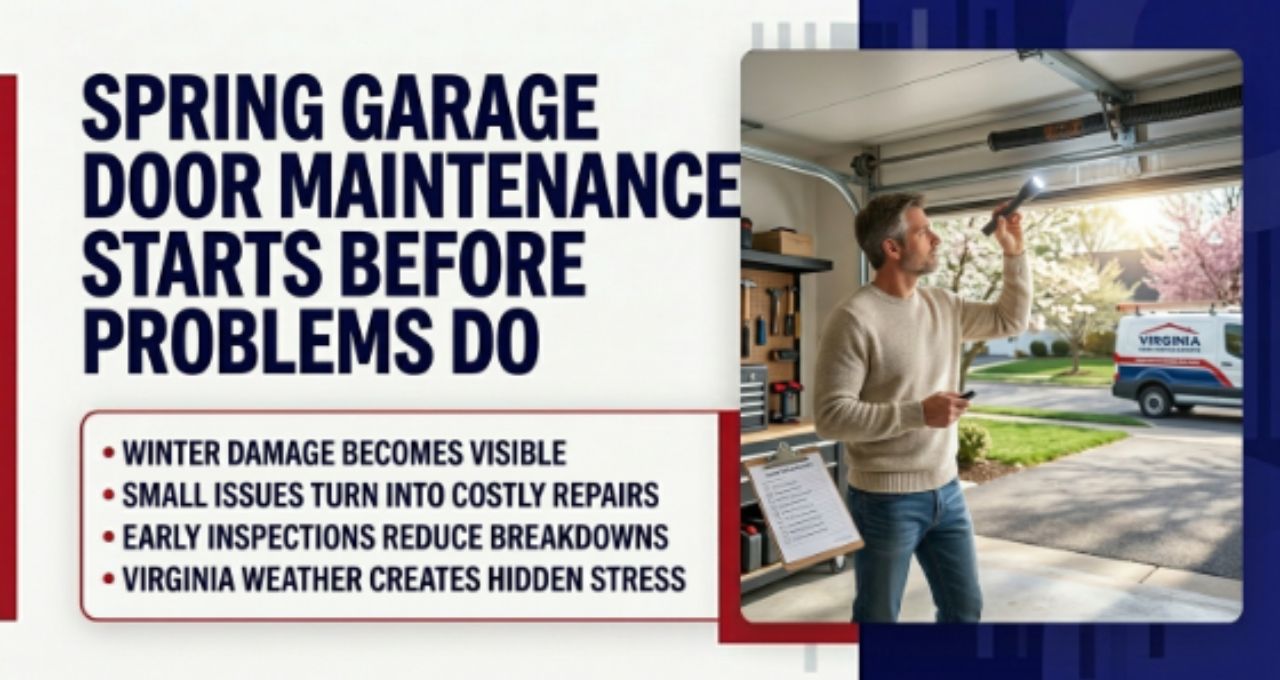
Spring: When Problems Wake Up
Winter doesn’t always break your garage door.
It weakens it.
Cold temperatures tighten metal. Moisture settles into small gaps. Components lose flexibility. But most of this stays hidden while the system continues to operate.
Then spring arrives.
Warmer air returns. Parts expand. Movement becomes easier again.
And that’s when subtle issues start to show themselves.
You might notice:
- A slight grinding sound that wasn’t there before
- A delay between pressing the button and the movement
- Minor rust appearing along springs or tracks
This isn’t new damage. It’s old stress becoming visible. Spring is not just a fresh start. It’s a reveal.
Summer: When Stress Builds Quietly
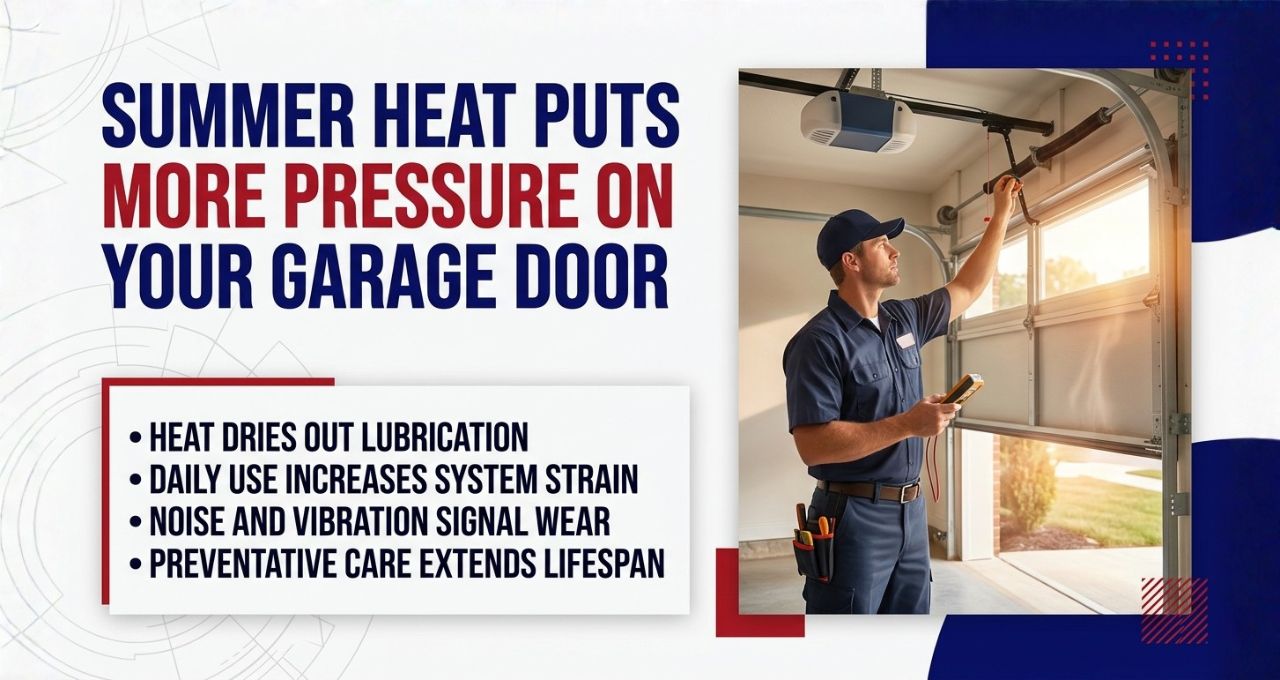
Summer feels easy on the surface. There’s no freezing. No stiffness. Everything moves more freely.
But underneath, a different kind of pressure builds. Heat expands metal components. Lubrication dries faster. Daily usage increases as routines shift.
And slowly, the system begins to compensate.
You may not see it immediately, but you might feel it:
- The door sounds louder than usual.
- Movement is smooth… but not consistent.
- The opener seems to work harder.
Nothing stops working. But something is changing.
This is where garage door maintenance matters most, because summer problems don’t look like problems. They look like normal use.
Fall: The Season Most People Skip:
Fall is quiet. There are no extreme temperatures. No obvious failures. So most homeowners do nothing. And that’s exactly why fall matters.
Because this is the last window before winter puts pressure on everything.
Leaves and debris begin to collect. Small misalignments go unnoticed. Worn parts continue operating without attention. The system is preparing for stress… without support.
Fall is not a passive season. It’s a missed opportunity.
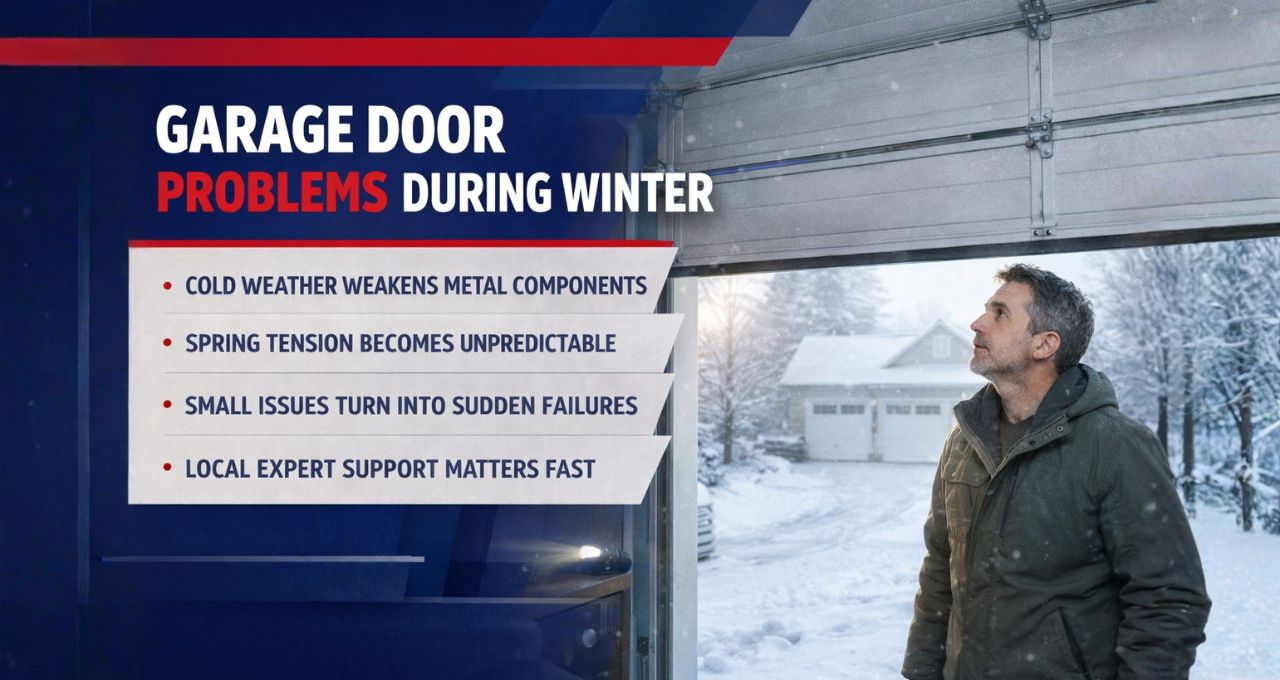
Winter: When Everything Shows Up at Once
This is where it all comes together.
The minor delay from spring. The subtle strain from summer. The overlooked adjustments from fall.
Winter doesn’t create these problems. It exposes them. Cold temperatures make metal brittle. Springs lose flexibility. Moisture freezes. Movement becomes harder.
And suddenly:
- The door hesitates
- The opener struggles
- A loud snap echoes through the garage
That’s the moment most people remember.
Not the months that led to it.
The Pattern Most Homeowners Don’t See:
Garage doors don’t fail randomly. They follow a progression.
- First, a small change in sound or movement
- Then, a slight imbalance or resistance
- Then, increased strain on key components
- Finally, a complete stop
Each stage gives you time to act. But only if you recognize it. That’s what garage door maintenance really is. Not a checklist. A pattern you learn to notice.
Reading the Signs Before They Turn Into Repairs:
Your garage door is always communicating. The problem is, most of the signals are easy to ignore.
Here’s how to read them differently:
- A louder-than-usual sound isn’t just noise. It’s friction building.
- A slower response isn’t just a delay. It’s an increasing strain.
- A slight shake isn’t random. It’s alignment shifting.
- A heavier feel isn’t normal. Its support is weakening.
Each of these is an early message. And each one is easier to handle early than later.
The Moment Maintenance Turns Into Repair
There’s a clear line. But it’s not always obvious. As long as adjustments restore normal function, you’re still in maintenance.
But when:
- Problems keep returning.
- Parts show visible wear.
- The system feels unstable.
- Movement becomes unpredictable.
…you’ve crossed into repair territory. And at that point, continuing to wait usually makes things worse.
Why Virginia Homes Face More Wear Than Expected
Not every region puts the same pressure on garage doors.
Virginia is different.
- Summers bring humidity that encourages rust
- Winters introduce freeze-thaw cycles that weaken metal
- Seasonal shifts cause constant expansion and contraction
This creates a cycle of stress that repeats every year. So even a well-functioning system experiences gradual wear. That’s why a generic approach to garage door maintenance often falls short here.
Local conditions change everything.
The Difference Local Experience Makes:
When problems appear, most homeowners don’t want theory. They want clarity.
That’s where Adams Garage Doors LLC becomes part of the conversation. Not because every issue requires service. But because knowing when it does matters.
Our team works with systems exposed to Virginia’s conditions every day.
We understand:
- Which signs matter immediately
- Which issues can wait
- Which patterns lead to failure
We offer:
- Same-day service when needed
- Licensed and insured technicians
- Straightforward pricing
- Practical recommendations without pressure
It’s not about selling a fix. It’s about helping homeowners understand what they’re dealing with.
A Different Way to Think About Maintenance:
Instead of asking: “What should I check?”
Try asking: “What has changed?”
Because change is the first signal. And noticing it early is what keeps maintenance simple. You don’t need a perfect routine. You need awareness.
- Notice when the door sounds different
- Notice when it moves differently
- Notice when it feels different
That’s the real checklist.
A Simple Way to Stay Ahead (Without Overthinking It):
If you still want a structure, keep it minimal:
- Spring: Look for what winter affected
- Summer: Listen for stress building
- Fall: Prepare before cold returns
- Winter: Pay attention to performance changes
That’s it. No long lists. No complicated routines. Just stay aware of how your system behaves over time.
Frequently Asked Questions:
How often should garage door maintenance be done?
Twice a year is a good baseline, but staying aware of changes matters more than strict timing.
Why does my garage door act differently in winter?
Cold temperatures affect metal components, making them less flexible and more prone to stress.
Can small issues really lead to major repairs?
Yes. Most major failures begin as small, manageable problems.
Is professional maintenance necessary?
For high-tension components, yes. Safety and accuracy matter.
What’s the first sign something is wrong?
Usually, a change in sound, speed, or balance.
Final Thought:
Garage door maintenance doesn’t have to be complicated.
But it does require attention.
Because your garage door doesn’t fail without warning.
It changes.
Quietly. Gradually. Consistently.
And if you learn to notice those changes, you won’t be reacting to problems.
You’ll be staying ahead of them.
And when something does feel uncertain, having a trusted local expert like Adams Garage Doors LLC gives you a clear next step without the guesswork.