
Adams Garage Doors LLC

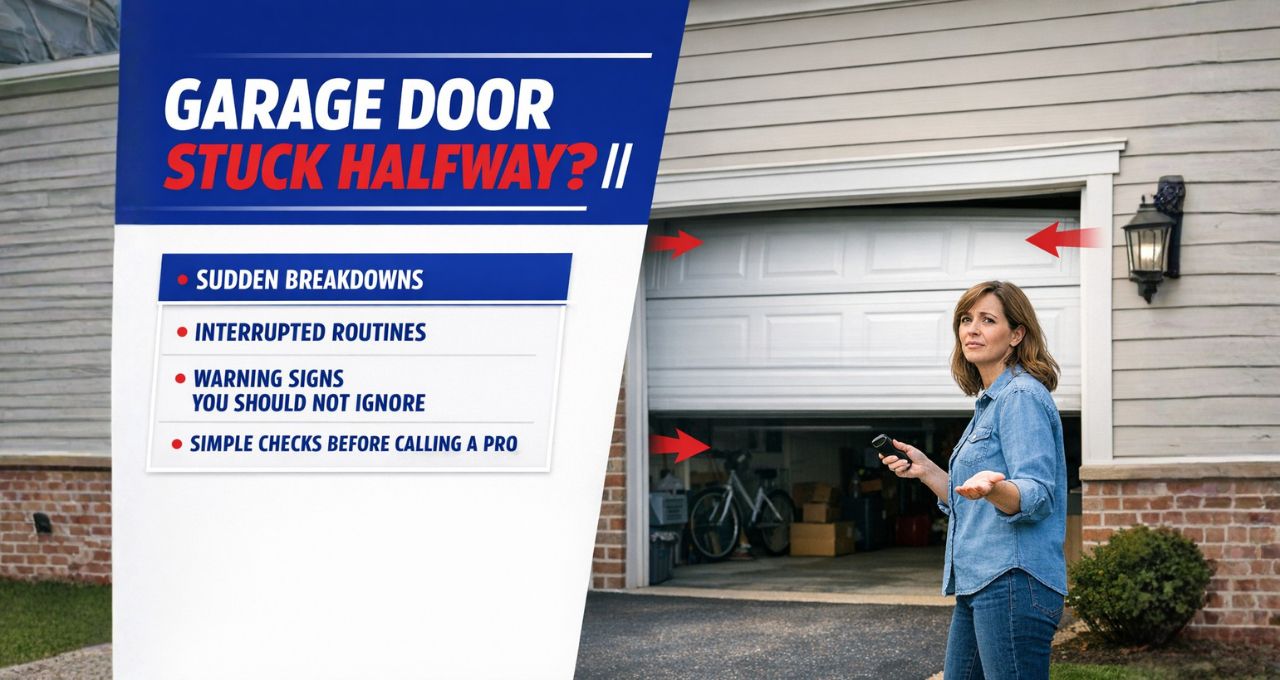
Garage Door Stuck Halfway? Troubleshooting Guide for VA Homes

You don’t really think about your garage door until it stops working.

One moment, it’s part of your routine. You press the remote, it opens, you drive out, and your day moves on. Then suddenly, something changes. You press the button… and nothing happens. Or maybe you hear the motor, but the door refuses to move.

It’s a small moment, but it disrupts everything.

For homeowners across Virginia, this is one of the most common home issues, and it often happens without much warning. What feels like a sudden failure is usually the result of gradual wear that has finally reached its limit.

The key is understanding what your garage door is trying to tell you before the problem gets worse.
Why Your Garage Door Won’t Open

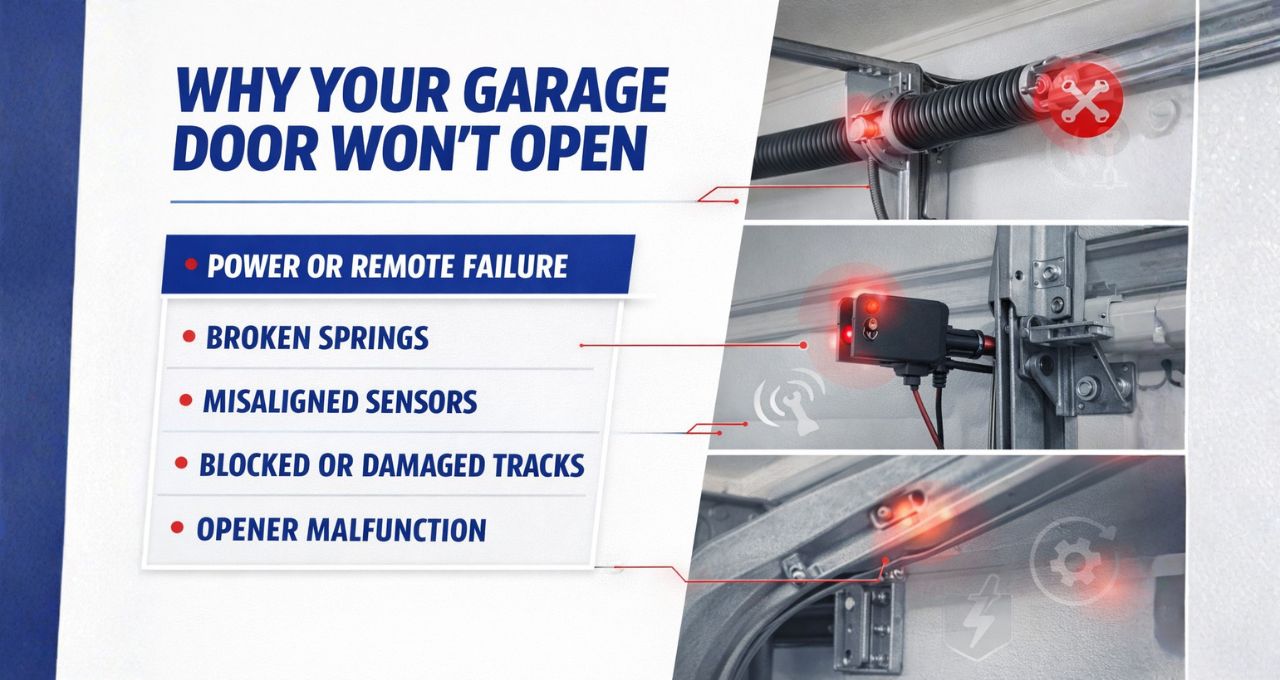
Quick Answer: Why Your Garage Door Won’t Open

If your garage door is not opening, the issue usually comes down to one of these causes:

  • Power supply or remote failure.
  • Broken springs.
  • Misaligned safety sensors.
  • Blocked or damaged tracks.
  • Garage door opener malfunction.

If the door feels unusually heavy or completely stuck, it may require broken garage door repair right away.

Step Back for a Second: What Exactly Is It Doing?

Before jumping into fixes, it helps to pause and observe.

Your garage door rarely fails without leaving clues. The way it behaves can quickly point you in the right direction. 

Ask yourself:

  • Do you hear the opener running?
  • Does the door try to move at all?
  • Did you notice any unusual sounds before it stopped working?

These small details can save time and help you understand whether the issue is simple or something more serious.

When Nothing Happens at All:

If you press the button and there’s no sound, no movement, and no response, the problem is often electrical.

Start with the basics:

  • Check if the opener is plugged in.
  • Look for a tripped circuit breaker.
  • Replace the remote batteries.

It might feel too simple, but many service calls begin with issues like these. Fixing them takes minutes, not hours.

When the Motor Runs but the Door Doesn’t Move:

This is where things shift from minor to mechanical.

You can hear the motor working, which means power is not the issue. But the door itself stays in place.

In most cases, this points to a broken spring.

Garage door springs handle the heavy lifting. When one fails, the opener can no longer raise the door on its own. This is one of the most common reasons homeowners end up needing broken garage door repair, especially after years of regular use.

That Loud Snap You Heard? It Matters

Many homeowners describe the same moment.

A sudden, sharp noise, like something snapping under tension.

That sound is often a torsion spring breaking. It can happen without warning and usually leaves the door completely inoperable.

At that point, the system is no longer safe to use. Trying to force the door open can cause further damage or even injury.

When the Door Starts… Then Stops:

Sometimes the door begins to open or close, then suddenly stops midway.

This type of behavior usually points to alignment or obstruction issues.

You might be dealing with:

  • Bent or misaligned tracks
  • Worn or damaged rollers
  • Objects blocking the path
  • Sensor interference

Even a small obstruction can prevent the system from completing its movement.

When the Door Reverses Unexpectedly:

If the door starts moving but then reverses direction, the safety system is likely stepping in.

Garage doors are designed to stop if something feels wrong.

Check the sensors near the base of the door:

  • Are they aligned properly?
  • Are they clean and free of dust?
  • Is anything blocking the beam?

In many cases, a simple adjustment can resolve the issue.

When the Door Feels Heavier Than Usual:

If you try to lift the door manually and it feels much heavier than normal, that’s a strong warning sign.

It usually means the spring system is no longer supporting the door properly.

This is not just inconvenient; it can be dangerous. A heavy, unbalanced door can fall unexpectedly or put excessive strain on other components.

When Troubleshooting Isn’t Enough:

There’s a point where basic checks stop being helpful.

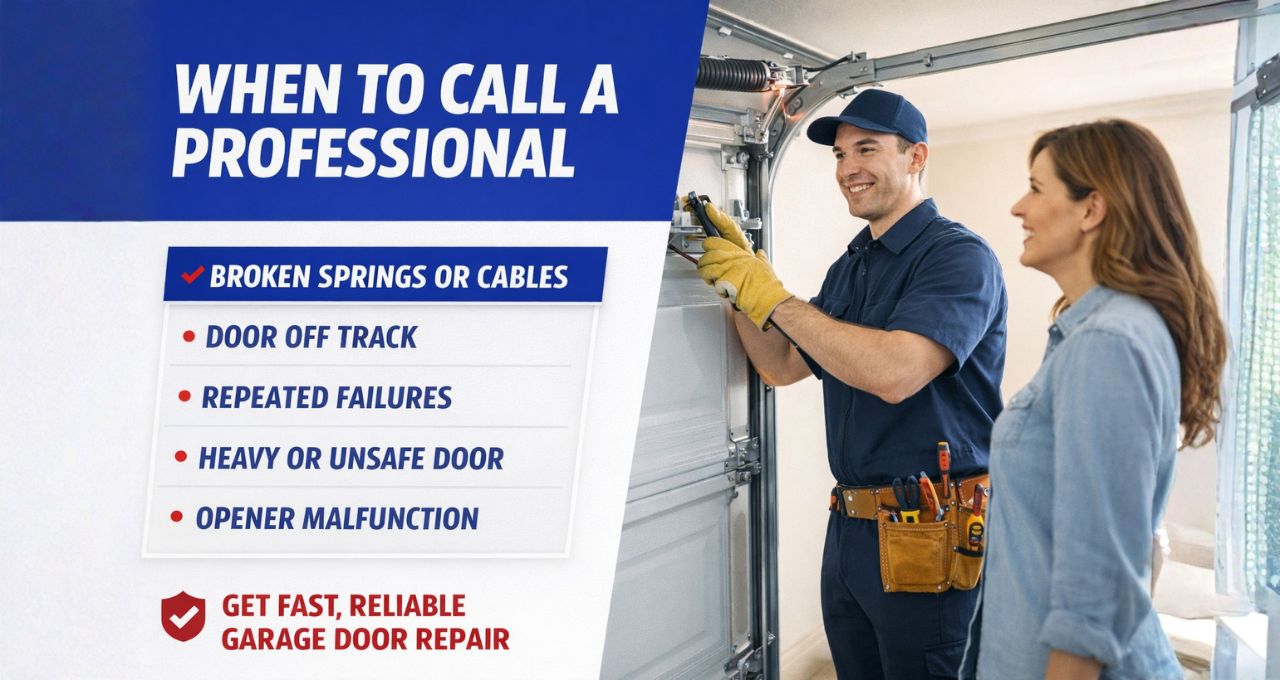
If your issue involves:

  • Broken springs
  • Snapped cables
  • Doors coming off the track
  • Repeated system failures

It’s time to step back.

Garage door systems operate under high tension, and attempting to repair these components without proper tools and training can lead to serious problems.
Garage Repair Expert

Why These Problems Happen Over Time:

Garage doors go through daily use, often multiple times a day.

Over the years:

  • Springs lose tension
  • Parts wear down
  • Alignment shifts
  • Motors work harder than they should

In a place like Virginia, seasonal temperature changes also affect metal components, causing them to expand and contract. This adds stress to the system and speeds up wear.

So when your garage door stops working, it’s usually not random.

It’s the result of long-term strain finally catching up.

Preventing the Next Breakdown:

While you can’t avoid wear completely, you can reduce the chances of sudden failure.

A few simple habits make a difference:

  • Pay attention to new or unusual sounds.
  • Address small issues early.
  • Keep tracks clear and clean.
  • Schedule periodic inspections.

Catching problems early often means smaller repairs and fewer disruptions.

Why Homeowners Turn to Adams Garage Doors LLC:

When a garage door stops working, the situation quickly becomes urgent. Cars get stuck. Schedules shift. Security becomes a concern.

That’s why many homeowners rely on Adams Garage Doors LLC when they need fast and reliable help.

We offer:

  • Same-day and emergency repair services
  • Licensed and insured technicians
  • Clear, upfront pricing
  • Experience with all major garage door systems

More importantly, they focus on identifying the root cause of the issue, not just fixing the surface problem.

Because a quick fix only helps if it lasts.

Quick Troubleshooting Checklist:

Before calling for service, it helps to quickly check:

  • Power supply and remote batteries.
  • Sensor alignment and cleanliness.
  • Any visible obstructions in the track.
  • Unusual sounds or resistance.

If the issue involves heavy lifting or broken components, it’s best not to attempt a fix yourself.

Frequently Asked Questions:

Why won’t my garage door open even though I hear the motor?

This usually means a broken spring or a disconnected mechanism that prevents the door from lifting.

Can I still open my garage door with a broken garage door spring?

It’s not recommended. The door becomes very heavy and unsafe to operate.

What is the most common reason a garage door stops working?

Worn or broken springs are one of the most common causes.

How long does broken garage door repair take?

Most professional repairs can be completed within one to two hours.

Should I try fixing the problem myself?

Basic troubleshooting is fine, but structural or tension-related issues should be handled by a professional.

Final Thought:

Garage doors don’t usually stop working without warning.

They give small signs, subtle changes that are easy to overlook during a busy day.

But those signs matter.

Paying attention early can save time, money, and stress later on.

And when the door finally refuses to open, the right response isn’t guesswork.

It’s getting the right help, at the right time, to fix the problem properly.

Book Your Garage Door RepairToday

The 268% Equity Surge: How Sellers in Virginia Can Maximize Property ROI

Something unusual has happened in the housing market.


Many homeowners across Virginia are sitting on record equity. Homes purchased just a few years ago are now worth significantly more. Some sellers have seen value increases close to 268 percent in certain neighborhoods.


That sounds exciting. It is.


But here’s the catch.


Equity alone does not guarantee profit. The way you prepare your home before listing can change your final sale price by thousands. Sometimes more.


And one feature plays a bigger role than most sellers expect.


The garage door.


Yes. That large panel at the front of your home. Buyers notice it instantly. It shapes their first impression before they even walk inside.


Let’s break down how sellers can protect their profit and make smart decisions before listing.


Understanding the Equity Surge in Virginia


Home values increased fast for several reasons.


Low interest rates. Limited housing supply. Remote work migration. Rising construction costs.


All of these pushed prices upward.


If you bought before 2020, you likely gained equity without doing much at all.


That creates opportunity. But also uncertainty.


Should you sell now? Wait longer? Invest in upgrades?


The answer depends on timing and preparation.


Why Timing Matters More Than You Think


Most people focus on the market. Interest rates. Buyer demand. Seasonal trends.


Those things matter. Sure.


But buyers react emotionally first. Logic comes later.


If your home feels well-maintained, buyers feel confident. Offers come stronger. Negotiations stay shorter.


If something looks worn or neglected, hesitation starts. Doubt grows. Offers drop.


Preparation controls perception. Perception controls price.


Smart Pre-Sale Upgrades With the Highest Return


Here’s good news.


You do not need major renovations to increase value.


In fact, smaller targeted improvements by a reliable garage door repair company often produce better returns.


Common high-impact upgrades include:

  • Exterior touch-ups
  • Fresh paint
  • Updated lighting
  • Landscaping cleanup
  • Garage door repairs or upgrades
  • Notice the pattern. First impressions.


Buyers decide emotionally within seconds of arriving.


That first moment matters more than sellers realize.


Why the Garage Door Has Such a Big Impact


garage door repair company

Think about it.


The garage door can take up 30 percent or more of your home’s front exterior. It is one of the largest visual elements buyers see.


If it looks old, dented, or noisy, buyers assume maintenance problems.


If it moves smoothly and quietly, buyers assume the home has been cared for.


That shift in perception is powerful.


This is why many sellers work with specialists like Adams Garage Doors LLC before listing. Their experience helps homeowners decide whether repair, adjustment, or replacement will create the best return.


Many people start by searching for the best garage door repair company because something is broken. But sellers need something different. They need a strategy. They need guidance on what actually increases property value.


Cost vs Return: What Sellers Usually Experience


Let’s talk numbers in simple terms.


Not exact prices. Just realistic outcomes.


Minor Mechanical Repairs


  • Cost: Moderate
  • Return: Often high


Fixing springs, rollers, or alignment restores smooth operation. Buyers notice quiet movement immediately.


Cosmetic Improvements


  • Cost: Low to moderate
  • Return: High


New paint, hardware upgrades, or panel fixes can refresh the entire exterior look.


Full Replacement


  • Cost: Higher upfront
  • Return: Strong when the door looks outdated


A new modern door can dramatically change curb appeal and buyer perception.


A professional inspection helps determine what makes financial sense.


Small Problems Create Big Buyer Doubts


Here’s something sellers rarely consider.


Buyers do not just see problems. They imagine future costs.


A garage door that jerks or makes loud sounds creates anxiety.


Common warning signs include:

  • Grinding noises
  • Slow movement
  • Crooked alignment
  • Visible rust or dents
  • Sudden stops while opening


These issues may be simple to fix. But during a showing, they feel bigger.


Emotion takes over. Buyers start negotiating harder.


Addressing issues early protects your leverage.


Seller Mistakes That Reduce Profit


Some patterns show up again and again.


  • Waiting Until Inspection Time

Last-minute repairs reduce negotiating power. Buyers gain control.


  • Spending Too Much on Renovations

Large projects rarely return full cost before selling.


  • Ignoring Exterior Appearance

Interior upgrades mean little if the outside looks neglected.


  • Hiring the Wrong Contractor

Poor workmanship creates new problems. Many homeowners begin searching for the best garage door repair company only after a bad experience. Starting with a trusted expert avoids that risk entirely.


Market Timing for Virginia Sellers


Spring and early summer often bring more buyers. Families prefer moving before school starts.


But timing is not everything.


A well-prepared home in winter can outperform a poorly prepared home in peak season.


Condition matters more than calendar.


Local insight also matters. Different counties across Virginia move at different speeds. Suburban growth areas may have stronger demand cycles than rural zones.


Understanding your local market helps you plan smarter.


Why Local Expertise Makes a Difference

Garage doors are mechanical systems. Climate affects them.


Humidity. Temperature swings. Seasonal expansion and contraction.


Local technicians understand these factors better than national chains.


They also understand neighborhood design trends and buyer expectations.


If you are considering upgrades, reviewing modern design ideas can help.


Seeing what buyers respond to makes decision-making easier.


How Adams Garage Doors LLC Helps Sellers Prepare


Selling a home can feel overwhelming. Too many decisions. Too many opinions.


Adams Garage Doors LLC focuses on clarity.


Instead of pushing unnecessary replacements, we evaluate what will produce the best return.


Services often include:

  • Garage door repairs
  • Spring replacement
  • Quiet operation adjustments
  • Safety inspections
  • Visual upgrades
  • Full replacement when beneficial


Their role is more advisor than vendor.


Many homeowners start by looking for the best garage door repair company. What they actually need is someone who understands resale value, buyer psychology, and timing.


That combination makes preparation easier and less stressful.


best garage door repair company

ROI Planning Checklist Before Listing


If you plan to sell within the next year, start here.


Exterior First


  • Inspect the garage door
  • Repair visible damage
  • Clean surfaces
  • Refresh paint if needed


Mechanical Reliability


  • Replace worn springs
  • Lubricate moving parts
  • Test safety sensors
  • Confirm smooth operation


Visual Consistency


  • Match hardware finishes
  • Align colors with exterior design
  • Improve driveway surroundings


Professional Evaluation


  • Get an expert assessment
  • Compare repair vs replacement
  • Prioritize highest-return updates


Simple steps. Big difference.


Frequently Asked Questions


  • Is it worth fixing a garage door before selling?

Yes. A working garage door improves buyer confidence and reduces inspection concerns. Repairs usually cost far less than the value they protect.


  • How much does curb appeal really matter?

A lot. Buyers often decide how they feel about a home within seconds. Strong exterior presentation increases interest and offers strength.


  • Should I repair or replace my garage door?

It depends on the condition. Minor mechanical issues often need repairs. Severe cosmetic wear or outdated styles may justify replacement.


  • What upgrades give the fastest return?

Exterior improvements, garage door updates, lighting upgrades, and landscaping usually provide a strong ROI with manageable costs.


  • When is the best time to sell in Virginia?

Spring and early summer are popular. But preparation and pricing strategy often matter more than the season alone.


  • Can garage door problems affect negotiations?

Yes. Buyers use visible defects to request concessions. Fixing issues early protects your negotiating position.


Final Thoughts: Protect the Equity You Built


Selling a home is more than a transaction. It is a transition.


Many Virginia homeowners now have significant equity. That creates opportunity. But maximizing return requires smart preparation.


Small improvements. Strategic repairs. Strong first impressions.


The garage door sits right at the center of that equation.


If you are planning to sell within the next 6 to 12 months, getting professional input early can remove uncertainty and help you move forward with confidence.


A short consultation today can protect thousands in potential profit tomorrow.