Adams Garage Doors LLC

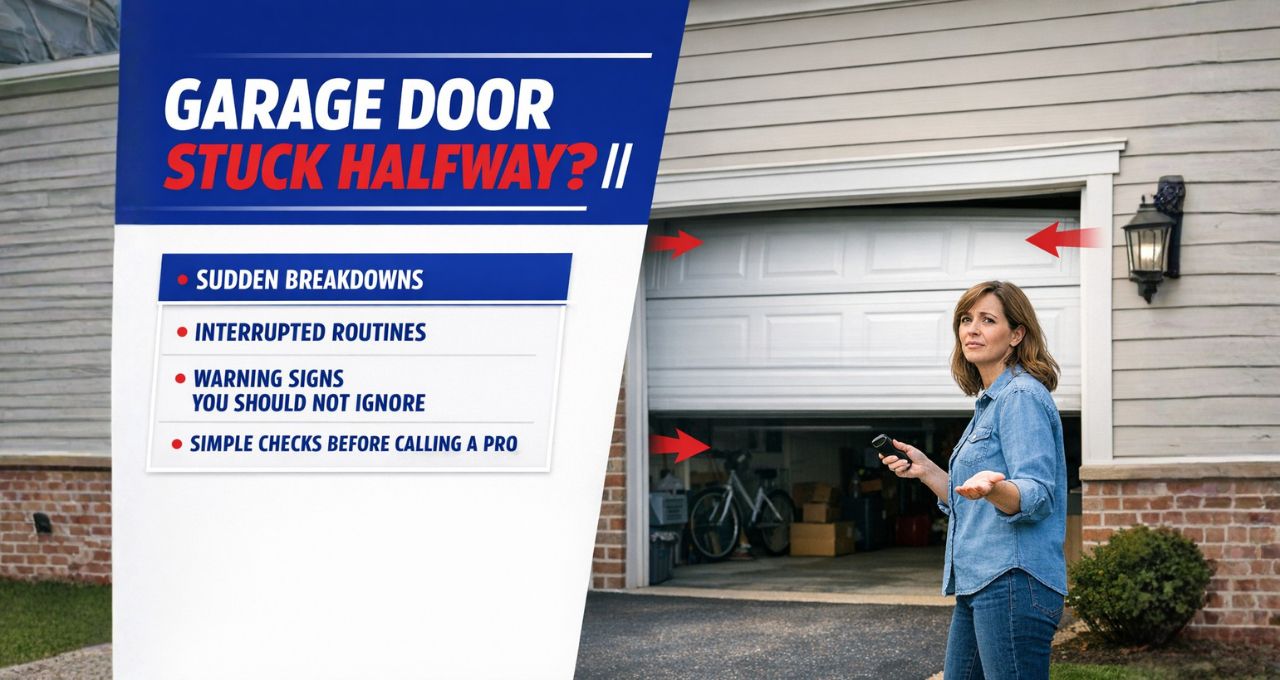
Garage Door Stuck Halfway? Troubleshooting Guide for VA Homes

You don’t really think about your garage door until it stops working.

One moment, it’s part of your routine. You press the remote, it opens, you drive out, and your day moves on. Then suddenly, something changes. You press the button… and nothing happens. Or maybe you hear the motor, but the door refuses to move.

It’s a small moment, but it disrupts everything.

For homeowners across Virginia, this is one of the most common home issues, and it often happens without much warning. What feels like a sudden failure is usually the result of gradual wear that has finally reached its limit.

The key is understanding what your garage door is trying to tell you before the problem gets worse.
Why Your Garage Door Won’t Open

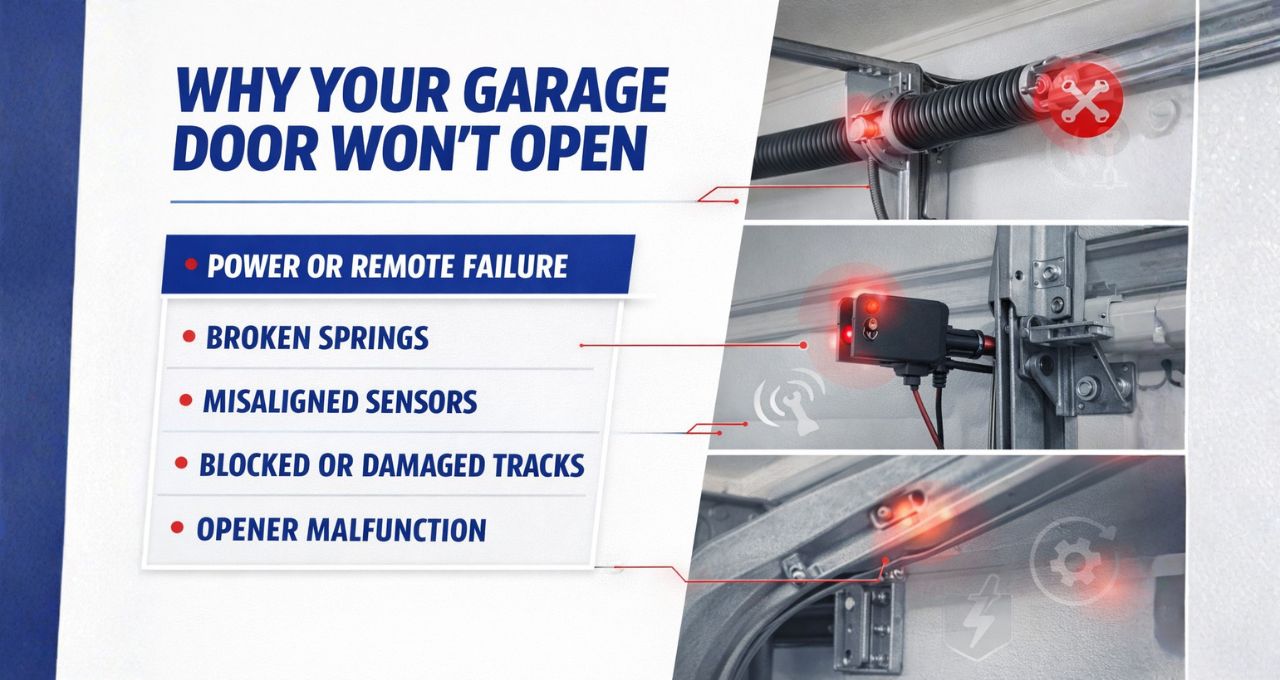
Quick Answer: Why Your Garage Door Won’t Open

If your garage door is not opening, the issue usually comes down to one of these causes:

  • Power supply or remote failure.
  • Broken springs.
  • Misaligned safety sensors.
  • Blocked or damaged tracks.
  • Garage door opener malfunction.

If the door feels unusually heavy or completely stuck, it may require broken garage door repair right away.

Step Back for a Second: What Exactly Is It Doing?

Before jumping into fixes, it helps to pause and observe.

Your garage door rarely fails without leaving clues. The way it behaves can quickly point you in the right direction. 

Ask yourself:

  • Do you hear the opener running?
  • Does the door try to move at all?
  • Did you notice any unusual sounds before it stopped working?

These small details can save time and help you understand whether the issue is simple or something more serious.

When Nothing Happens at All:

If you press the button and there’s no sound, no movement, and no response, the problem is often electrical.

Start with the basics:

  • Check if the opener is plugged in.
  • Look for a tripped circuit breaker.
  • Replace the remote batteries.

It might feel too simple, but many service calls begin with issues like these. Fixing them takes minutes, not hours.

When the Motor Runs but the Door Doesn’t Move:

This is where things shift from minor to mechanical.

You can hear the motor working, which means power is not the issue. But the door itself stays in place.

In most cases, this points to a broken spring.

Garage door springs handle the heavy lifting. When one fails, the opener can no longer raise the door on its own. This is one of the most common reasons homeowners end up needing broken garage door repair, especially after years of regular use.

That Loud Snap You Heard? It Matters

Many homeowners describe the same moment.

A sudden, sharp noise, like something snapping under tension.

That sound is often a torsion spring breaking. It can happen without warning and usually leaves the door completely inoperable.

At that point, the system is no longer safe to use. Trying to force the door open can cause further damage or even injury.

When the Door Starts… Then Stops:

Sometimes the door begins to open or close, then suddenly stops midway.

This type of behavior usually points to alignment or obstruction issues.

You might be dealing with:

  • Bent or misaligned tracks
  • Worn or damaged rollers
  • Objects blocking the path
  • Sensor interference

Even a small obstruction can prevent the system from completing its movement.

When the Door Reverses Unexpectedly:

If the door starts moving but then reverses direction, the safety system is likely stepping in.

Garage doors are designed to stop if something feels wrong.

Check the sensors near the base of the door:

  • Are they aligned properly?
  • Are they clean and free of dust?
  • Is anything blocking the beam?

In many cases, a simple adjustment can resolve the issue.

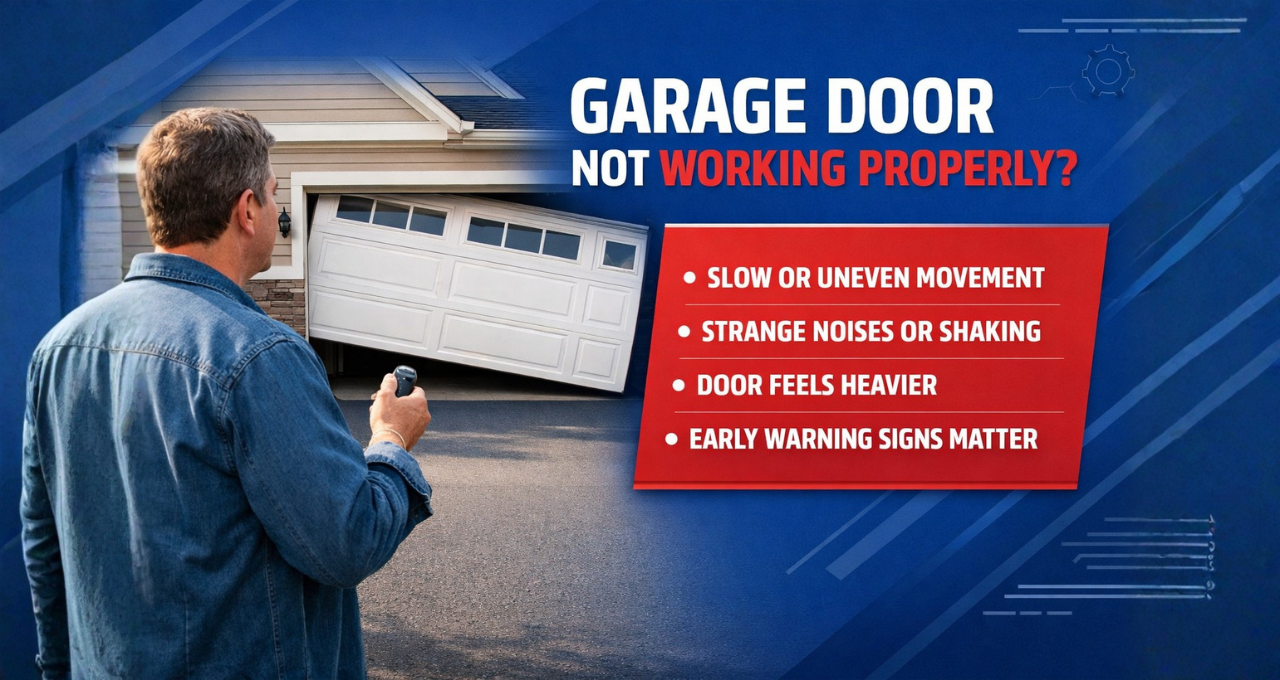
When the Door Feels Heavier Than Usual:

If you try to lift the door manually and it feels much heavier than normal, that’s a strong warning sign.

It usually means the spring system is no longer supporting the door properly.

This is not just inconvenient; it can be dangerous. A heavy, unbalanced door can fall unexpectedly or put excessive strain on other components.

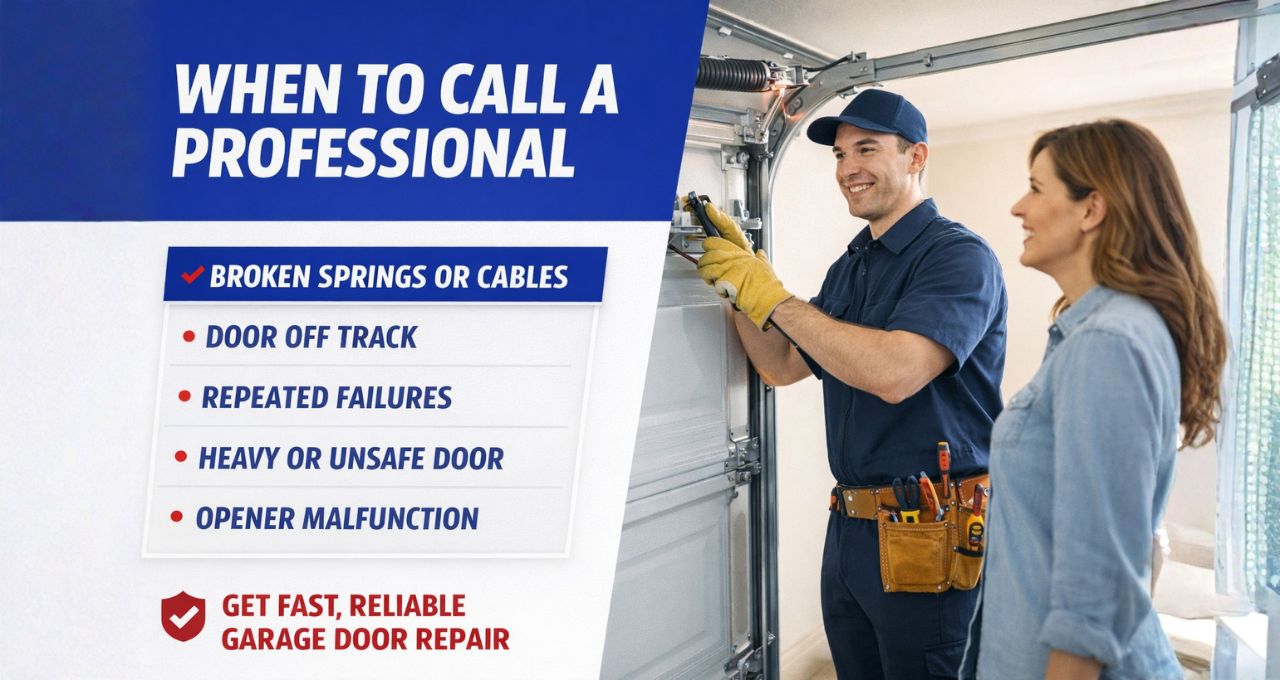
When Troubleshooting Isn’t Enough:

There’s a point where basic checks stop being helpful.

If your issue involves:

  • Broken springs
  • Snapped cables
  • Doors coming off the track
  • Repeated system failures

It’s time to step back.

Garage door systems operate under high tension, and attempting to repair these components without proper tools and training can lead to serious problems.
Garage Repair Expert

Why These Problems Happen Over Time:

Garage doors go through daily use, often multiple times a day.

Over the years:

  • Springs lose tension
  • Parts wear down
  • Alignment shifts
  • Motors work harder than they should

In a place like Virginia, seasonal temperature changes also affect metal components, causing them to expand and contract. This adds stress to the system and speeds up wear.

So when your garage door stops working, it’s usually not random.

It’s the result of long-term strain finally catching up.

Preventing the Next Breakdown:

While you can’t avoid wear completely, you can reduce the chances of sudden failure.

A few simple habits make a difference:

  • Pay attention to new or unusual sounds.
  • Address small issues early.
  • Keep tracks clear and clean.
  • Schedule periodic inspections.

Catching problems early often means smaller repairs and fewer disruptions.

Why Homeowners Turn to Adams Garage Doors LLC:

When a garage door stops working, the situation quickly becomes urgent. Cars get stuck. Schedules shift. Security becomes a concern.

That’s why many homeowners rely on Adams Garage Doors LLC when they need fast and reliable help.

We offer:

  • Same-day and emergency repair services
  • Licensed and insured technicians
  • Clear, upfront pricing
  • Experience with all major garage door systems

More importantly, they focus on identifying the root cause of the issue, not just fixing the surface problem.

Because a quick fix only helps if it lasts.

Quick Troubleshooting Checklist:

Before calling for service, it helps to quickly check:

  • Power supply and remote batteries.
  • Sensor alignment and cleanliness.
  • Any visible obstructions in the track.
  • Unusual sounds or resistance.

If the issue involves heavy lifting or broken components, it’s best not to attempt a fix yourself.

Frequently Asked Questions:

Why won’t my garage door open even though I hear the motor?

This usually means a broken spring or a disconnected mechanism that prevents the door from lifting.

Can I still open my garage door with a broken garage door spring?

It’s not recommended. The door becomes very heavy and unsafe to operate.

What is the most common reason a garage door stops working?

Worn or broken springs are one of the most common causes.

How long does broken garage door repair take?

Most professional repairs can be completed within one to two hours.

Should I try fixing the problem myself?

Basic troubleshooting is fine, but structural or tension-related issues should be handled by a professional.

Final Thought:

Garage doors don’t usually stop working without warning.

They give small signs, subtle changes that are easy to overlook during a busy day.

But those signs matter.

Paying attention early can save time, money, and stress later on.

And when the door finally refuses to open, the right response isn’t guesswork.

It’s getting the right help, at the right time, to fix the problem properly.
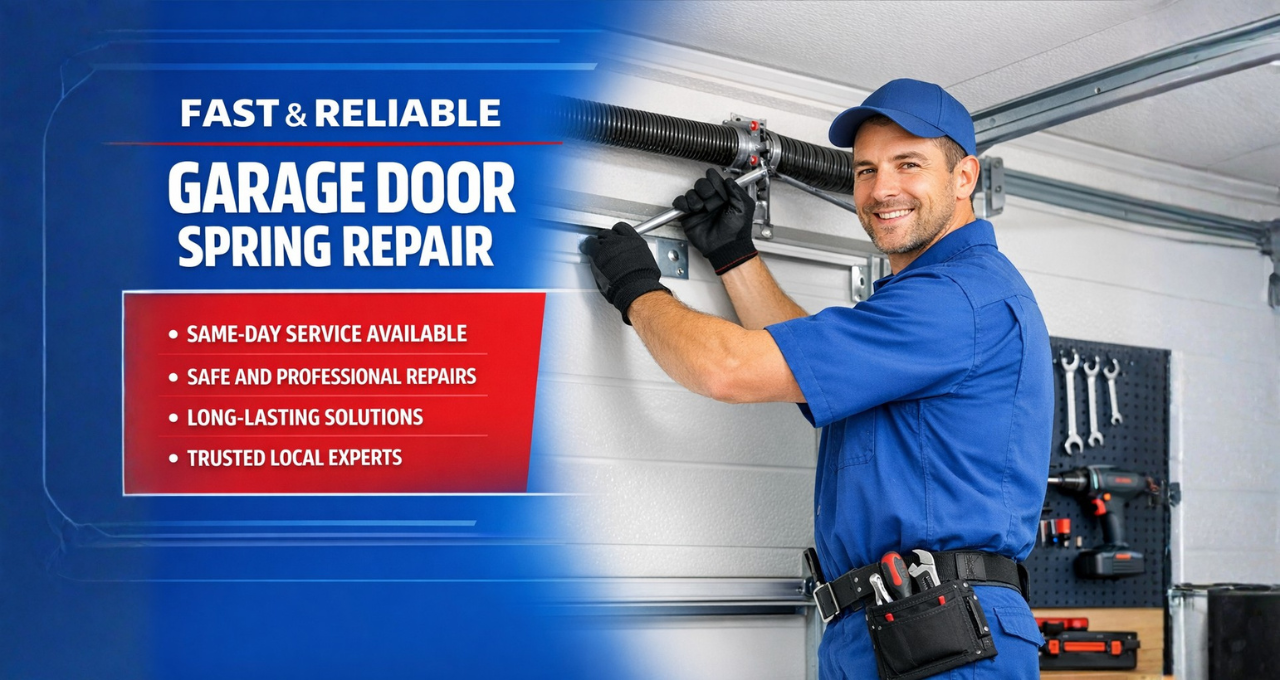
Book Your Garage Door RepairToday

Garage Door Spring Problems: What Happens If You Ignore Them?

No one plans for a garage door failure. It doesn’t show up on your to-do list. It doesn’t send reminders.

It just waits.

Then one day, you press the remote… and something feels off.

The door lifts more slowly than usual. It hesitates. Maybe it jerks halfway up.

You pause. You notice it. Then you move on. Because it still works. Mostly.

That “mostly” is where the problem begins.

Across homes in Woodbridge, this is how serious issues start. Quietly. Gradually. Easy to ignore.

Until they are not.

This is why garage door spring repair in Woodbridge often turns into urgent, expensive repairs.

Local teams like Adams Garage Doors LLC deal with this exact situation every day. A small delay. A missed sign. Then a full breakdown.

The truth is simple.

Garage door problems don’t get better with time.

They build pressure.

The Part You Never See, But Always Rely On

Garage door springs are not visible unless you look for them.

But they do most of the work.

They carry the weight of the door. They control the movement. They keep everything balanced.

Without them, the system fails.

Think of it this way. When your garage door opens smoothly, it is not the motor doing all the work. It is the springs doing most of it.

The motor just guides. So when springs weaken, the entire system starts compensating.

And that’s where trouble begins.

When “It Still Works” Is a Warning Sign

Most homeowners don’t act when something feels slightly off.

Because the door still opens. Still closes. But here’s what is actually happening behind the scenes:

  • The spring is losing tension.
  • The opener is working harder.
  • The cables are under uneven load.
  • The system is slowly going out of balance.

You may not see it. But the system feels it. And systems under stress don’t last long.

Garage Door

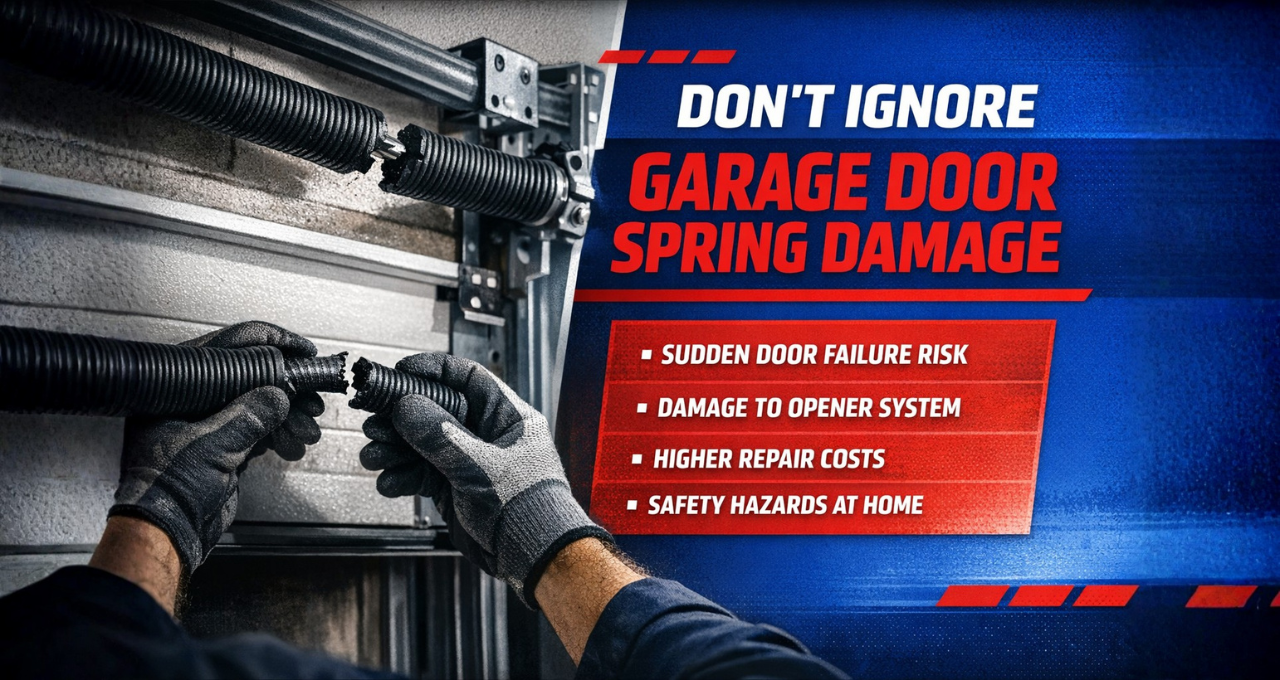
The Real Risk: It Fails All At Once

Garage door springs don’t usually fail gradually in a visible way.

They fail suddenly. A loud snap. A sharp release of tension. Then nothing. The door won’t lift. Or worse, it drops.

This is where ignoring the problem becomes dangerous.

What Ignoring Garage Door Spring Repair Really Leads To

Let’s go beyond the obvious.

Because the real risks are often hidden.

Sudden Weight Drop

A garage door is heavy. Very heavy. When a spring breaks, that weight is no longer supported. The door can come down fast.

If a car is underneath, it gets damaged.

If someone is nearby, the risk is much worse.

Pressure on the Opener System

Here’s something most homeowners don’t realize. When the spring weakens, the opener takes on extra work.

It strains. It overheats. It wears out faster. Over time, that leads to motor failure. Now you are not just fixing a spring. You are replacing an opener.

That is a much bigger expense.

Structural Damage to the Door

Uneven tension causes uneven movement. The door may start to tilt slightly. Tracks may shift. Panels may bend.

At first, it looks minor. But repeated stress changes the structure.

That can lead to long-term damage that cannot be reversed with simple repairs.

Security Gaps You Didn’t Expect

If the door does not close fully, your garage becomes vulnerable. And most garages are not empty.

They store tools. Equipment. Sometimes, direct access to the house. A faulty spring can quietly create a security gap. And you may not notice it until it’s too late.

Repair Costs That Multiply

This is where small problems become expensive ones. A single spring repair is manageable.

But once other parts get involved:

  • Motor replacement
  • Track repair
  • Cable replacement
  • Door realignment

Costs increase quickly. Delaying repair is rarely a cost-saving decision.

Signs Your Garage Door Is Trying To Warn You

Your garage door communicates. Just not with words.

Watch for these signs:

  • The door feels heavier than usual
  • Movement is slower
  • You hear new noises
  • The door shakes slightly
  • It opens unevenly
  • The opener sounds strained

These are not random issues. They are early warnings.

Ignoring them does not make them go away.

Why This Is Not a DIY Situation

It’s easy to think, “I’ll just fix it this weekend.” But garage door springs are under high tension.

That tension is what lifts the door. Releasing or adjusting it without proper tools is risky.

Injuries happen when:

  • Springs snap during handling
  • Tools slip under tension
  • Components release unexpectedly

Even experienced technicians follow strict safety steps. This is not about skill alone. It is about controlled handling.

What Professional Repair Actually Involves

From the outside, it may look simple.

Replace the spring. Done.

But proper repair goes deeper.

A trained technician will:

  • Inspect the entire system
  • Check balance and alignment
  • Replace the spring safely
  • Adjust tension correctly
  • Test door performance
  • Ensure long-term stability

Professionals do not just fix the visible issue. They restore system balance. That is what prevents repeat problems.

A Situation Many Homeowners Experience

Let’s walk through a real scenario.

A homeowner notices the garage door feels heavier. It still works, so they ignore it. A week later, the opener starts making noise. They ignore that, too.

Then one morning, the spring snaps.

Now:

  • The door won’t open
  • The opener stops working
  • The system is off balance

What started as a small issue now involves multiple repairs. This pattern is common. And avoidable.

Why Local Experience Makes a Difference

Not all repairs are the same.

Local technicians understand:

  • Weather impact on components
  • Common door systems in the area
  • Typical wear patterns
  • Faster response routes

Working with a trusted local provider makes the process smoother.

Teams like Adams Garage Doors LLC bring that local understanding. We have seen these issues before. Many times. That experience speeds up diagnosis and repair.

Garage Door Spring

When It Becomes an Emergency

Some situations should not wait.

Call for help immediately if:

  • You hear a loud snap
  • The door won’t open at all
  • The door is stuck halfway
  • Cables are hanging loose
  • The door feels unsafe to use

These are not “wait and see” moments. They require immediate attention. Because the longer you wait, the higher the risk.

How to Avoid Getting to That Point

Prevention is simple. But often overlooked.

A few basic habits can make a big difference:

  • Schedule yearly inspections
  • Lubricate moving parts
  • Pay attention to new noises
  • Fix small issues early
  • Test the door balance occasionally

Garage door systems are mechanical. They need care. Regular attention keeps them reliable.

Frequently Asked Questions

  • How long do garage door springs last?

Most springs last between 7 and 10 years, depending on usage and maintenance.

  • Can I keep using my garage door if the spring is weak?

It is not recommended. It puts stress on other parts and increases the risk of sudden failure.

  • Should both springs be replaced together?

Yes. If one fails, the other is usually close to wearing out.

  • How long does spring repair take?

In most cases, a professional can complete the repair within a couple of hours.

  • Is it risky to delay repair?

Yes. Delaying increases the chance of damage, higher costs, and safety issues.

Final Thought: Small Delay, Big Consequences

Garage door spring issues don’t demand attention immediately. That’s what makes them easy to ignore.

But the system keeps working. Under pressure. Under strain.

Until it can’t. Then everything stops. If something feels off, it usually is.

Acting early is not overreacting. It is being smart.

When It’s Time to Fix It, Work With Someone You Trust

This is where choosing the right help matters.

With Adams Garage Doors LLC, homeowners are not just getting a quick fix. They are getting a team that understands how to solve the problem properly the first time.

What sets us apart?

  • Local experience in Woodbridge and Northern Virginia
  • Licensed and insured technicians who prioritize safety
  • Same-day service for urgent spring issues
  • High-quality, warranty-backed parts
  • Clear, upfront pricing with no surprises

More importantly, they focus on long-term reliability.

Not just replacing a spring. But making sure your entire system is balanced, safe, and built to last.

So you are not dealing with the same problem again a few weeks later.

Garage Door Spring Repair in Dumfries: What Technicians Look For That You Might Miss

Garage doors look simple. You press a button, the door lifts, and life moves on. Easy, right?

Well… not exactly.

Behind that smooth movement sits a powerful spring system doing most of the heavy lifting. When something goes wrong, it often starts with small warning signs that most homeowners overlook. That’s why garage door spring repair in Dumfries is one of the most requested services for homeowners dealing with sudden door failures.

Here’s the thing. Technicians see problems long before they turn into a complete breakdown.

Let’s break down what they notice that you might miss.

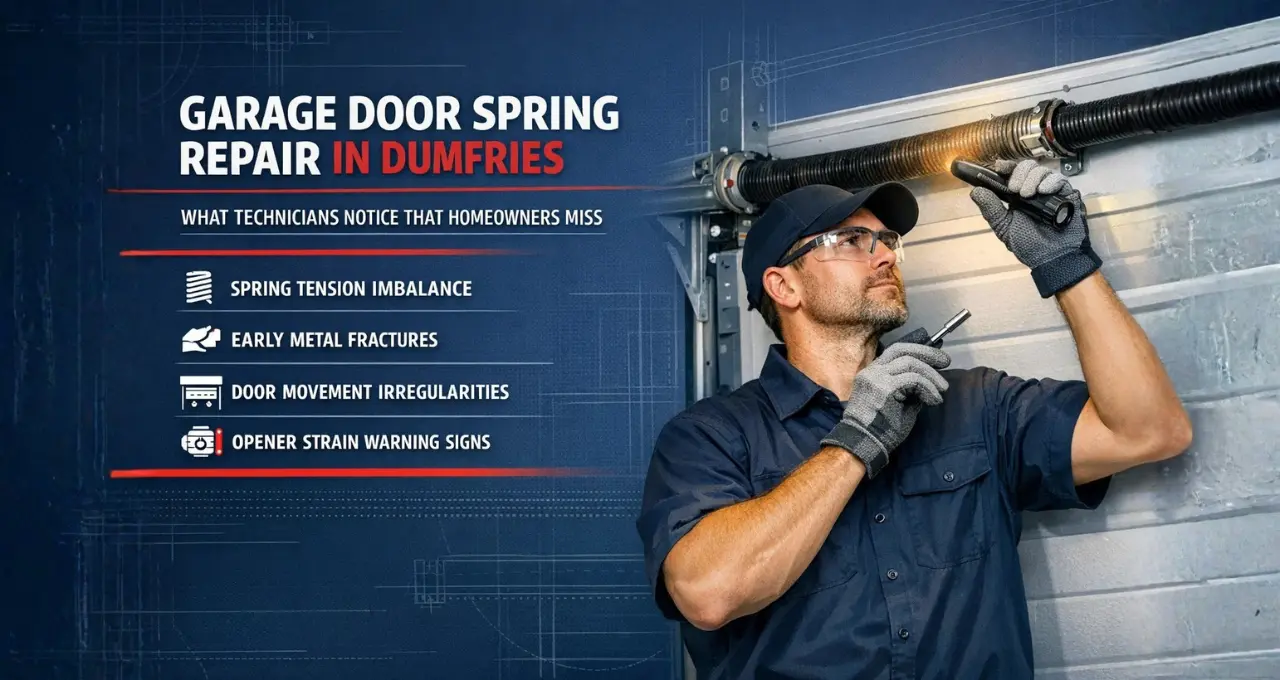
First, The Spring Tension Tells a Story


Pss… this is a big one.

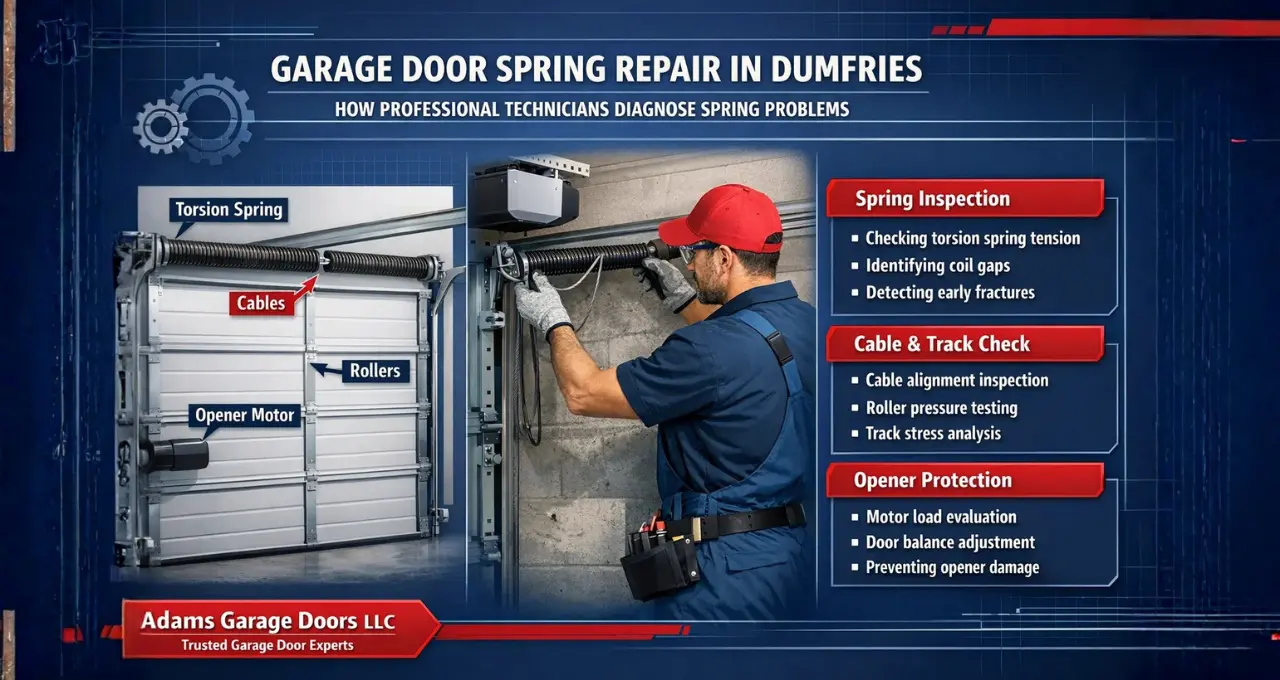
Garage door springs are designed to hold intense tension. Over time, that tension slowly changes due to regular use. A trained technician performing garage door spring repair checks whether the spring is still balancing the door properly.

If the tension is off, you might notice:

  • The door feels unusually heavy
  • It stops halfway when opening
  • The opener struggles or makes loud noises

Technicians measure the spring balance carefully. Even a small imbalance can stress the entire system.

Tiny Cracks in the Spring


Oh… these are easy to miss.

Springs don’t usually snap without warning. Small fractures often appear first. During an inspection, professionals closely examine the metal coils for early signs of fatigue.

Those cracks might look harmless, but they often mean the spring is nearing failure. Catching them early through Dumfries’ garage door spring repair can prevent a sudden break that leaves your door stuck shut.

Cable Alignment and Wear

Garage doors rely on cables working alongside the springs. If those cables begin to shift, fray, or loosen, the spring system becomes unstable.

Technicians check for:

  • Loose or misaligned cables
  • Frayed strands
  • Uneven tension on both sides of the door

These issues often develop quietly. Homeowners rarely notice until the door starts tilting or jerking during movement.

garage door spring

Roller and Track Pressure


Here’s something interesting.

When springs weaken, the door’s weight shifts to other components like rollers and tracks. Over time, this added pressure creates friction and noise.

During garage door spring repair, local Dumfries technicians inspect whether the door is gliding smoothly along the track or struggling against resistance.

If the rollers look worn or the track shows stress marks, it often points back to a spring problem.

Opener Strain (Yes, It Matters)


You might think your garage door opener is the issue.

But sometimes… It’s not.

When springs lose their strength, the opener has to work much harder than it should. That extra load slowly damages the motor.

Professionals from Adams Garage Doors LLC often discover that opener problems are actually caused by worn springs. Fixing the spring restores balance and prevents unnecessary opener replacement.

Smart move, right?

Why Professional Inspection Matters

Springs in the garage doors are under high tension. Attempting to check them or manipulate them without the right tools may be harmful.

This is the reason why most homeowners find Adams Garage Doors LLC to offer good garage door spring repair. The seasoned technicians know the right place to look and what to do to rectify minor problems before they develop into critical fixes.

They not only check the spring, but the entire system.

And that fussiness of his really counts.

And honestly… that attention to detail makes all the difference.

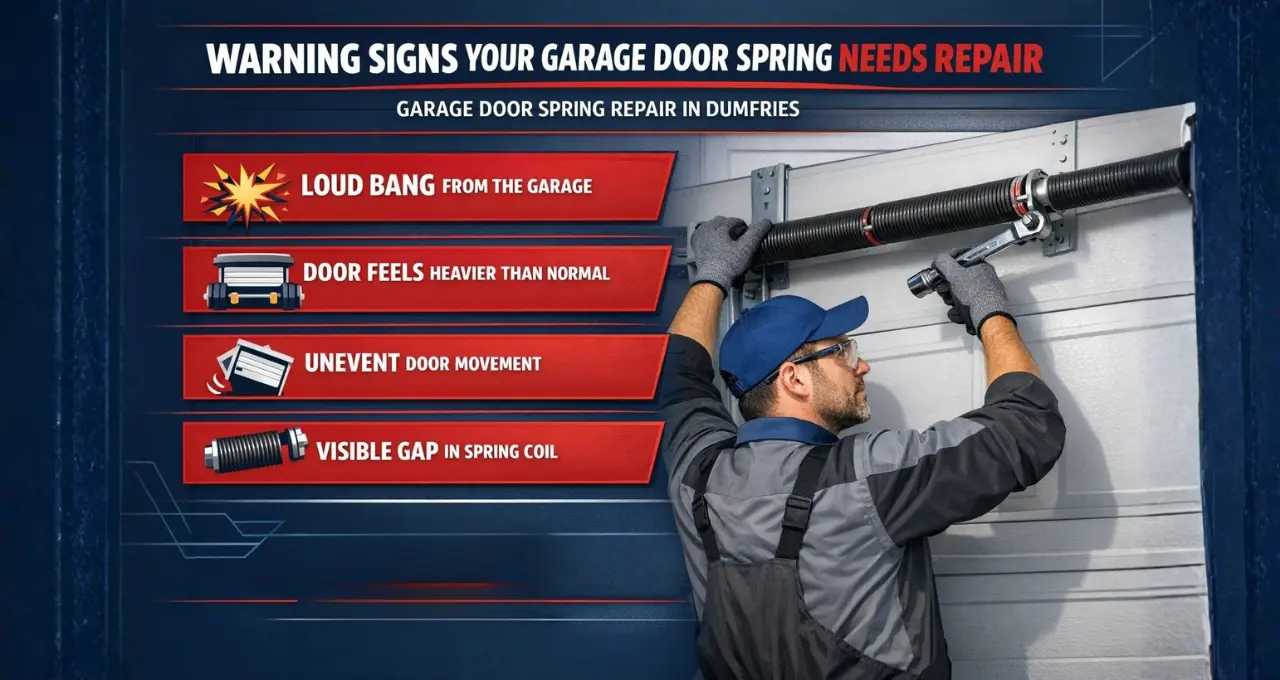
Quick Signs You Shouldn’t Ignore

garage door spring repair in Dumfries

Not sure if your spring needs attention? Watch for these red flags:

  • A loud bang from the garage
  • The door suddenly feels heavier
  • Uneven door movement
  • Slower opening speed
  • Visible gaps in the spring coil

If you notice any of these, it may be time for garage door spring repair in Dumfries before the door stops working entirely.

Final Thought

Garage doors work hard every day. Most people never think about the spring system until something breaks.

But a trained technician notices the early warning signs most homeowners miss.

So if your door starts acting a little… off… don’t ignore it. A quick inspection from Adams Garage Doors LLC can keep your garage door running smoothly and safely for years to come.

FAQs


What are the first signs my garage door spring might need repair?

A loud snap, a heavy door, uneven movement, or a visible gap in the spring coil are common early warning signs.

Is it safe to use my garage door if the spring is damaged?

No, using the door with a damaged spring can strain the opener and may cause the door to drop suddenly.

How quickly can a technician fix a garage door spring issue?

Most garage door spring repairs can be completed within about an hour after proper inspection.