
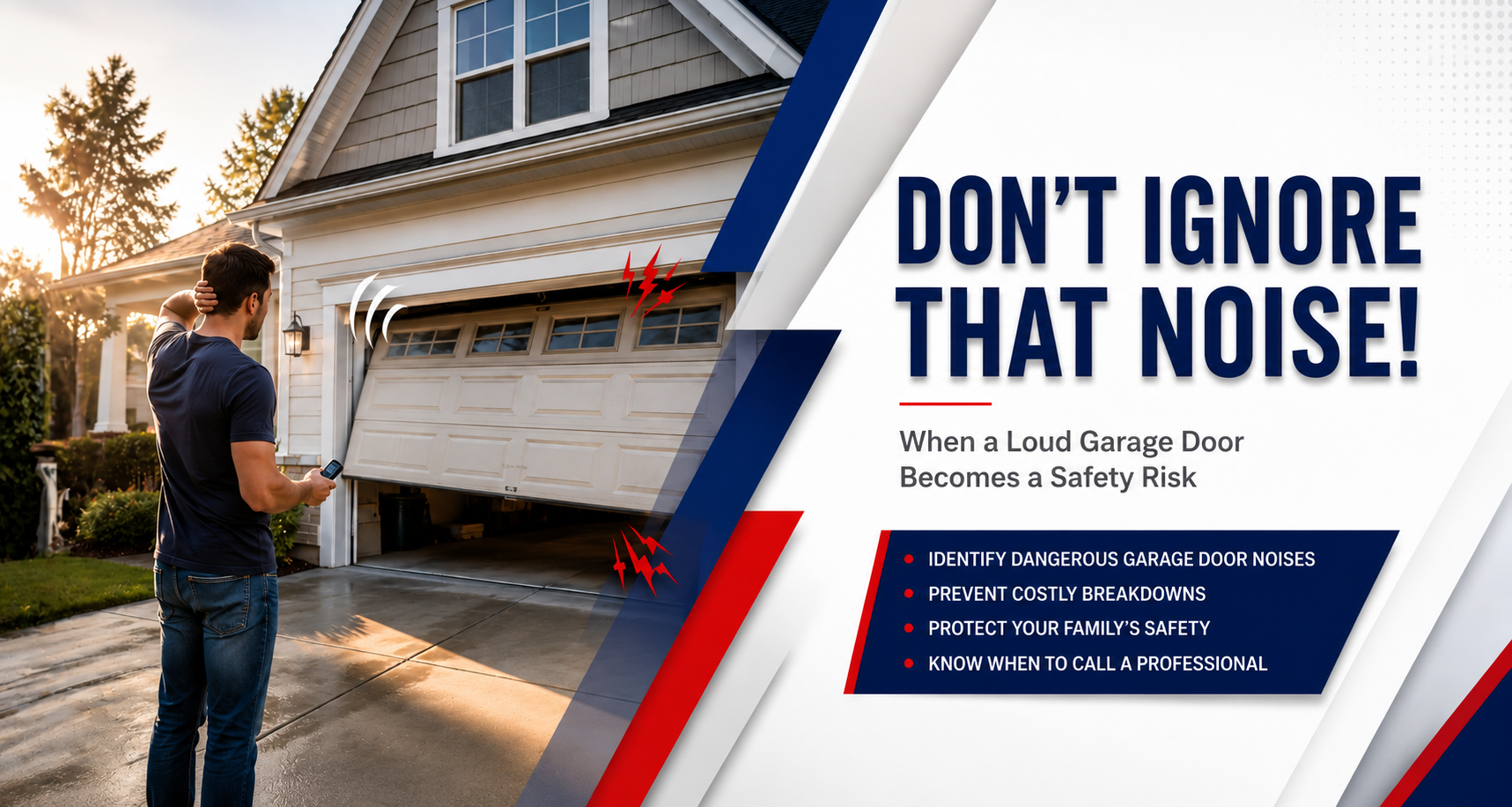
Have you ever heard a loud bang from the garage and stopped what you were doing?
For a moment, you wonder if something heavy fell over. You walk outside expecting to find a broken shelf or a tipped-over storage bin. Instead, everything looks normal. Then you notice your garage door sitting quietly in place, almost as if nothing happened.
A few hours later, you press the remote. The door opens with a grinding sound that definitely wasn’t there yesterday.
Most homeowners shrug it off.
“It’s probably just getting old.”
“It just needs a little oil.”
“I’ll deal with it next weekend.”
Sometimes that’s true. Other times, that strange noise is your garage door’s way of telling you that something is about to fail.
Your garage door is made up of many moving parts that work together every time you leave for work, return home, or take out the trash. When one part starts wearing out, it often speaks before it breaks. The sound may be annoying today, but ignoring it could lead to expensive repairs, a door that won’t open, or even a dangerous situation.
In this guide, you’ll learn what different garage door noises mean, which ones need immediate attention, and when it’s time to call for noisy garage door repair before a small problem becomes a major one.
Why Does a Garage Door Make Loud Noises?
The short answer: A garage door becomes noisy when one or more components are worn, loose, dry, damaged, or out of alignment.
Not every sound means your garage door is unsafe. Some noises simply mean the system needs routine maintenance. Others can point to failing springs, damaged rollers, loose hardware, or opener problems that should be repaired quickly.
The key is knowing the difference.
Not Every Noise Means the Same Thing:
Think of your garage door like a car.
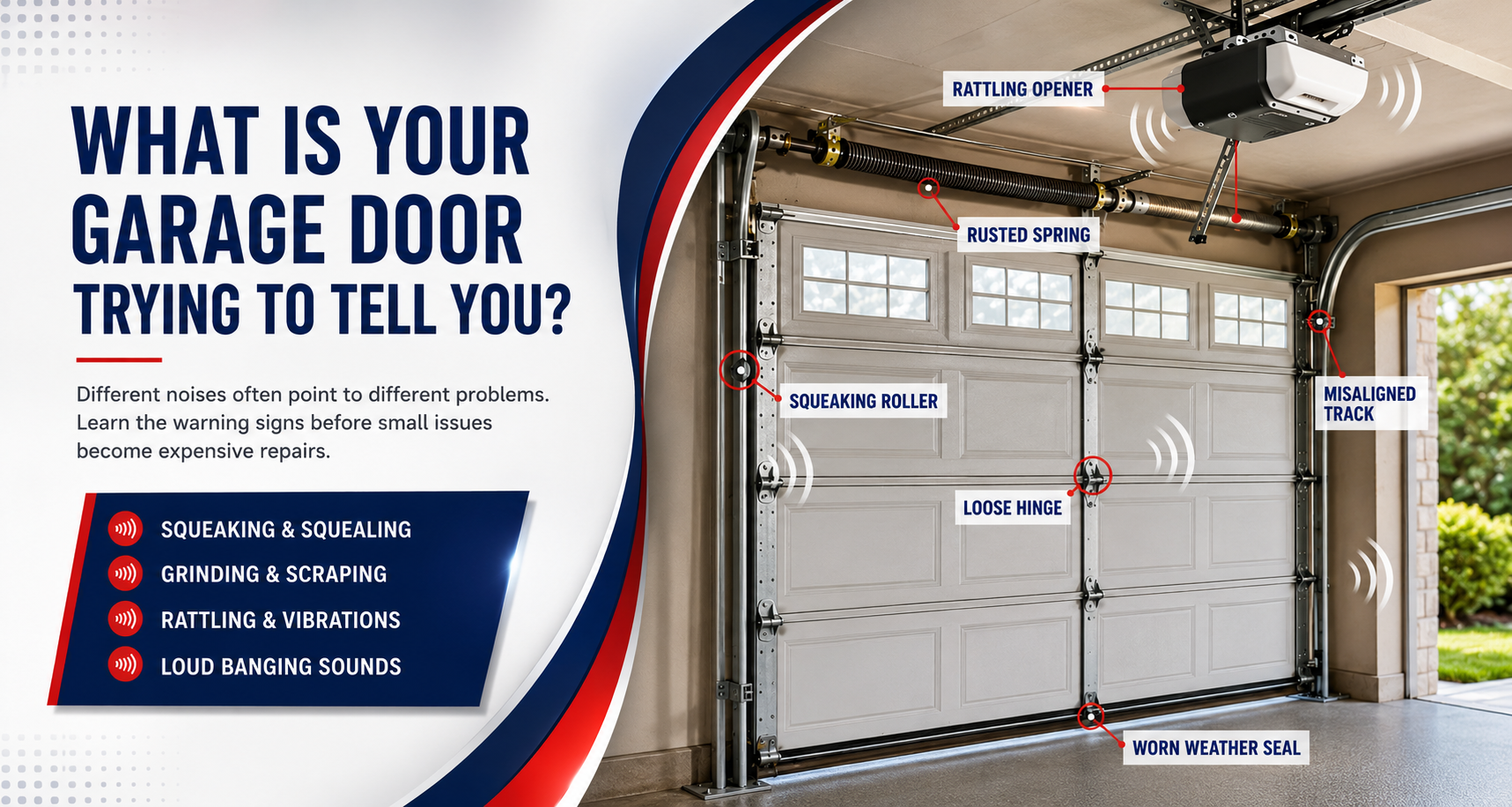
A quiet engine suddenly making new sounds usually means something has changed. The same idea applies to your garage door. Different noises often point to different problems.
Let’s look at the most common ones.
- Squeaking or Squealing
What does it sound like? A high-pitched squeak every time the door moves.
What’s usually causing it? This is one of the most common garage door complaints.
In many cases, the rollers, hinges, or springs simply need lubrication. Over time, dust, dirt, and everyday use create extra friction between moving parts. Without proper lubrication, metal begins rubbing against metal, creating that familiar squeaking sound. Guidance from garage door experts consistently recommends lubricating moving components as part of routine maintenance.
Is it dangerous? Usually, no.
However, if the squeaking becomes louder each week or continues after proper lubrication, another component may be wearing out.
What should you do?
- Inspect the rollers and hinges.
- Apply a garage door lubricant to approved moving parts.
- If the sound doesn’t improve, schedule a professional inspection.
- Grinding Noises
What does it sound like? A rough metal-on-metal scraping sound while the door is opening or closing. Most homeowners notice this sound immediately because it is much louder than normal operation.
What causes it? Grinding usually means something inside the system isn’t moving smoothly anymore.
Possible causes include:
- Worn rollers.
- Dirty or damaged tracks.
- Loose hardware.
- Misaligned components.
- A struggling garage door opener.
Sometimes the problem starts small. A roller may begin sticking in the track. As the opener continues pulling the door, more pressure builds throughout the system.
If you’ve also noticed delayed operation or inconsistent movement, the opener itself could be contributing to the noise. You can learn more in our guide to garage door opener problems that cause unusual garage noises, which explains how opener issues often affect the entire system.
Is it dangerous? It can be.
Grinding noises often mean increased friction. If ignored, the extra strain may damage additional parts and increase repair costs.
- A Loud Banging Sound
Imagine hearing a sudden “BANG!” from the garage late at night. It’s loud enough to make everyone in the house stop what they’re doing. This is one noise you should never ignore.
What’s causing it? One of the most common causes is a broken garage door spring.
Garage door springs are under tremendous tension. When one snaps, it releases stored energy almost instantly, creating a sound that many homeowners compare to a firecracker or a gunshot. Garage door industry guidance consistently notes that spring failure can produce a very loud bang because of the tension stored in the spring.
Is it dangerous? Yes. A broken spring means the garage door may no longer be properly supported. Trying to force the door open can put additional strain on the opener and create a serious safety risk.
If you hear this sound, stop using the garage door and arrange for professional repair.
You may also find our article on emergency warning signs homeowners should never ignore helpful if you’re unsure whether the situation requires immediate attention.
- Rattling or Vibrating Sounds
Does your garage door sound like it’s shaking itself apart every time it moves? Rattling noises are surprisingly common, especially on older garage doors.
What causes rattling? After thousands of opening and closing cycles, nuts, bolts, hinges, and brackets naturally loosen.
Even small vibrations become more noticeable over time. In some cases, the door itself is perfectly fine. It simply needs a professional tune-up to tighten hardware and inspect the moving parts.
Should you worry? Not immediately.
However, loose hardware should never be ignored for months.
A loose bolt today can eventually lead to misaligned tracks, uneven door movement, or unnecessary wear on rollers and hinges.
Here’s the good news. Routine maintenance often catches these small problems before they become expensive repairs.
- Popping or Cracking Sounds
A popping sound can catch you off guard because it often happens without warning.
You may hear one loud pop as the garage door starts moving or several smaller popping noises while it opens or closes.
What causes it?
In many cases, the noise comes from the door panels expanding and contracting as temperatures change. Virginia’s changing seasons can make this more noticeable, especially when warm afternoons are followed by cool evenings.
However, popping can also be caused by:
- Worn hinges.
- Loose hardware.
- Misaligned tracks.
- A door that is no longer properly balanced.
Is it dangerous? Sometimes.
If the popping happens occasionally and the door still moves smoothly, it may simply need maintenance. But if the sound is becoming louder or the door starts jerking while moving, it’s time to have the system inspected before more components are damaged.
- Clicking Sounds Without the Door Moving
Have you ever pressed the remote, heard a clicking noise, and watched… nothing happened?
That’s frustrating, especially when you’re already running late.
What causes it? A clicking sound usually points to an electrical or opener-related issue.
Possible causes include:
- Faulty safety sensors.
- A worn garage door opener.
- Wiring problems.
- A damaged circuit board.
- Obstructions blocking the sensors.
Before assuming the opener has failed, check that nothing is blocking the safety sensors near the bottom of the tracks.
If the problem continues, professional diagnosis is the safest option.
- Humming or Buzzing Sounds
If your opener hums but the garage door doesn’t move, the motor is trying to do its job, but something is stopping the system.
Common reasons include:
- A broken spring.
- A disconnected trolley.
- A seized roller.
- A damaged gear inside the opener.
- An obstruction preventing movement.
Many homeowners continue pressing the remote repeatedly, hoping the door will eventually move.
Unfortunately, that can make the problem worse.
The opener isn’t designed to lift a door with a broken spring or major mechanical issue. Continuing to force it can burn out the motor and turn one repair into two.
- Scraping Sounds
A scraping noise is one of the clearest signs that something isn’t aligned correctly. Instead of rolling smoothly along the tracks, the door begins rubbing against metal or another surface.
Why does it happen?
Common causes include:
- Bent tracks
- Loose rollers
- Track misalignment
- Debris inside the tracks
Besides creating an unpleasant sound, scraping increases friction throughout the system. The longer the door operates this way, the more wear it places on rollers, hinges, and the opener.
When Does a Noisy Garage Door Become Dangerous?
A noisy garage door becomes dangerous when the sound is caused by damaged or failing components that affect the door’s safe operation.
Some noises simply mean your garage door needs maintenance. Others indicate a serious mechanical problem.
You should stop using the garage door and arrange a professional inspection if you notice:
- A loud bang followed by a door that won’t open.
- Grinding that becomes worse each day.
- The door shakes or moves unevenly.
- The door stops halfway.
- Cables appear loose or frayed.
- Rollers come off the track.
- The opener struggles to lift the door.
- The garage door closes unexpectedly.
These warning signs should never be ignored because garage doors can weigh several hundred pounds. Continuing to use a damaged system increases the risk of property damage and personal injury.
Can You Fix a Noisy Garage Door Yourself?
Some maintenance tasks are perfectly safe for homeowners.
You can usually:
- Clean dirt from the tracks.
- Lubricate approved moving parts.
- Tighten visible loose bolts.
- Test the auto-reverse safety feature.
- Inspect weather seals for damage.
However, some repairs should always be left to trained professionals.
Avoid repairing:
- Garage door springs
- Lift cables
- Torsion systems
- Bent tracks
- Major opener components
These parts operate under high tension and require specialized tools and experience.
How Regular Maintenance Keeps Your Garage Door Quiet:
Most garage doors don’t suddenly become noisy. The sounds usually develop gradually as parts wear down. A yearly maintenance visit helps identify these problems early before they become expensive repairs.
Professional maintenance typically includes:
- Lubricating moving components.
- Inspecting springs and cables.
- Checking track alignment.
- Tightening hardware.
- Testing safety features.
- Evaluating opener performance.
- Identifying worn rollers before they fail.
Think of it like servicing your vehicle.
Routine maintenance is almost always less expensive than replacing damaged parts after a breakdown.
Let Adams Garage Doors LLC Bring Back the Quiet:
A noisy garage door is more than just an inconvenience. It’s often the first sign that something inside the system needs attention.
At Adams Garage Doors LLC, we help Virginia homeowners diagnose and fix garage door problems before they turn into costly emergencies. Whether your door is squeaking, grinding, rattling, or making a loud banging sound, our experienced technicians will identify the real cause and recommend the right solution.
When you choose Adams Garage Doors LLC, you benefit from:
- Professional garage door repair services.
- Fast response times across Virginia.
- Experienced and knowledgeable technicians.
- Honest pricing with no hidden surprises.
- High-quality replacement parts.
- Complete safety inspections.
- Reliable workmanship backed by years of experience.
We believe every homeowner deserves a garage door that operates safely, smoothly, and quietly. Whether you need a simple tune-up or a more complex repair, we’re here to help.
Don’t ignore the noise.
Schedule your garage door inspection with Adams Garage Doors LLC today and enjoy the peace of mind that comes with a garage door you can rely on.
Frequently Asked Questions:
What causes a garage door to make loud noises?
A garage door can become noisy because of worn rollers, loose hardware, dry hinges, damaged springs, misaligned tracks, or problems with the opener. While some sounds are harmless, others can indicate a serious issue that needs professional attention.
Is it safe to use a noisy garage door?
It depends on the type of noise. A slight squeak may only mean the moving parts need lubrication, but loud grinding, banging, or scraping noises can signal damaged components. If the noise suddenly becomes louder or the door moves unevenly, stop using it and schedule a professional inspection.
Can I fix a noisy garage door myself?
You can safely perform basic maintenance, such as lubricating moving parts, cleaning the tracks, and tightening loose hardware. However, repairs involving springs, cables, tracks, or the opener should always be handled by a trained technician because these components can be dangerous.
Why does my garage door make a loud bang when opening?
A loud bang often means a garage door spring has broken. Since the springs are under high tension, they release a large amount of stored energy when they snap. This is considered a safety issue, and you should avoid using the door until it has been repaired.
How often should I schedule garage door maintenance?
Most homeowners should schedule professional garage door maintenance at least once a year. If your garage door is used frequently or has already started making unusual noises, more frequent inspections can help catch small issues before they become costly repairs.
Conclusion:
Your garage door isn’t trying to annoy you when it starts making strange noises. More often than not, it’s trying to tell you something.
A squeak might mean the rollers need lubrication. A grindng sound could point to worn components. A loud bang may signal a broken spring that needs immediate attention. The sooner you identify the cause, the easier and more affordable the repair is likely to be.
Ignoring unusual sounds may seem harmless at first, but small mechanical problems rarely stay small. As worn parts continue to work under extra stress, they can affect the entire garage door system, leading to higher repair costs, unexpected breakdowns, and potential safety risks.
The good news is that most of these problems are preventable. Regular inspections, routine maintenance, and timely noisy garage door repairs can keep your garage door operating smoothly, quietly, and safely throughout the year.
If your garage door has started making noises that don’t sound normal, don’t wait until it refuses to open or close. Taking action today can save you time, money, and unnecessary frustration tomorrow.