Adams Garage Doors LLC

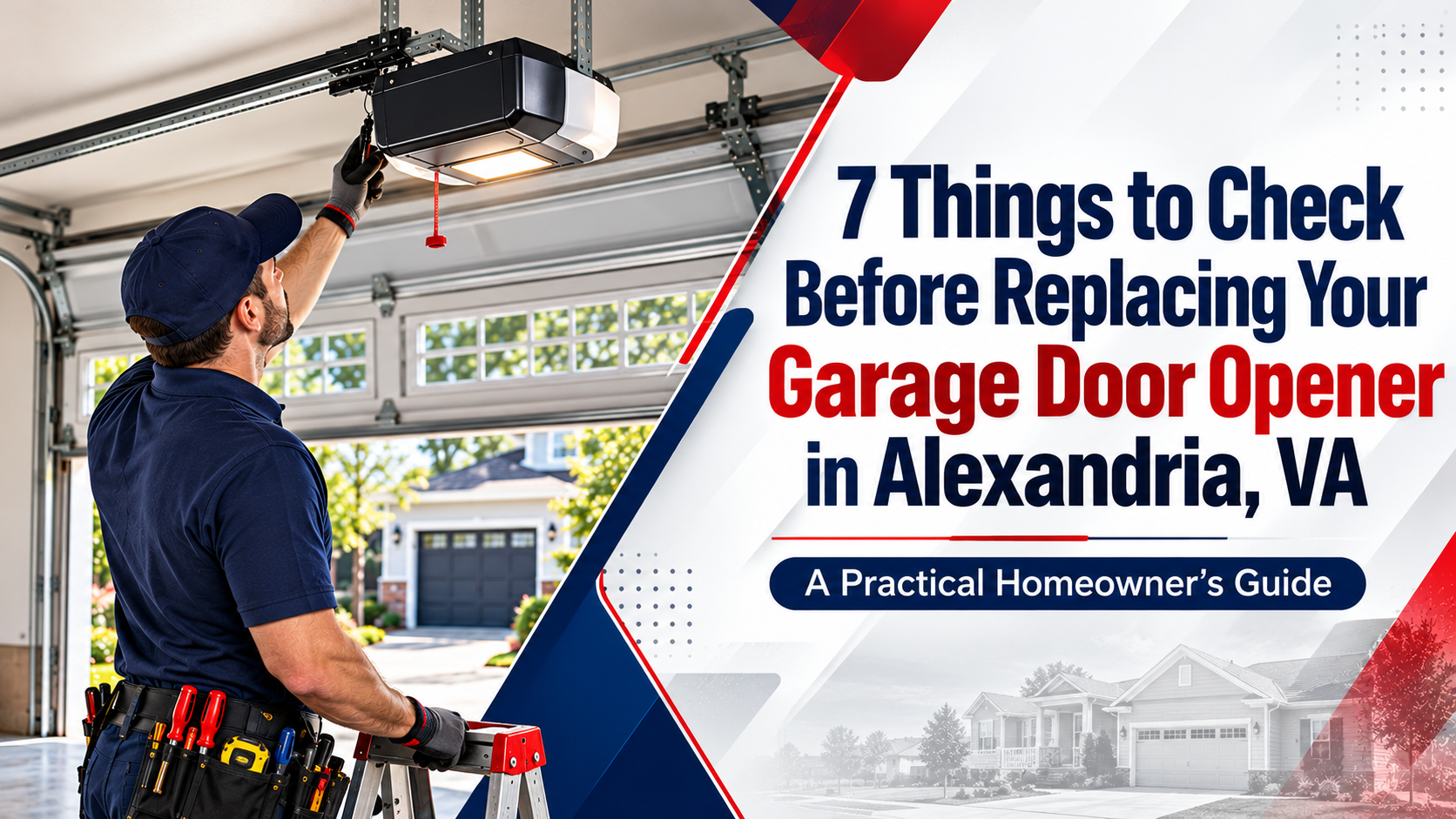
7 Things to Check Before Replacing Your Garage Door Opener in Alexandria, VA: A Guide

If your garage door opener is making unusual noises, struggling to lift the door, or refusing to respond to the remote, it may be time to consider a replacement. However, before deciding which new garage door opener to buy, there are a few things that one should consider, such as the age, motor efficiency, security systems, compatibility, and condition of the door itself.

A properly selected garage door opener replacement in Alexandria can improve everyday convenience, support safer operation, and provide more reliable access to your garage.

7 Things to Check Before Replacing Your Garage Door Opener

Getting a new garage door opener does not entail simply going out to buy another motor. It requires one to look at the performance of the existing garage door system, as well as the door type.

Here are seven important things to check before making a decision.

1. Check the Age and Condition of Your Existing Opener:

Begin by determining the age of your garage door opener and any changes that may have occurred regarding its efficiency. Old openers are often not equipped with the latest safety standards & it becomes hard to locate spare parts.

Look for warning signs such as:

  • The opener works intermittently or stops unexpectedly.
  • The motor runs, but the garage door does not move properly.
  • The unit makes grinding, rattling, or other unusual noises.
  • The remote or wall control responds inconsistently.

These symptoms do not always mean you need a new opener. Sometimes, the problem involves the remote, sensors, wiring, or another repairable component. A professional inspection can actually help determine whether garage door opener repair or complete replacement makes more sense.

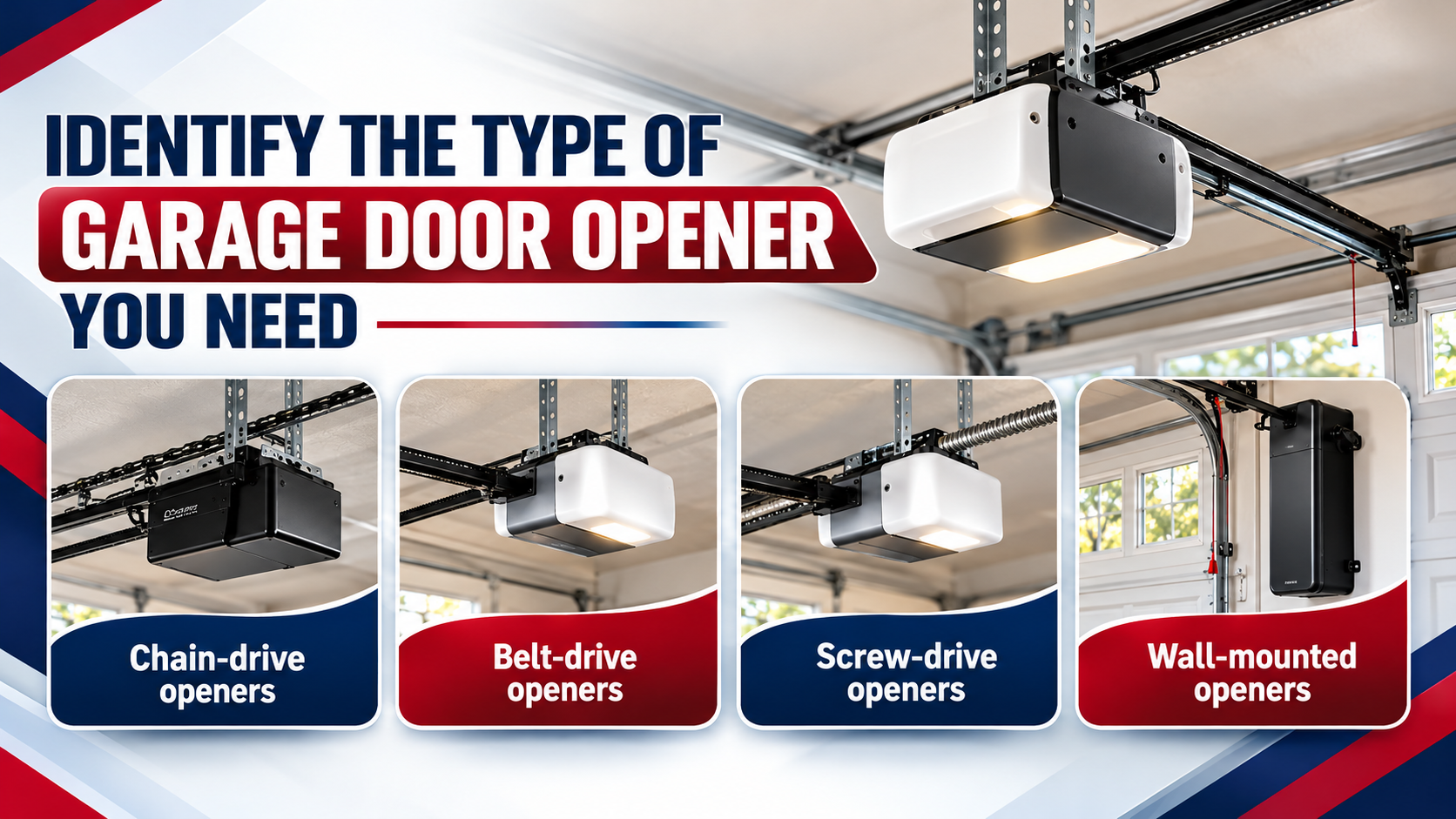
2.Identify the Type of Garage Door Opener You Need:

Not every opener is suitable for every garage door. The right choice depends on the door’s weight, construction, usage, and available ceiling space.

Common opener types include:

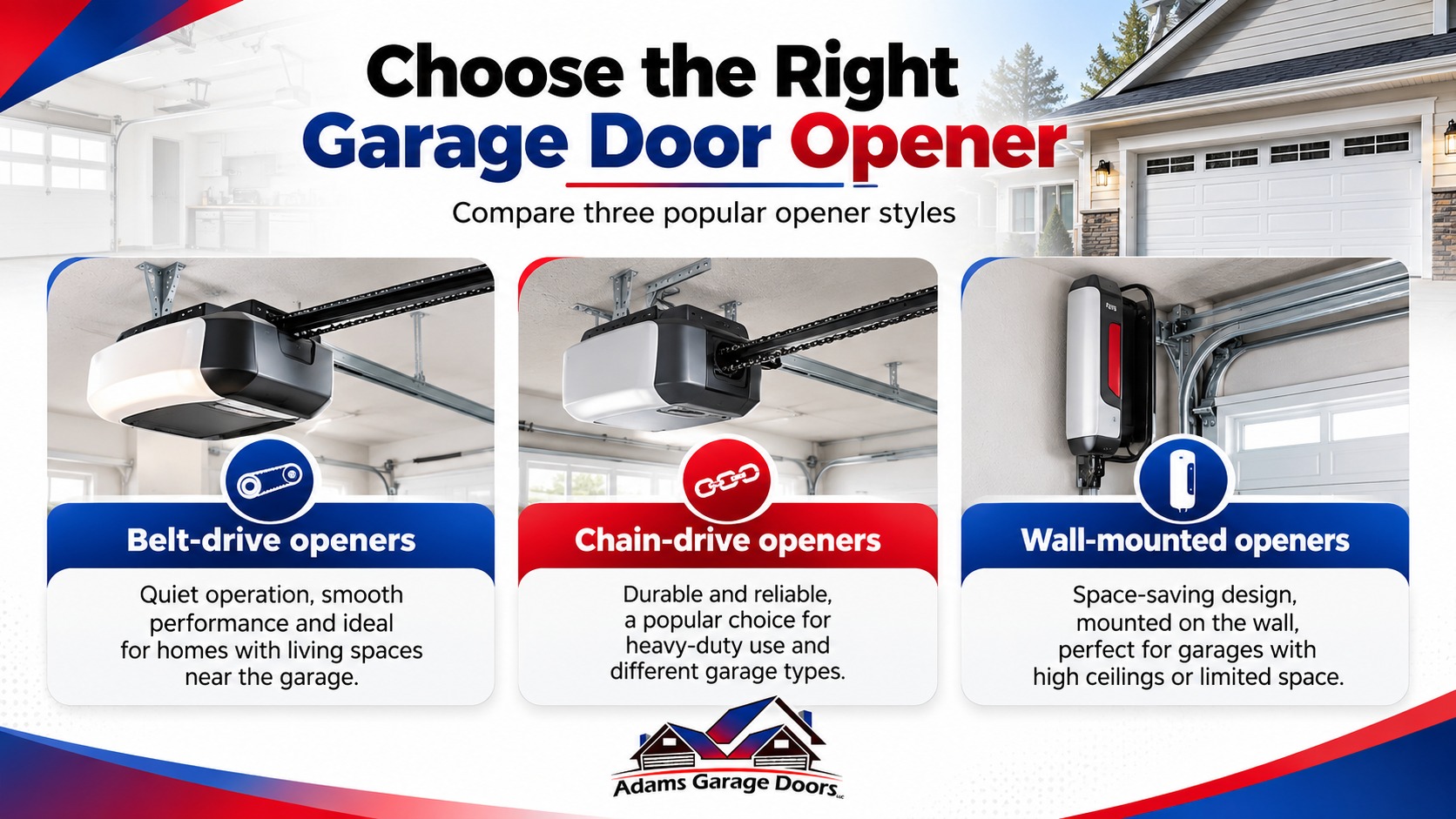
  • Chain-drive openers: Use a metal chain to move the door. They are a common option for many residential garages but can produce noticeable noise.
  • Belt-drive openers: Use a reinforced belt and generally operate more quietly, making them worth considering for garages attached to living spaces.
  • Screw-drive openers: Use a threaded rod to move the door. Suitability depends on the specific model and installation requirements.
  • Wall-mounted openers: Also called jackshaft openers, these are installed beside the garage door and may help free up ceiling space when the door system is compatible.

Before choosing a replacement, consider your budget, noise preferences, garage layout, and the manufacturer’s recommendations.
 Type of garage door repair

3.Check the Motor’s Power Requirements:

Your opener motor must also match your garage door. If you have a very heavy door or one with specific needs to operate correctly, it might require a different opener motor compared to a light door.

However, a better motor cannot replace an imbalance in your door. It could be difficult for the opener to perform its task properly if there is something wrong with the springs, the rollers, or tracks.

Therefore, a technician should examine the whole system before choosing an opener.

Important: Never attempt to adjust or replace garage door springs yourself. These components are under significant tension and can cause serious injuries.

4.Review Safety Features and Sensor Performance:

Safety should come into consideration while replacing a garage door opener. It is quite common for the new garage door opener to have a safety mechanism that can detect anything blocking the way of the garage door.

Before purchasing a new unit, check for:

  • Functional photoelectric safety sensors.
  • An automatic reversal system that responds to obstructions.
  • Secure remote-control technology.
  • Battery backup availability, where supported and appropriate.
  • Compatibility with the applicable safety requirements and the garage door system.

The safety standards may differ depending on the opener type and installation time. Check with your installer to make sure the new opener complies with the standards that apply to you.

5.Check Compatibility With Your Garage Door:

Your opener should fit the current system you already have installed in your home. The height, weight, construction, track configuration, and space for mounting can all play a part in this decision.

As an illustration, the opener that will be right for a regular residential sectional door may not be the one to use on an exceptionally heavy or oversized door. A faulty track or damaged roller may make the opening process difficult.

Make sure to conduct a complete inspection by the technician of your door, springs, tracks, rollers, and mounting space before replacing the opener.

If you are considering a complete upgrade, explore our new garage door installation services to learn more about your options.

6.Consider Smart Controls and Everyday Convenience:

The opening device that you choose should match the existing system currently installed in your house. Height, weight, build, track design, and mounting space are among the factors to consider when making the choice.

For instance, what would work for the average residential section door might not be the best for a very heavy or large door. A faulty track or roller may cause trouble opening the door.

It is advisable to have your door, spring, track, roller, and mounting space inspected first by the technician before the installation of the opener.

7. Compare Replacement Costs, Warranty, and Installation Quality

The cost involved is not just limited to the cost of buying the replacement parts for your garage door opener, but also other factors like the type of opener you have, installation costs, dismantling costs, and even repairs.

Before approving the work, ask for a clear estimate covering:

  • The opener model included accessories.
  • Labor and installation charges.
  • Removal or disposal of the old unit, if applicable.
  • Additional parts or repairs, if needed.
  • Product warranty and workmanship coverage.

Professional installation also matters. Incorrect mounting, wiring, sensor alignment, or travel-limit settings can affect the opener’s performance and safety.

For a clearer picture of the process, click here to read more about what homeowners should expect from a professional garage door opener installer. 

Should You Repair or Replace Your Garage Door Opener?

The answer varies according to the reason for your problems, the state of your current device, and the cost of an effective repair job.

A repair is usually recommended in case there is an improperly functioning remote, a blockage in the sensor, or a replacement part. In case of a malfunctioning motor, lack of necessary parts, a missing safety feature in your opener, or expensive repairs, you should consider replacement.

With the help of a professional diagnosis, you will be able to choose the one option that is more effective from a financial point of view. You will not buy an opener to fix a problem with your door.

When Should You Schedule Garage Door Opener Replacement in Alexandria?

Inspections should be made if you have a malfunctioning garage door opener that always stops, finds it difficult to open the door, makes strange sounds constantly, or is inconsistent in operation.

Alexandria residents should as well look at the state of the whole door system before getting an opener replaced, since it is more appropriate when everything about the door is in good shape.

Planning a garage door opener installation? Read our guide on what to expect during a professional garage door repair visit to learn how a technician inspects your garage door system, identifies potential issues, and recommends the appropriate service.

Avoid operating a garage door that appears unstable, has a broken spring, or has come off its tracks. Disconnecting the opener or attempting a repair without understanding the system can create additional risks.
Garage Door Services

Adams Garage Doors LLC: Your Trusted Partner for Garage Door Services

Adams Garage Doors LLC offers installation and repair of garage doors in both domestic and business environments within the entire state of Virginia. The team has experience with all types of garage doors and has the required equipment to install and repair garage doors.

This company installs garage door openers, including chains and motors, and repairs garage doors with rusted tracks and springs. In case you require a new opener, a replacement garage door, or any type of repair work on your garage door, our team will advise you about the best option.

Adams Garage Doors LLC serves homeowners and businesses in Alexandria, Fairfax, Woodbridge, Lorton, Springfield, Chantilly, and other Virginia communities.

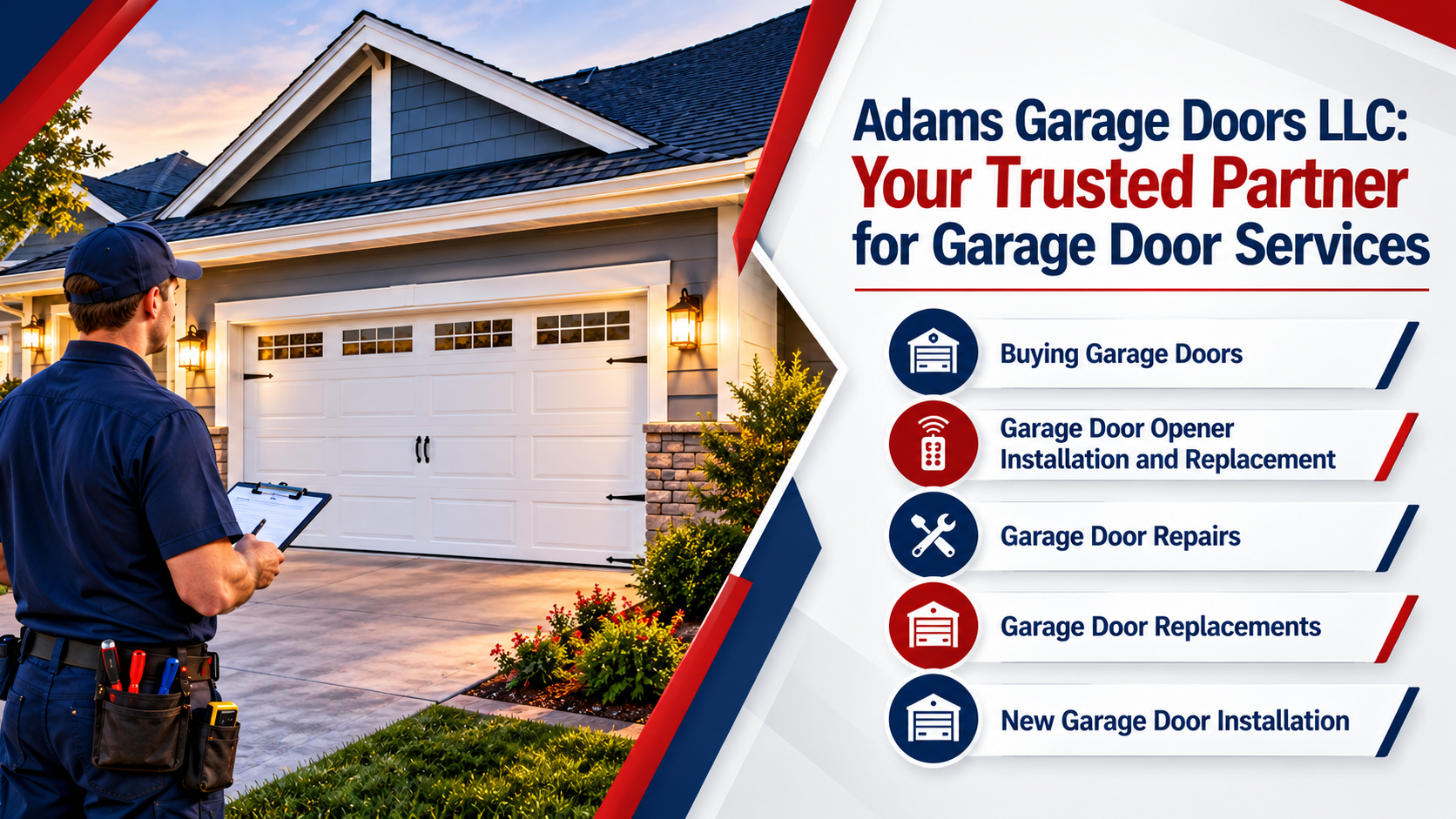
Services include:

  • Buying garage doors.
  • Garage door opener installation and replacement.
  • Garage door repairs.
  • Garage door replacements.
  • New garage door installation.

We also offer warranties on all jobs it does, which will make customers feel more confident about the products purchased. Steel and wooden garage doors, as well as opening and repair services, can be obtained from this company.

Frequently Asked Questions:

What are the signs of a garage door opener needing to be replaced?

Multiple failures, broken motors, irregular performance, constant odd sounds, and no replacement parts available can be some signs that you need a new garage door opener. An inspection will show whether you need a replacement or a repair.

How much does garage door opener replacement cost in Alexandria, VA?

The price of replacing an opener will depend on the type of opener you choose, its motor, labor & installation. You should receive an estimate of the costs from your local garage door technician.

How long does it take to replace a garage door opener?

It will take several hours to perform a regular replacement, depending on many different factors, including the removal of the old opener and repairs.

Can I change my garage door opener without changing my garage door?

Yes. The new opener can easily be put up on the existing garage door if the door and all its parts are in good condition. The door needs to be inspected first by a professional.

Is a belt-driven garage door opener quieter than a chain-driven one?

The belt-driven garage door opener is usually quieter compared to a similar chain-driven garage door opener. The noise level of the garage door opener depends on the specific opener and the hardware on the door.

Who installs garage door openers in Alexandria, VA?

Adams Garage Doors LLC is the company that will take care of garage door openers and related installations and repairs in Alexandria, VA & other areas in Virginia. Please contact us for your needs.

Bottom Line: Make the Right Choice for Your Garage

A garage door opener replacement should improve reliability, convenience, and safe operation. Checking the motor, door compatibility, safety features, available controls, and installation costs before choosing a unit can help you avoid common mistakes.

If your existing opener is showing signs of wear, Adams Garage Doors LLC can help you assess your options. 

Contact the team to discuss garage door opener replacement in Alexandria, VA, and find a solution suited to your garage door and everyday needs.
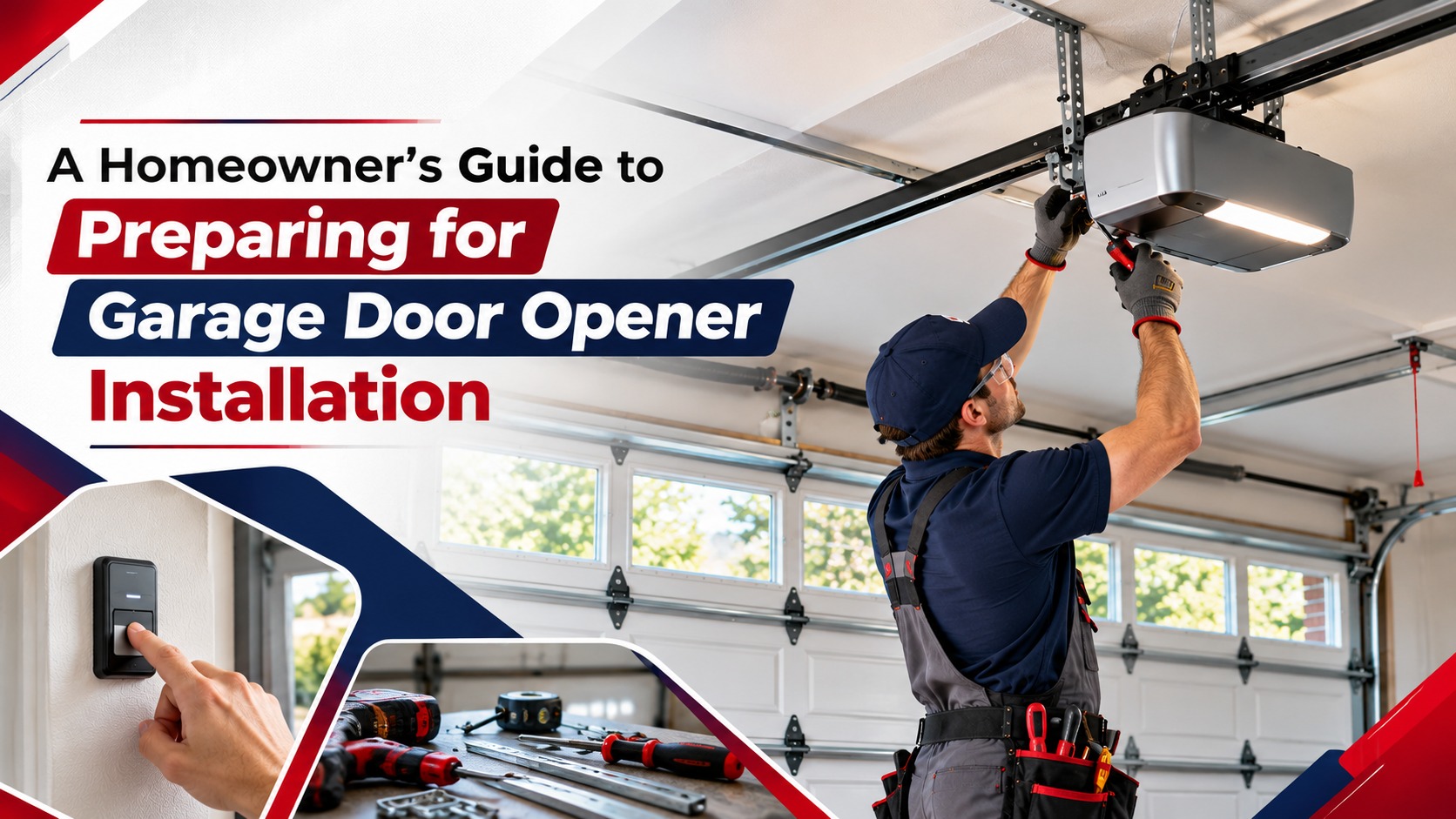
A Homeowner’s Guide to Preparing for Garage Door Opener Installation in Triangle,VA

Garage door opener installation can bring some convenience into your daily routine, but a hassle-free experience begins even before the specialist arrives at your home. From cleaning up your garage entryway to assessing your existing opener and remotes, there are several things that you should do to be prepared for the job.

For homeowners planning garage door opener installation in Triangle, the best approach is to understand what the technician may need, which details to share beforehand, and how to prepare the space for safe, efficient work.

Before Installation Day: Five Things Worth Checking

Viewing installation day as an upgrade to your home rather than just replacing your motor can be beneficial. Your old garage door, the amount of ceiling space available, and the needs of your family can have an impact on the process.

Use this quick checklist before your appointment.

Clear the garage entrance: Move vehicles, bicycles, storage boxes, and other items away from the garage door and opener area.

Check the existing equipment: Note any unusual noises, inconsistent movement, or problems with your current remote.

Gather essential details: Keep your appointment confirmation, opener model information, and any relevant warranty documents handy.

Plan access: Make sure the technician can reach the garage, electrical outlet, ceiling-mounted equipment, and control panel.

Think about daily use: Consider how often the door opens, who uses it, and whether you need additional remotes or keypad access.

These steps may seem minor, but they can make the initial inspection more productive and help the installer understand your household’s needs.

1. Give Your Garage a Quick Safety Check:

Your garage door opener does more than lift a heavy door. It works with springs, cables, rollers, tracks, and other components to move the door safely.

Before the installation, study the way your current door opens or closes. Is its movement unbalanced? Do you hear some grinding sounds? Or have you seen that your tracks are bent? Did the door become somewhat crooked when being opened or closed?

Tell about these aspects to the installer, instead of trying to repair them yourself.

The garage door springs and lifting cables work under high tension. Do not release these cables, disconnect the door, or adjust the springs yourself. The professional will need to check for any mechanical issues.

You may also point out if the door has become heavier and harder to handle lately. Your opener cannot fix a broken or imbalanced door. It would be good to find out about the cause of the problem.

2. Know What You Want From Your New Opener:

Not every household needs the same garage door opener. The right choice depends on your door, garage layout, preferred noise level, usage patterns, and budget.

Consider these common options before the appointment.

Belt-drive openers: These typically use a reinforced belt and are popular with homeowners who want quieter operation, particularly when a bedroom sits above or beside the garage.

Chain-drive openers: These use a metal chain to move the door. They can be a practical option for homeowners who prioritize functionality and value, although operation may be noisier.

Wall-mounted openers: These attach beside the garage door rather than occupying the center of the ceiling. They may suit certain garages with limited overhead clearance, provided the door and installation conditions are compatible.

Other amenities might include battery backup, smart home integration, lighting that turns on with motion detection, and wireless keypads.

It is not necessary for you to select a particular model prior to discussing it with the installation technician. You simply need to communicate what is important to you.

3. Check the Space Above and Around the Door:

The garage layout can influence which opener will work best.

Take a look at the ceiling above the garage door and see if there are any obstacles such as shelves, hanging racks, light fixtures, etc. It would be good to let the professional know if your ceiling is low, or if there are beams visible, as well as if you have any special garage arrangement.

It might be that the installer needs to check your headroom height, mounting points, door travel distance, and the location of your electrical power supply source. This information will help decide how the opener and the hardware required for installation will be mounted.

It is also important to make sure that there are no stored items near the door tracks, which would make it more difficult for the installer to examine the entire system.

If there is a special outlet for your garage, do not use the extension cords as a replacement. Your electrical requirements need to be assessed by a specialist.

Opener Installation Process

4. Prepare Your Questions Before the Technician Arrives:

An installation appointment is a perfect time for you to learn how your new unit works and what is included in the service.

Instead of trying to recall all questions right away, just jot down the key ones.

For example, find out if you can reuse the current mount or if replacement components are needed. See if programming remotes, installing a keypad, testing safety devices, and instructing on maintenance procedures are included in the price.

Also, don’t hesitate to ask about the warranty and guarantee of craftsmanship, along with any possible additional fees if there are damages found during the inspection.

For a clearer understanding of the installation process, read our related guide: What a professional garage door opener installer should include during the installation. 

Knowing what to expect helps you compare service options more confidently and understand the value of professional installation beyond simply connecting a motor.

5. Make Access and Household Arrangements:

A technician needs a reasonably clear workspace to inspect the door, install equipment, and complete operational tests.

Move vehicles out of the immediate work area when possible. Keep children and pets away from the garage during the appointment, especially while tools and moving door components are in use.

If you rely on the garage for daily entry and exit, plan an alternative route in case the door cannot be used temporarily during installation.

It is also helpful to have an adult available to answer questions about the existing system and confirm preferences for remotes, keypad placement, or smart controls.

For homeowners who work from home, consider whether drilling, testing, or repeated door operation could interrupt meetings. You do not need to rearrange your entire day, but knowing when the work will happen can make things easier.

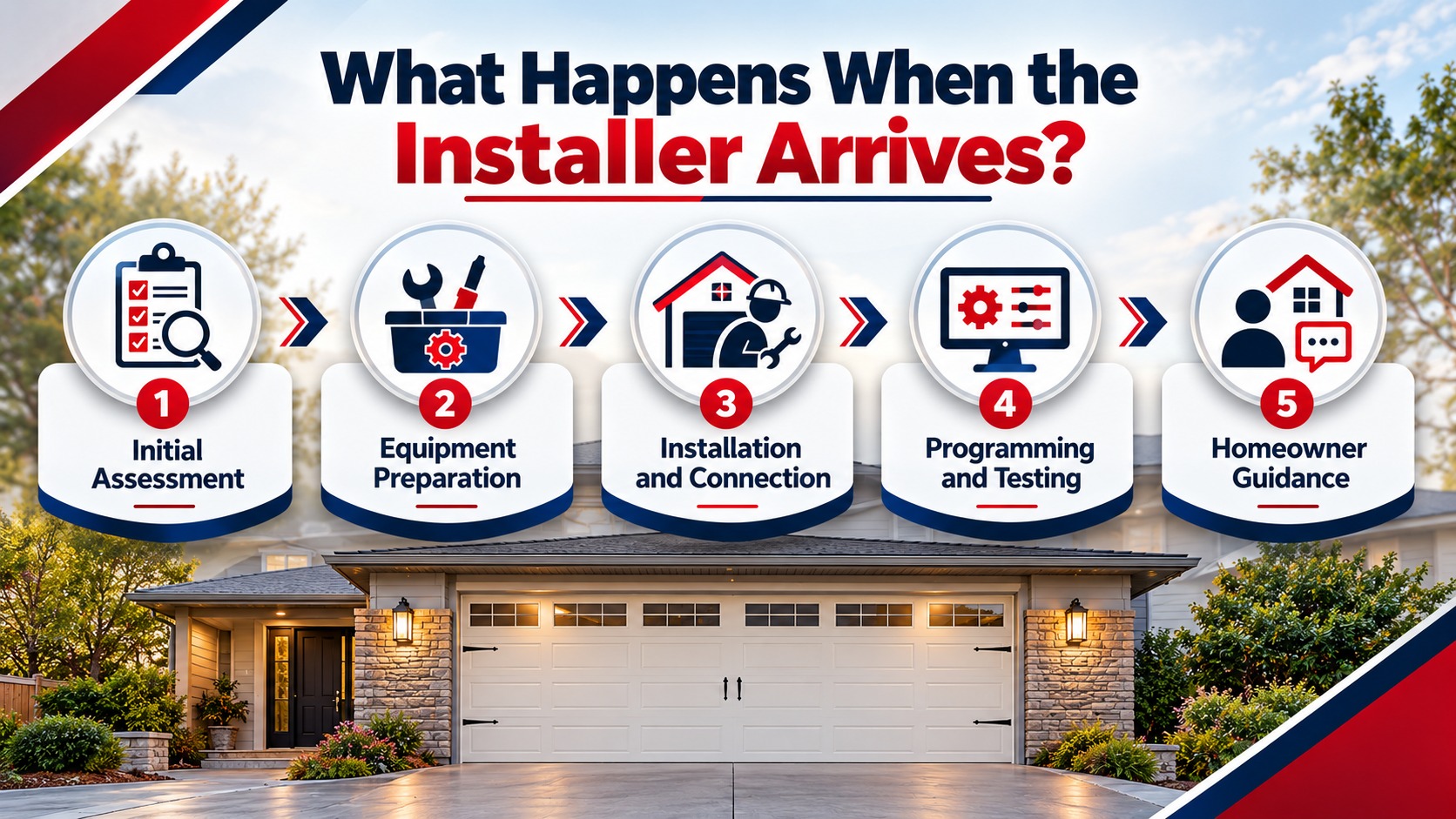
6. What Happens When the Installer Arrives?

Understanding the likely sequence of work can help you feel prepared without needing to manage the technical details yourself.

Although the exact process depends on the equipment and condition of the door, a professional appointment commonly involves several stages.

Initial assessment: The technician examines the garage door, tracks, springs, mounting area, and electrical arrangements to identify compatibility or safety concerns.

Equipment preparation: The installer confirms the selected opener, required hardware, and any additional components needed for the job.

Installation and connection: The old equipment may be removed when necessary, followed by mounting the new opener and connecting its operating components according to the manufacturer’s instructions.

Programming and testing: The installer configures compatible remotes or other controls and checks door travel, operation, and relevant safety features.

Homeowner guidance: You should have an opportunity to ask how the controls work, what routine maintenance involves, and whom to contact if a problem develops.

The time required varies according to the existing setup, opener type, and whether repairs or additional work are necessary. Ask your installer for an estimated duration before the appointment rather than relying on a fixed time expectation.

7. After Installation: Do Not Skip the Final Walk-Through

Once the installation of the new door opener is completed, spend some time learning how it functions.

Let the technician show you how it normally opens and closes, teach you how to operate it using the wall control and remote, as well as other backup options available for your model.

Ensure that the safety sensors are installed properly and are tested following the requirements of the manufacturer. Learn how the emergency release mechanism functions and how to use it properly. Make sure that you have the owner’s manual, warranty card, and servicing information available.

Never assume that a door is safe simply because it opens and closes. The completed system should be checked by the installer, including the required safety features.

If you are replacing an aging unit, our companion article, Factors to consider when replacing an older garage door opener in Alexandria. can help you understand the considerations involved in deciding whether replacement makes sense.

Garage Opener Types

Why Local Experience Matters for Triangle Homeowners:

Choosing a garage door professional involves more than comparing prices. You want someone who understands the equipment, checks the existing door, explains the available options, and treats safety as part of the job.

Homeowners arranging garage door opener installation near you in Triangle should look for clear estimates, appropriate licensing and insurance where applicable, transparent communication, and an installation process that follows the manufacturer’s requirements.

Before booking, confirm the service area, appointment availability, equipment compatibility, and what the quoted price includes. Ask whether the provider can address additional mechanical issues if the inspection reveals a problem.

Meet Adams Garage Doors LLC: Your Trusted Partner for Garage Door Services in VA

Adams Garage Doors LLC is the right place to turn to for all garage door-related services via the company’s own communication channels. In the case of a new opener, this conversation will allow homeowners to specify the dimensions of their garage, the issues with the current installation & the functions they wish to have in the replacement one.

For service details or to request an appointment, visit the website. Sharing your concerns and expectations in advance can help the company determine the appropriate next steps for your garage.

Frequently Asked Questions :

1.How do I prepare my garage for opener installation?

Clear the garage door area, remove obstacles, and ensure access to the power supply and mounting space before installation.

2Which garage door opener is best for my home?

The best opener depends on your door’s weight, size, noise level, available space, and daily usage.

3.How long does garage door opener installation take?

Installation time varies by opener type, garage setup, and any additional repairs required.

4.Can a new opener be installed on an old garage door?

Yes, if the existing door is compatible and in good working condition. Damaged or unbalanced doors should be inspected first.

5.Does garage door opener installation require an electrical outlet?

Most automatic openers require a suitable power source. Check the manufacturer’s requirements and have electrical work assessed by a qualified professional.

Final Thoughts:

A successful garage door opener installation starts with a few sensible decisions: clear the workspace, identify your needs, share existing problems, and prepare questions about equipment, safety, and service coverage.

With the right preparation, Triangle homeowners can approach installation day with greater confidence and a clearer understanding of what their new opener should deliver. 

Why wait? Contact our team now.

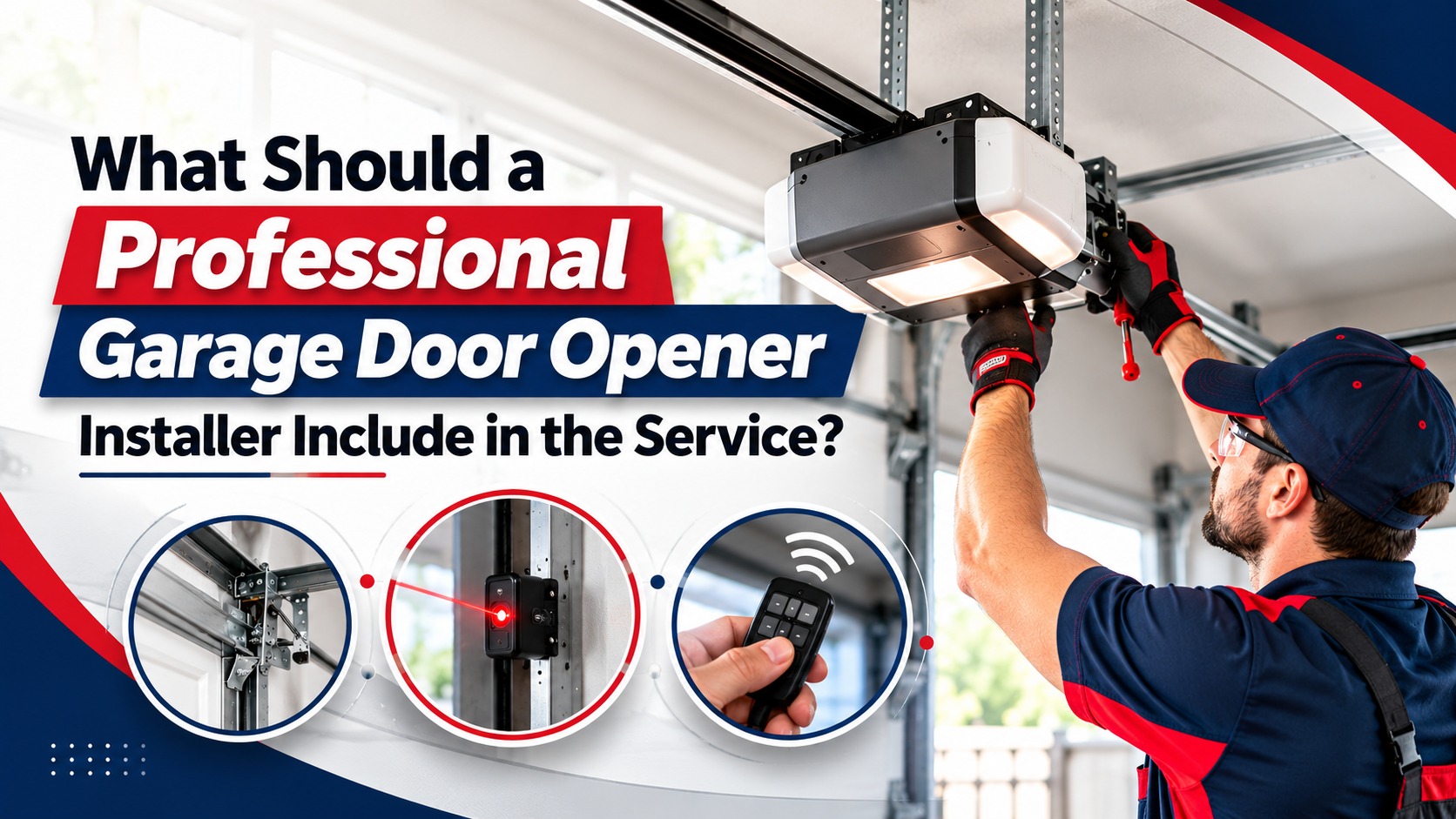
What Should a Professional Garage Door Opener Installer Include in the Service?

Introduction: When Your Garage Door Stops Cooperating

Imagine arriving home after a long, exhausting day. You press your garage door remote, expecting the familiar sound of the door opening. Instead, you hear a strange grinding noise, the door moves halfway, or nothing happens at all.

It may seem like a small inconvenience, but a malfunctioning garage door opener can disrupt your routine, affect your home’s security, and leave you feeling frustrated.

This is when professional help makes a difference. However, hiring an installer should involve more than simply mounting a motor and connecting a few wires. A quality service should include proper inspection, the right equipment, careful installation, safety checks, and clear guidance.

If you’re searching for garage door opener installers in my area, understanding what a complete service includes can help you make a confident decision. Here’s what to expect when working with a professional team like Adams Garage Doors LLC.

1. Inspection of Your Existing Garage Door System:

Before installing a new opener, a professional should inspect the existing garage door system. Why? Because even the best opener cannot compensate for a door that is difficult to lift, poorly balanced, or damaged.

The inspection should cover essential components, including:

  • Garage door springs and cables
  • Tracks, rollers, and hinges
  • Door balance and movement
  • Existing opener and mounting hardware
  • Power supply and available installation space

This step helps identify problems that could affect the new opener’s performance. It also allows the technician to determine whether repairs are needed before installation begins.

A thorough inspection can save you from paying for a new opener only to discover that an underlying mechanical problem still prevents your door from operating correctly.

2. Help Choosing the Right Garage Door Opener:

Not every garage door opener suits every home. Your garage’s layout, door weight, noise preferences, and daily usage all influence which system makes the most sense.

A professional installer should explain your options instead of recommending a product without understanding your needs.

Garage Door Opener Types

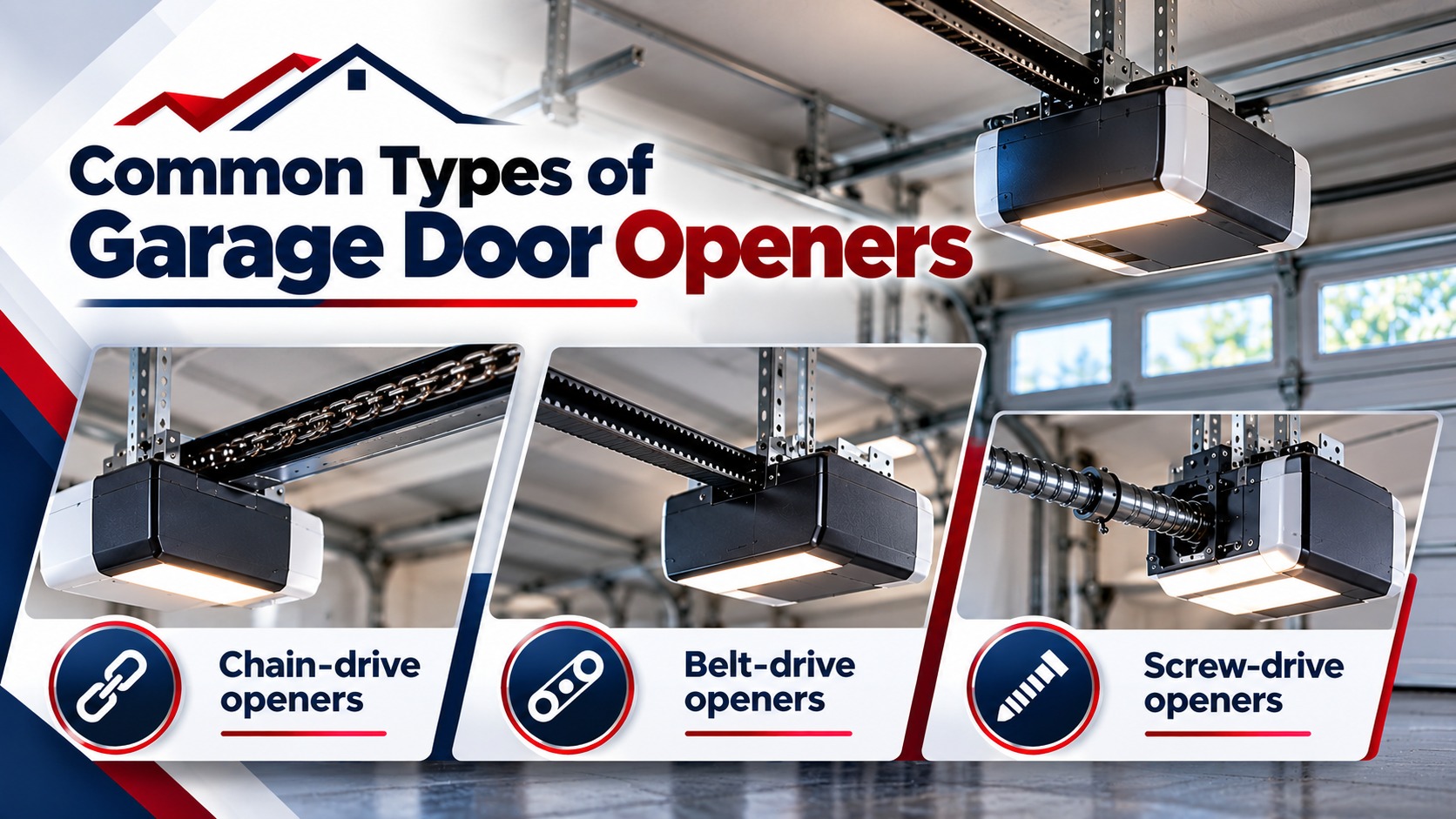
Common Types of Garage Door Openers:

Chain-drive openers: These use a metal chain to move the door. They are often a practical choice for homeowners looking for a durable, budget-conscious option, although they tend to be noisier.

Belt-drive openers: These use a belt instead of a metal chain, making them a popular option for quieter operation, particularly in homes with bedrooms near the garage.

Screw-drive openers: These use a threaded rod to move the door. Their suitability depends on the specific model, climate, and maintenance requirements.

Your installer may also discuss smart garage door openers that support smartphone controls, remote monitoring, or other connected features.

Adams Garage Doors LLC offers garage door opener options from brands such as Genie and Chamberlain, along with different drive systems to suit varying requirements. 

You can explore the company’s garage door opener installation and repair services to learn more.

3. Safe and Proper Installation :

Once you select the appropriate opener, the technician should install it according to the manufacturer’s instructions.

This typically includes securely mounting the motor, installing the rail and drive mechanism, attaching the door arm, and checking the alignment of the components. Electrical connections should also be handled according to applicable safety requirements.

Precision matters here. Incorrect mounting, poor alignment, or improper adjustments can lead to excessive noise, unreliable operation, or unnecessary wear.

Garage door springs and cables can also hold dangerous tension. Professional installation helps ensure that these components are handled appropriately and that the opener is not used to compensate for a mechanical fault.

When comparing garage door opener installers in my area, look for professionals who explain the installation process and take time to complete the work correctly rather than rushing through the job.

4. Safety Sensor Installation and Testing:

One of the most important parts of garage door opener installation is checking the safety features.

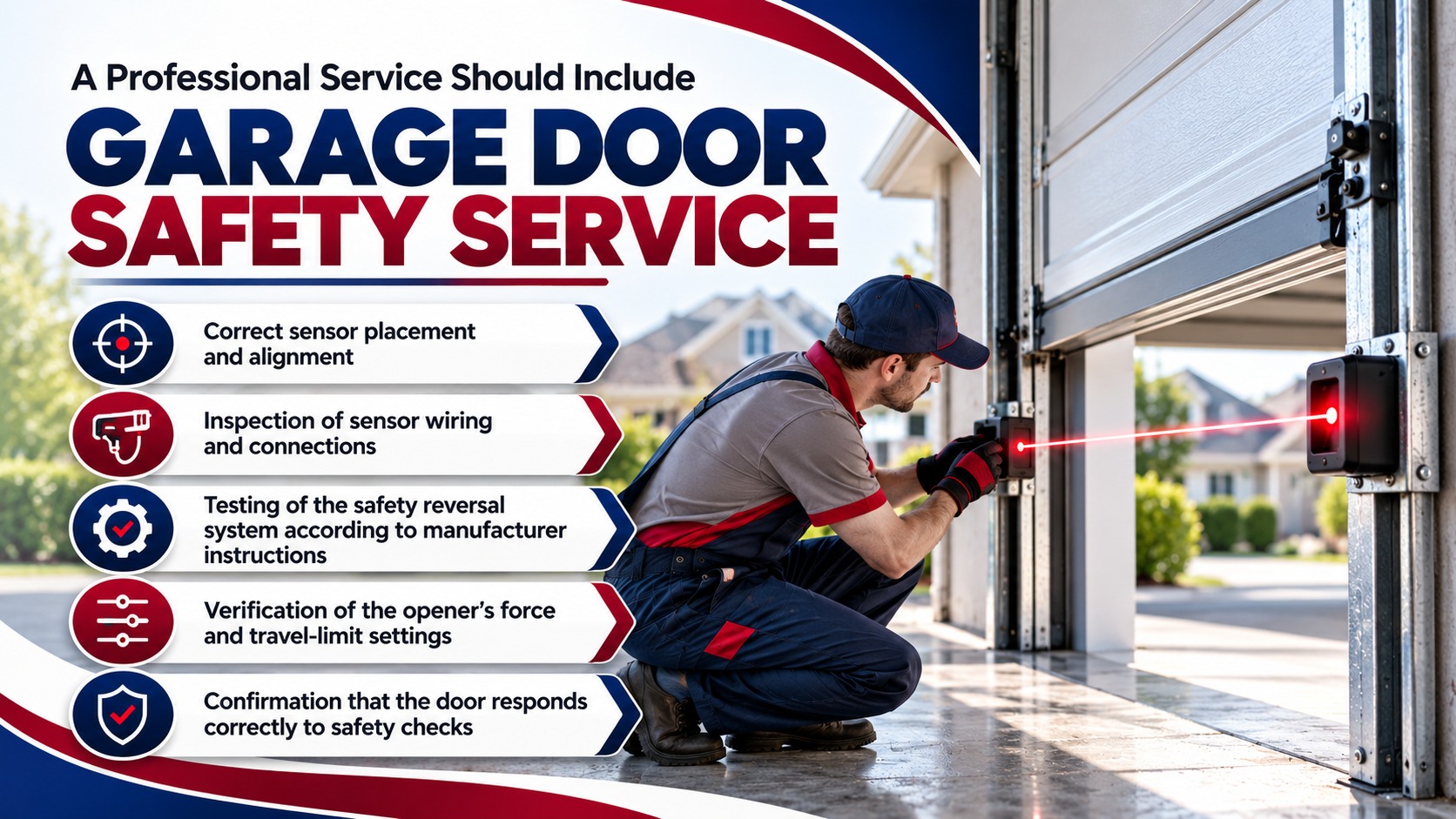
Modern automatic garage door systems commonly use photoelectric safety sensors near the bottom of the door tracks. These sensors detect an obstruction in the door’s path and help prevent the door from closing on a person or object.

A professional service should include:

  • Correct sensor placement and alignment
  • Inspection of sensor wiring and connections
  • Testing of the safety reversal system according to manufacturer instructions
  • Verification of the opener’s force and travel-limit settings
  • Confirmation that the door responds correctly to safety checks

These checks are essential for households with children, pets, or frequent garage traffic.

Remember, a garage door that opens and closes is not necessarily a garage door that operates safely. Proper testing is what helps confirm that the system is functioning as intended.

Garage Door Safety

5. Remote Controls and Smart Features Setup:

Modern garage door openers can offer more convenience than traditional wall switches. Depending on the model, you may have remote controls, wireless keypads, smartphone access, or smart-home integration.

A complete installation should include setting up the available controls and checking that they work correctly.

The technician should also explain how to program additional remotes, change access codes where supported, and use any compatible mobile application.

If you’re upgrading an older opener, ask whether your preferred model supports the features you want. Not every opener includes Wi-Fi connectivity or smartphone control, so checking compatibility beforehand can prevent disappointment.

6. Final Performance Testing and Adjustments:

Before considering the job complete, a professional should operate the door through several opening and closing cycles.

During this stage, the technician should check for unusual sounds, jerky movement, inconsistent stopping points, and other signs of improper operation.

The service should also include checking the door’s travel limits, confirming that the opener operates smoothly, and addressing any installation-related adjustments.

A final walkthrough gives you the opportunity to see the system working and ask questions before the technician leaves.

This is also a good time to discuss any maintenance needs or warning signs that could indicate a future problem.

Why Choose Adams Garage Doors LLC for Garage Door Opener Services?

When your garage door opener starts failing, you want a solution that restores convenience without creating more stress.

Adams Garage Doors LLC provides garage door opener installation, repair, and replacement services for residential and commercial customers across the greater Virginia area. The company offers opener options from established brands, including Genie and Chamberlain, and various drive systems to meet different needs.

Whether your existing opener needs attention or you’re considering an upgrade, the team can help you explore suitable options for your garage.

Ready to improve your garage door’s convenience and reliability? Visit Adams Garage Doors LLC to learn more about its opener services and request an estimate.

Frequently Asked Questions:

1. When should I replace my garage door opener?

Replace it if it frequently malfunctions, makes unusual noises, or fails to respond consistently.

2. How long does garage door opener installation take?

Most straightforward installations take a few hours, depending on the system and garage door condition.

3. What should I check before hiring an installer?

Check experience, pricing, safety testing, product compatibility, and warranty coverage.

4. Which is better: belt-drive or chain-drive openers?

Belt-drive openers are quieter, while chain-drive models are often more budget-friendly.

5. How do I find reliable garage door opener installers in my area?

Check customer reviews, experience, transparent pricing, and service availability in your location.

6. Does installation include safety testing?

Yes, professional installation should include safety sensor alignment and testing of the opener’s safety features.

Conclusion: Choose Confidence Over Convenience Alone

Your garage door opener is something you may use several times every day, often without giving it a second thought. When it stops working, you quickly realize how much you depend on it.

Choosing a professional installer means looking beyond the motor itself. Proper inspection, suitable equipment, safe installation, functional controls, thorough testing, and clear aftercare all contribute to a better experience.

Instead of waiting for a small problem to become a major frustration, take the time to choose a service provider who understands the complete system.

With garage door opener installation, repair, and replacement services, Adams Garage Doors LLC can help you take the next step toward a garage door that operates smoothly and conveniently.

Don’t let a faulty garage door opener disrupt your routine! Contact Adams Garage Doors LLC today to schedule your service and get your garage door operating smoothly again.

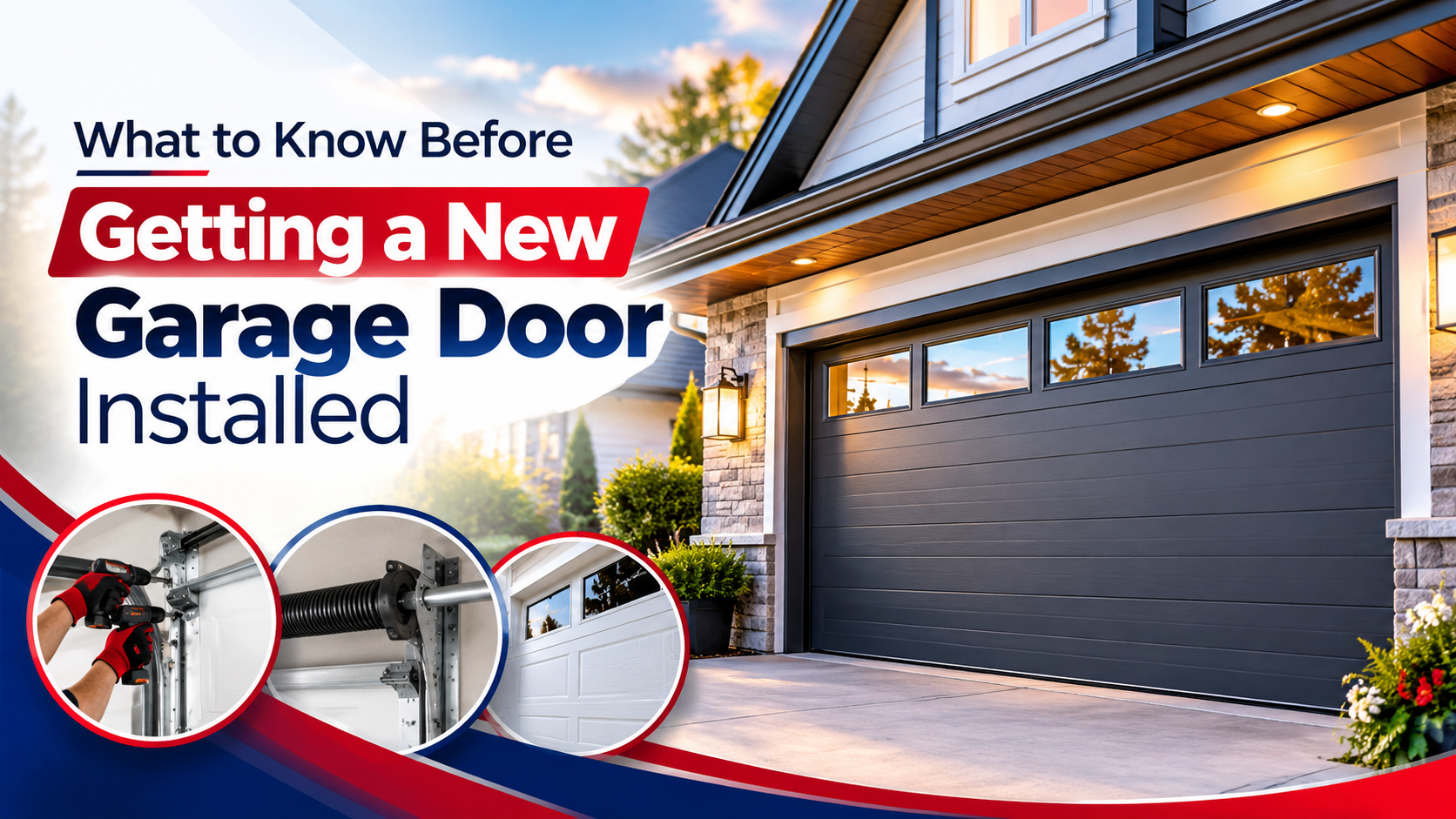
What to Know Before Getting a New Garage Door Installed in Alexandria, VA

Putting up a new garage door is an efficient approach to making your house more secure, more beautiful, and more convenient on a daily basis. Nevertheless, many people are unclear about what goes on when installing a garage door and how long it lasts.

If you are planning a garage door installation in Alexandria, VA, understanding each step can help you prepare your property, avoid unexpected costs, and make a confident decision. A professional installation generally consists of determining the size of the opening, choosing an appropriate garage door, removing the old door if necessary, installing the new system, and checking for safety measures. The process is quite simple when adequate preparations have been made.

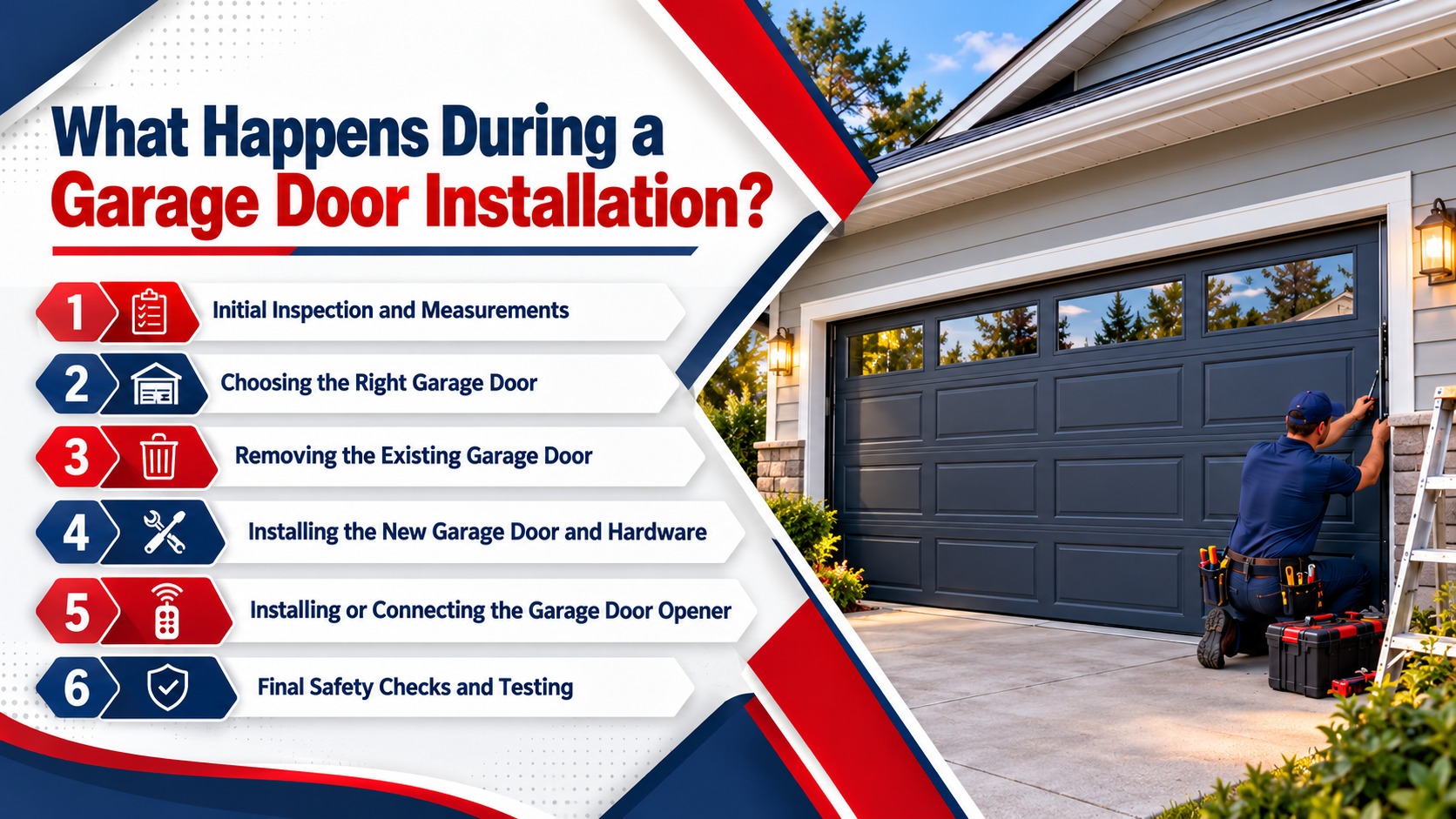
What Happens During a Garage Door Installation?

The typical procedure for installing a garage door is to perform a preliminary inspection, choose the door, remove the old equipment, install the new door and accessories, and conduct a safety test. The specific procedures will vary depending on the characteristics of the building and the chosen door.

Here is what homeowners in Alexandria can generally expect.

1.Initial Inspection and Measurements:

It starts by measuring the space that you have in your garage. The installer will measure the dimensions of the opening and also how high you have at the top of the door. Other measurements will be made depending on whether there will be an automatic opening mechanism.

Measuring is important as it ensures that everything from fitment to movement and sealing with the floor is done accurately. The homeowner is supposed to share his/her ideas and needs during this inspection. 

For those replacing an old door, this step also plays a vital role in determining if the old tracks and other parts are reusable.

2.Choosing the Right Garage Door:

Once the measurements are complete, you can explore different garage door styles and materials. The right option depends on your home’s architecture, your budget, maintenance preferences, and how frequently you use the garage.

Common options include:

  • Steel garage doors: An ideal choice due to durability, flexibility in design, and ease of maintenance.
  • Wooden garage doors: Recommended for those who like the classic style of wood.
  • Insulated garage doors: Beneficial for creating an efficient thermal barrier between the garage and other rooms.
  • Contemporary garage doors: Designed for modern homes in contemporary styles.

Take into account the quality, insulation value, finish, warranty, and anticipated maintenance needs of the door when you make your choice.

Since Alexandria’s climate changes with the season, another reason for material consideration is the climate. Discuss issues related to corrosion protection, weather-sealing, and maintenance needs with your installer.

3. Removing the Existing Garage Door :

In case your old garage door is being replaced, the technician will usually remove the current garage door and examine the other components around it before fitting the new system.

This may depend on the condition of the components, and it may involve the removal of old panels, rails, rollers, brackets, and other hardware. It is also important to check whether there is any damage to the framing of the mounting points that would affect the installation process.

It is important to note that the springs and other hardware used in the garage door system can be under a lot of pressure. Removing these components yourself without proper training may result in injury. Removal should always be left to a professional.

It is important to find out beforehand whether the price quotation provided includes the removal of the old door.

Garage Door Installation Proecess

4.Installing the New Garage Door and Hardware:

Once the preparations for the opening have been made, the technician starts installing the garage door. This can be done by positioning the tracks, assembling the panels, fitting the rollers and hinges, and attaching the necessary brackets.

The next process involves setting up and balancing the spring mechanism following the manufacturer’s guidelines.

Correct alignment is vital. A misaligned or difficult-to-open garage door can put a strain on the mechanism. Professionally installed doors operate smoothly.

It is the responsibility of your installer to highlight any maintenance procedures and identify parts that need regular inspections.

5.Installing or Connecting the Garage Door Opener:

If your new garage door includes an automatic opener, the technician will install or connect the opener and check that it operates correctly with the door.

Depending on the selected model, the system may include a wall control, remote controls, safety sensors, and smart-home connectivity.

The opener must be compatible with the door’s weight, design, and operating requirements. The technician should test the controls, sensor alignment, and automatic reversing function before completing the job.

If you want to understand this part of the process in more detail, click here to read more about what homeowners should expect during a professional garage door opener installation .

This additional information can help you understand the difference between installing a new garage door and installing or replacing the equipment that opens it.

6. Final Safety Checks and Testing:

A garage door installation is not complete simply because the door is in place. The technician should test the entire system to confirm that the door opens and closes correctly.

Final checks typically include:

  • Verifying the balance and proper alignment of the door.
  • Testing the tracks, rollers, hinges, and mounting parts.
  • Testing the garage door opener and control system.
  • Testing the photoelectric safety sensors and auto-reversing system.
  • Checking for any problems with the contact of the door to the floor and weather-stripping.
  • Explanations on how to operate the door and maintenance tips.

Ask the installer to demonstrate the safety features before leaving. You should also receive guidance on what to do if the door becomes noisy, moves unevenly, or stops responding to the opener.

How Long Does Garage Door Installation Take?

A simple replacement of your home’s garage door can take anywhere from three to six hours. This, however, depends on several factors that will determine how long it takes to complete the job.

Some factors that will affect the schedule include:

  • The dimensions and weight of the garage door.
  • Whether the existing garage door will have to be replaced.
  • The state of the current structure, including its rails.
  • The specific type of garage door and its opener.
  • The need for other maintenance jobs.

It is important that the installer gives you a reasonable time estimate following an inspection of your garage. This way, you will know if there will be changes to the schedule due to unforeseen problems.

How Much Does Garage Door Installation Cost in Alexandria, VA?

The cost of garage door installation in Alexandria, VA, depends on the door material, size, insulation, design, opener, labor, and condition of the existing garage structure.

A basic replacement will generally cost less than a customized door installation that requires additional hardware or structural changes. Premium finishes, insulated construction, decorative windows, and smart opener features can also increase the overall price.

Before approving a quote, check whether it includes:

  • The garage door and required hardware.
  • Removal and disposal of the existing door.
  • Installation labor.
  • Garage door opener installation, if requested.
  • Replacement of damaged tracks, springs, or other components.
  • Warranty coverage and any applicable additional charges.

Comparing quotes on the same basis makes it easier to identify the best overall value rather than choosing solely by the lowest price.

For practical advice on evaluating estimates, click here to read more about how homeowners can compare garage door installation quotes before choosing a service provider.

A detailed written estimate helps you understand what you are paying for and reduces the likelihood of unexpected expenses.

Garage Preparation Guide

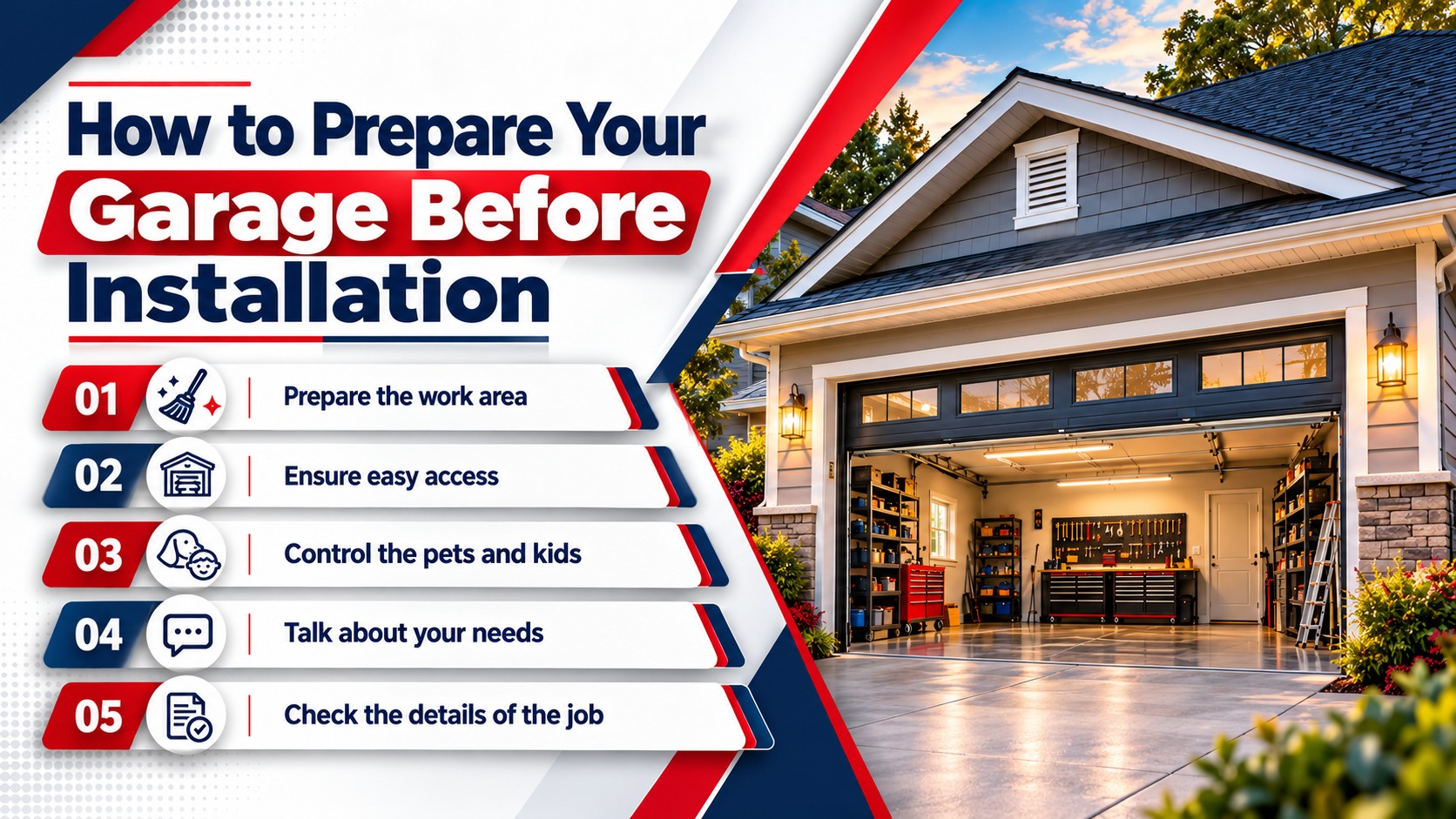
How to Prepare Your Garage Before Installation

A little preparation can help the installation team work efficiently and protect your belongings.

Prepare the work area. Remove all cars, tools, bikes, storage containers, and anything else that may be around the garage door.

Ensure easy access. Ensure the installer is able to access the garage entryway, electrical sockets, and any necessary controls.

Control the pets and kids. Keep them away from the area where work is being done while tools, heavy panels, and mechanical parts are being used.

Talk about your needs. Mention any special circumstances such as ceiling height, limited driveway, restricted access, or noise concerns.

Check on the details of the job. Go over what type of door you have selected, the date of installation, how long the project will take, payment arrangement, and warranty.

Just follow these basic instructions to ensure a hassle-free installation process.

Why Professional Garage Door Installation Matters

A garage door is a heavy moving system with multiple mechanical components. Incorrect installation can lead to uneven movement, excessive noise, premature wear, opener strain, or safety problems.

Professional installation helps ensure that the door is correctly measured, aligned, balanced, and tested. An experienced technician can also identify problems with the existing structure or hardware before they become more expensive to address.

For Alexandria homeowners, working with a local service provider can make it easier to discuss property-specific requirements, arrange installation, and obtain follow-up assistance when needed.

When evaluating a company, look for relevant experience, a clear written estimate, appropriate insurance and licensing where applicable, transparent warranty terms, and a willingness to explain the work.

Why Choose Adams Garage Doors LLC?

Adams Garage Doors LLC is a garage door installation and repair firm that operates in Virginia. The company offers services of installing and replacing garage doors to homeowners and businesses who want practical solutions to their garage door requirements.

The staff is qualified to handle garage doors and possesses all the tools needed to install and repair them. The company focuses on solving problems related to garage door openers, opener chains, opener motors, rusted tracks, and springs.

Adams Garage Doors LLC offers a selection of garage doors, including steel garage doors and wooden garage doors, to suit different property styles and preferences. Customers can also explore garage door openers, replacement doors, and repair services.

The company serves Alexandria, Fairfax, Woodbridge, Lorton, Springfield, Chantilly, and other Virginia communities. It also states that it provides a warranty on every job it performs. Homeowners should confirm the specific warranty terms and coverage applicable to their project before booking.

Whether you need a new garage door, want to replace an aging system, or need help with an existing door, the team can help you explore the available options.

You can also visit the website of the new garage door installation to learn more about its installation services and available options.

Frequently Asked Questions:

How long will a garage door installation take?

A typical installation will take somewhere between 3 and 6 hours.

Do I need to replace my garage door opener while having a new door installed?

Not necessarily. You may be able to reuse an older one that is compatible with a new one and works properly. However, it is better to have a professional look at your opener and its condition, capacity, and safety measures.

Is it possible to install the garage door by myself?

It would be best if you did not. The reasons are related to the weight of the panels, tension springs, and other elements that make the installation potentially dangerous.

What kind of materials should I use for my garage door in Alexandria, VA?

Steel is quite a good material as it is durable and available in different types. On the other hand, wood may fit better if a homeowner prefers an old-fashioned design.

What should I pay attention to before making a garage door installation decision?

The following aspects need to be checked: door specifications, hardware, cost of labor, price of disposal of the old door, additional repairs, garage door opener cost, schedule, and warranty.

Schedule Your Garage Door Installation in Alexandria, VA

A new garage door can improve everyday convenience, enhance your property’s appearance, and provide dependable access to your garage when correctly installed and maintained. Understanding the process, comparing written estimates, and selecting a suitable door can help you avoid unnecessary complications.

If you are considering garage door installation in Alexandria, VA, Adams Garage Doors LLC can help you explore available door options and installation services. 

Contact the team to discuss your requirements and request a quote for your property.

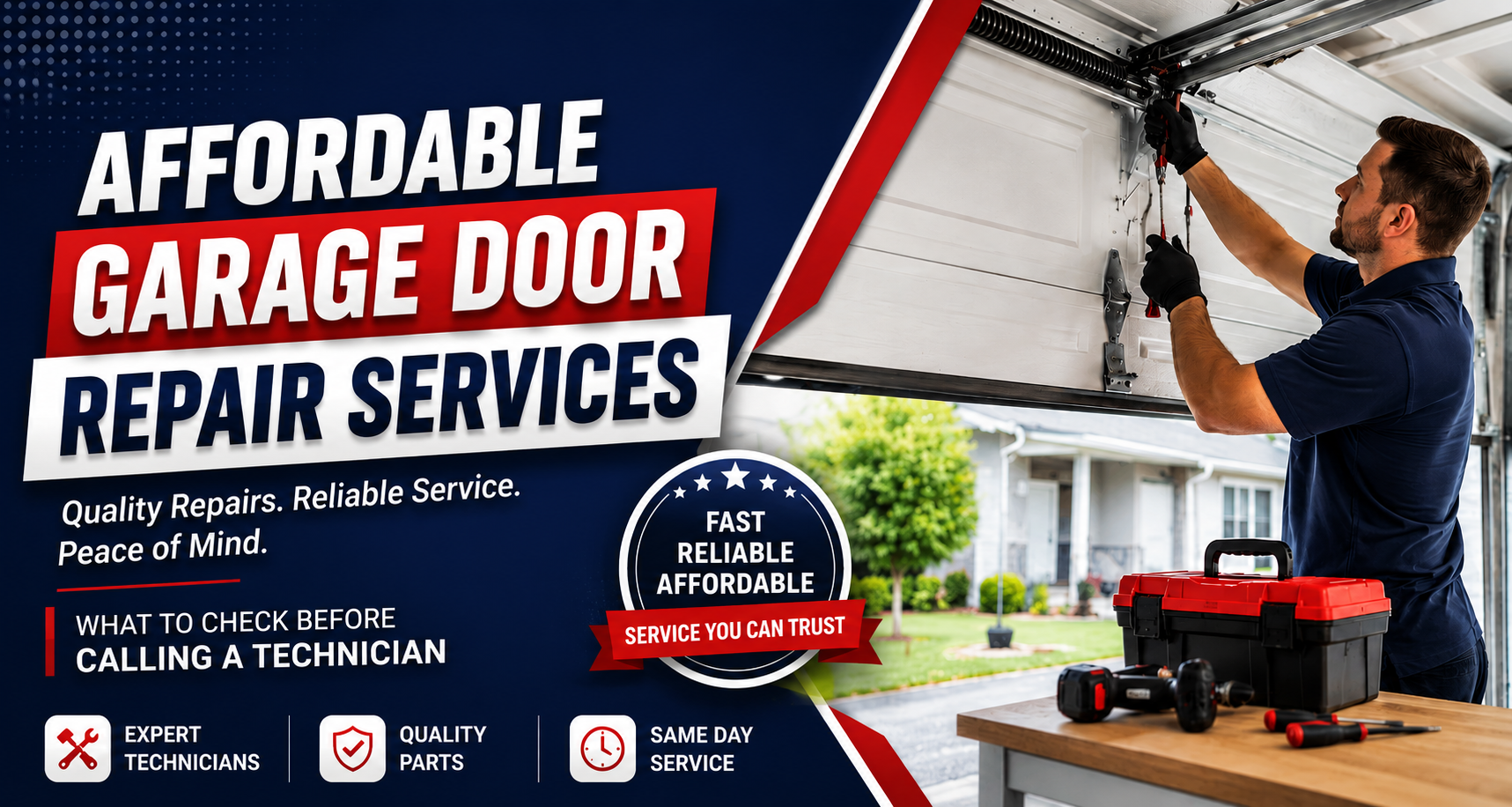
Affordable Garage Door Repair Services: What to Check Before Calling a Technician

A garage door that suddenly stops working does not always mean you need an expensive repair. Before calling a technician, homeowners can safely check the remote battery, opener power, safety sensors, visible obstructions, and other simple issues. 

However, broken springs, damaged cables, off-track doors, severe track damage, and high-tension components should never become DIY projects. Knowing what to check, and when to stop, can save both money and trouble.

Before You Spend Money, Run This 5-Minute Check

When a garage door refuses to open or close, it is tempting to assume the worst.

Don’t.

Start with the basics.

Try the wall-mounted control. Then try the remote. Listen to the opener. Look at the sensors. Check whether anything is blocking the door.

These simple observations can tell you whether you are dealing with a minor issue or a problem that needs professional and affordable garage door repair.

What you notice

Safe first check

When to stop

Remote does not work

Replace the battery

Call for help if it still fails

Opener is silent

Check power and breaker

If power is available but opener stays dead

Door will not close

Check safety sensors

If sensors are damaged or remain faulty

Door moves unevenly Look for obvious obstruction

Do not force the door

Door is unusually heavy

Stop operating it Call a technician

Loud bang or snap

Inspect only from a safe distance

Do not touch springs or cables
Cable is loose or frayed Leave it alone

Professional repair is needed

Door is off track

Keep people away from it

Call a technician

That last column matters more than the first one.

A few minutes of troubleshooting can save you an unnecessary service call. But trying to save money by repairing a high-tension component yourself can turn a relatively straightforward repair into a serious safety problem.

What Can You Safely Check Yourself?

Not every garage door problem requires a toolbox.

In fact, several basic checks can be done without dismantling the system.

1. Check the Remote Battery:

This is the easiest place to start.

If the wall control opens the door but the remote does not, replace the remote battery and test it again.

If you have a second remote, try that one too.

This small test can quickly tell you whether the problem is with the garage door opener or simply the remote.

2. Check Whether the Opener Has Power:

If nothing happens when you press the wall control, check the obvious things first.

Is the opener plugged in?

Has a breaker tripped?

Is there power elsewhere in the garage?

If the garage has lost power, the opener may be perfectly fine.

However, do not open the motor housing or start working on electrical components yourself. If the opener has power but remains unresponsive, professional troubleshooting is the safer choice.

3. Look at the Safety Sensors:

Garage door safety sensors sit close to the floor on either side of the opening.

They need a clear line of sight.

Dust, cobwebs, dirt, or an object placed directly in front of a sensor can prevent the door from closing properly.

You can gently clean the sensor lenses with a soft cloth and check whether anything is blocking them.

Do not bend, force, or dismantle the sensor brackets.

4. Check for Visible Obstructions:

Take a slow look at the garage door’s path.

A storage box, tool, piece of debris, or another object can sometimes interfere with movement.

If there is loose debris that you can safely remove, clear it away.

But don’t confuse an obstruction with a damaged track.

A bent or severely misaligned track is not a simple DIY adjustment.

What Garage Door Problems Should You Never Try to Repair Yourself?

This is where affordable garage door repair advice needs a safety boundary.

Some garage door components are under significant tension.

Springs are the biggest example.

If a spring breaks, the door can suddenly become extremely heavy because the mechanism is no longer properly counterbalancing the door. Adams Garage Doors LLC notes that broken springs can create serious problems and recommends professional repair rather than DIY handling.

Do not attempt to:

  • Replace or adjust torsion springs.
  • Rewind a garage door spring.
  • Repair high-tension spring hardware.
  • Replace lifting cables.
  • Force an off-track door back into position.
  • Straighten a severely bent track.
  • Work on damaged drums.
  • Continue using a visibly unstable door.

If you hear a loud snap and the door suddenly becomes difficult to lift, stop.

That is a technician situation, not a weekend project.

Could a Strange Noise Be an Early Warning?

Yes.

Your garage door may give you plenty of warning before a major breakdown.

The problem is that homeowners often get used to the noise.

A little squeaking becomes normal. A slight grinding sound gets ignored. The door shakes a little more than it used to, but it still opens, so life continues.

That can be a mistake.

Adams Garage Doors LLC identifies different garage door noises, including squeaking and grinding, as potential signs of wear involving rollers, hinges, tracks, or other components.

If your garage door has started making a sound it never made before, pay attention.

For a deeper look at the warning signs, read this

The goal is not to panic over every squeak. It is to notice when your door’s behaviour has changed.

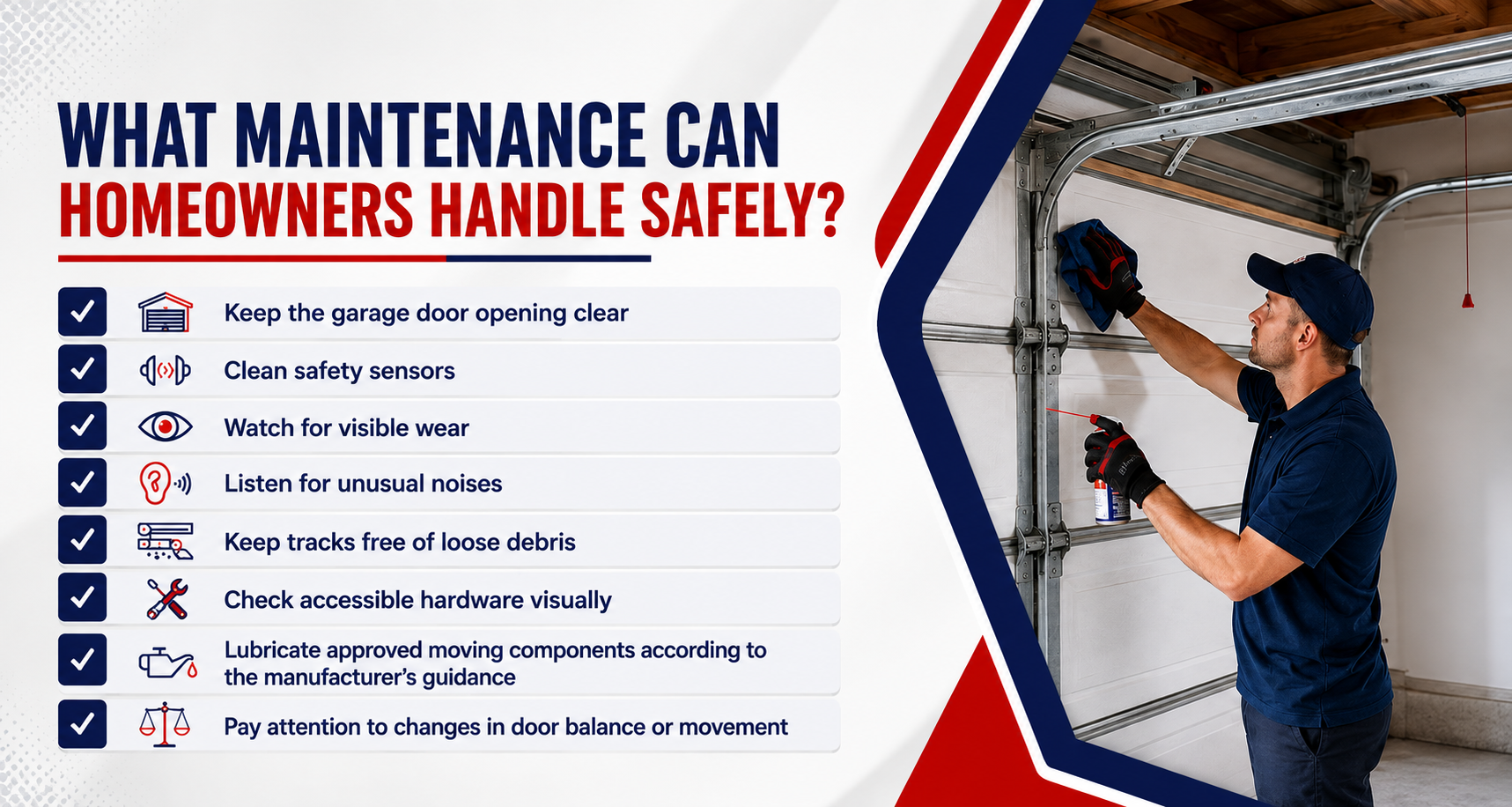
What Maintenance Can Homeowners Handle Safely?

Some routine maintenance is perfectly reasonable for homeowners.

You can:

  • Keep the garage door opening clear
  • Clean safety sensors
  • Watch for visible wear
  • Listen for unusual noises
  • Keep tracks free of loose debris
  • Check accessible hardware visually
  • Lubricate approved moving components according to the manufacturer’s guidance
  • Pay attention to changes in door balance or movement

For more practical guidance, see our guide

The important word is safely.

Maintenance does not mean dismantling the door.

If a task requires you to release spring tension, disconnect lifting cables, remove major components, or work around stored mechanical energy, leave it to a trained technician.

Safe Garage Door Maintenance Guide

Is Your Garage Door Problem Minor or Serious?

Here’s a simple way to think about it.

Green: You can troubleshoot it

These are generally low-risk checks:

  • Remote battery.
  • Obvious power issue.
  • Dirty sensor.
  • Object blocking the door.
  • Loose debris around the opening.

Yellow: Watch it and arrange an inspection

These signs deserve attention:

  • Increasing squeaking.
  • Occasional grinding.
  • Slower operation.
  • Slightly uneven movement.
  • Opener sounding different.
  • Door taking longer to open or close.

Red: Stop using the door

These situations need professional attention:

  • Broken spring.
  • Loose or frayed cable.
  • Door off its track.
  • Door suddenly becomes very heavy.
  • Loud bang followed by failure.
  • Door drops or moves unpredictably.
  • Severe track damage.
  • Visible structural damage.

This simple traffic-light approach can prevent a common mistake: treating every garage door problem as either “nothing” or “complete replacement.”

There is usually a middle ground.

Should You Repair or Replace the Garage Door?

A malfunction does not automatically mean you need a new garage door.

A repair may make sense when the door itself is structurally sound and the issue involves an individual component.

Replacement may become more sensible when the door is severely damaged, repeatedly failing, outdated, or approaching the end of its useful service life.

Adams Garage Doors LLC also notes that factors such as system age, component condition, safety concerns, repair costs, and long-term reliability can influence the repair-versus-replacement decision.

So don’t make the decision based solely on one broken component.

Look at the condition of the entire system.

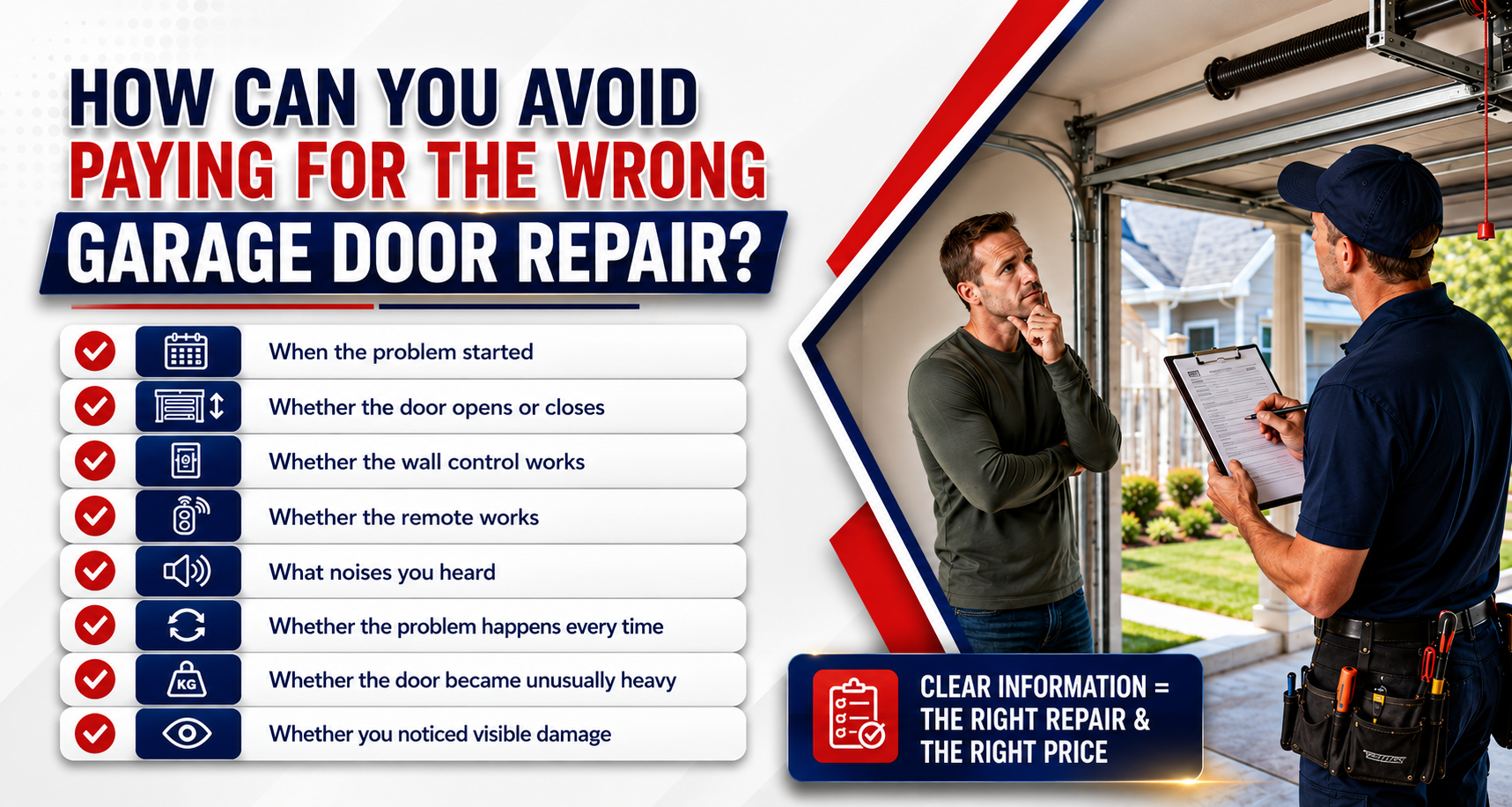
How Can You Avoid Paying for the Wrong Garage Door Repair?

This is an overlooked part of saving money.

Before a technician arrives, write down exactly what happened.

For example:

“The remote stopped working yesterday, but the wall button still opens the door.”

That’s much more useful than:

“My garage door is broken.”

Tell the technician:

  • When the problem started.
  • Whether the door opens or closes.
  • Whether the wall control works.
  • Whether the remote works.
  • What noises you heard.
  • Whether the problem happens every time.
  • Whether the door became unusually heavy.
  • Whether you noticed visible damage.

You can also take a short video of the problem from a safe distance.

Don’t touch damaged components just to get a better recording.

The purpose is to document the symptom, not investigate the mechanism yourself.

Avoid Paying for the Wrong Garage Repair

What Should Virginia Homeowners Know About Garage Door Repair?

Local homeowners often want the same thing from a repair company: a fast diagnosis, safe work, and a solution that makes financial sense.

Adams Garage Doors LLC serves homeowners across Virginia, including Woodbridge, Lorton, Springfield, Alexandria, Chantilly, Fairfax and surrounding communities. The company states that its team has a combined 40 years of garage door installation and repair experience and provides same-day repair services.

That local focus matters when a garage door suddenly refuses to open before work, gets stuck with a vehicle inside, or will not close properly at the end of the day.

The right response is not always “replace everything.”

It starts with finding the actual problem.

When Should You Call Adams Garage Doors LLC?

If your basic checks do not solve the issue, or if the problem involves a spring, cable, track, opener, or other mechanical component, it is time to stop troubleshooting.

Adams Garage Doors LLC‘s garage door repair service can help homeowners move from guessing to an actual diagnosis.

The company provides garage door installation and repair services throughout its Virginia service area and also offers services involving garage door openers, springs and other components.

The company is based in Woodbridge, Virginia, and lists Woodbridge, Lorton, Springfield, Alexandria, Chantilly and Fairfax among the Virginia communities it serves.

That makes Adams Garage Doors LLC a practical option for homeowners who have already tried the safe basics and need professional help with the rest.

Frequently Asked Questions:

What can I check before calling a garage door technician?

Start with the remote battery, opener power, wall control, safety sensors, and obvious obstructions. These checks can identify some simple problems without dismantling the garage door.

Can I repair a garage door spring myself?

No. Garage door springs can hold significant tension and can cause serious injury if handled incorrectly. Spring replacement and adjustment should be performed by a trained professional.

Why won’t my garage door close?

Dirty or misaligned safety sensors are one possible cause. Check that the sensor area is clean and unobstructed. If the problem continues, professional troubleshooting may be needed.

Is a noisy garage door always dangerous?

Not necessarily. Some noises may result from ordinary friction or wear. However, new, worsening, grinding, popping, or unusually loud sounds should not be ignored because they can indicate a developing mechanical problem.

How can I reduce garage door repair costs?

Deal with warning signs early, perform safe routine maintenance, and avoid making high-risk DIY repairs. Getting the actual problem diagnosed can also help prevent unnecessary component replacement.

When should I stop using my garage door?

Stop using it if it becomes unusually heavy, moves unpredictably, comes off its track, has a broken spring or damaged cable, makes a loud bang followed by failure, or shows serious structural damage.

Does Adams Garage Doors LLC provide garage door repair in Virginia?

Yes. We provide garage door repair and related services across its Virginia service area, including Woodbridge, Lorton, Springfield, Alexandria, Chantilly and Fairfax. The company also states that it offers same-day repair service.

Conclusion:

Affordable garage door repair starts with knowing what you can safely check and when professional help is necessary. Simple issues may be easy to resolve, but springs, cables, tracks, and major mechanical problems require expert attention. 

If your garage door needs reliable repair in Virginia, contact us today for professional assistance. 

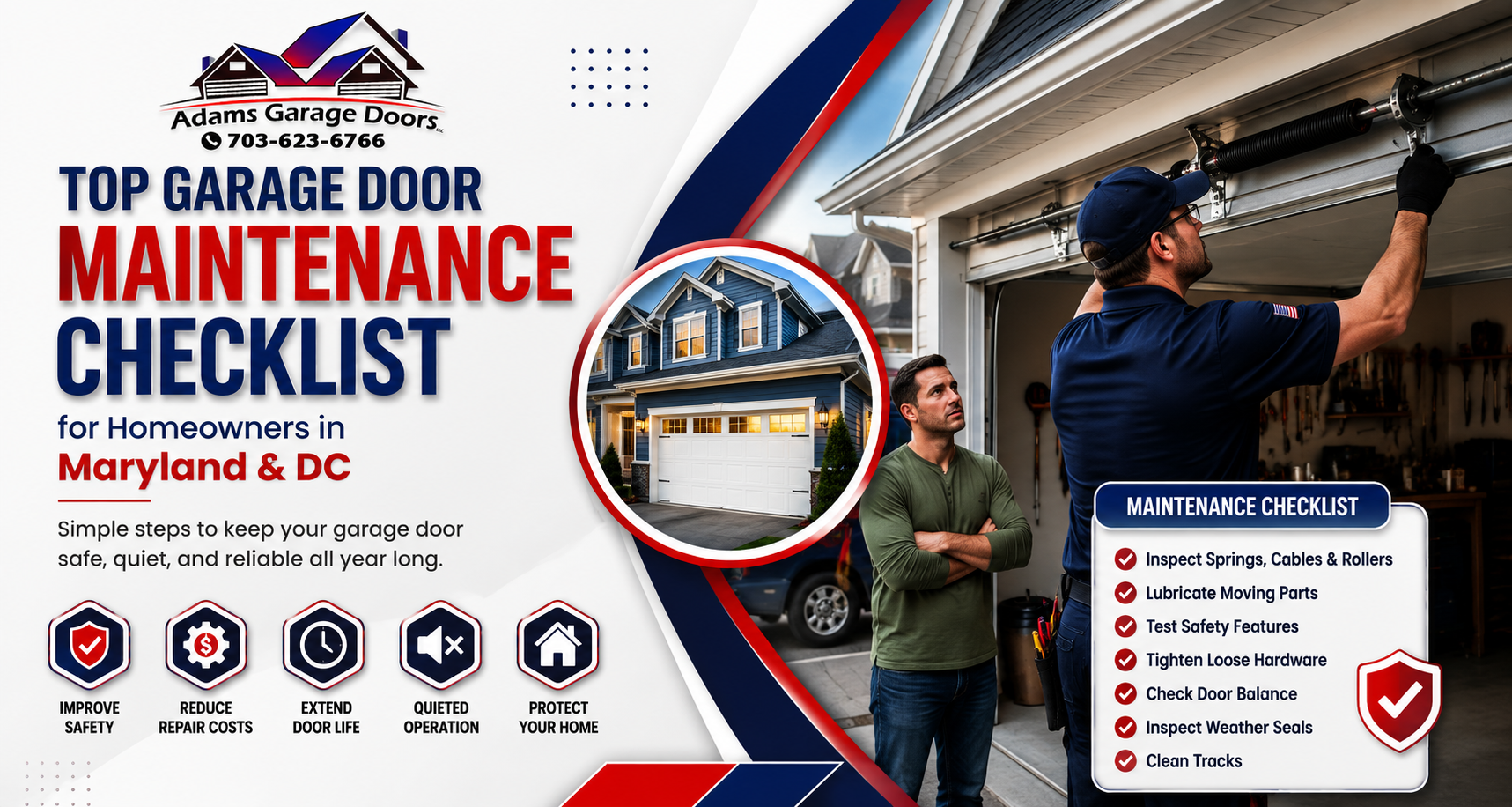
Top Garage Door Maintenance Checklist for Homeowners in Maryland & DC

Garage door maintenance should be performed at least once a year, with simple visual inspections every few months. Regular maintenance includes checking springs, lubricating moving parts, testing safety features, inspecting weather seals, and ensuring the door remains balanced. These steps help prevent costly repairs, improve safety, and extend the lifespan of your garage door.

Your garage door is one of the hardest-working systems in your home. It protects your vehicles, improves home security, and adds curb appeal. However, changing weather conditions across Virginia, Maryland, and Washington, DC can gradually wear down essential components. Following a simple maintenance routine keeps your garage door operating safely and quietly while protecting your investment.

Why Garage Door Maintenance Should Never Be Ignored:

Neglecting routine maintenance often leads to noisy operation, worn parts, and unexpected repairs. 

Preventive care offers several benefits:

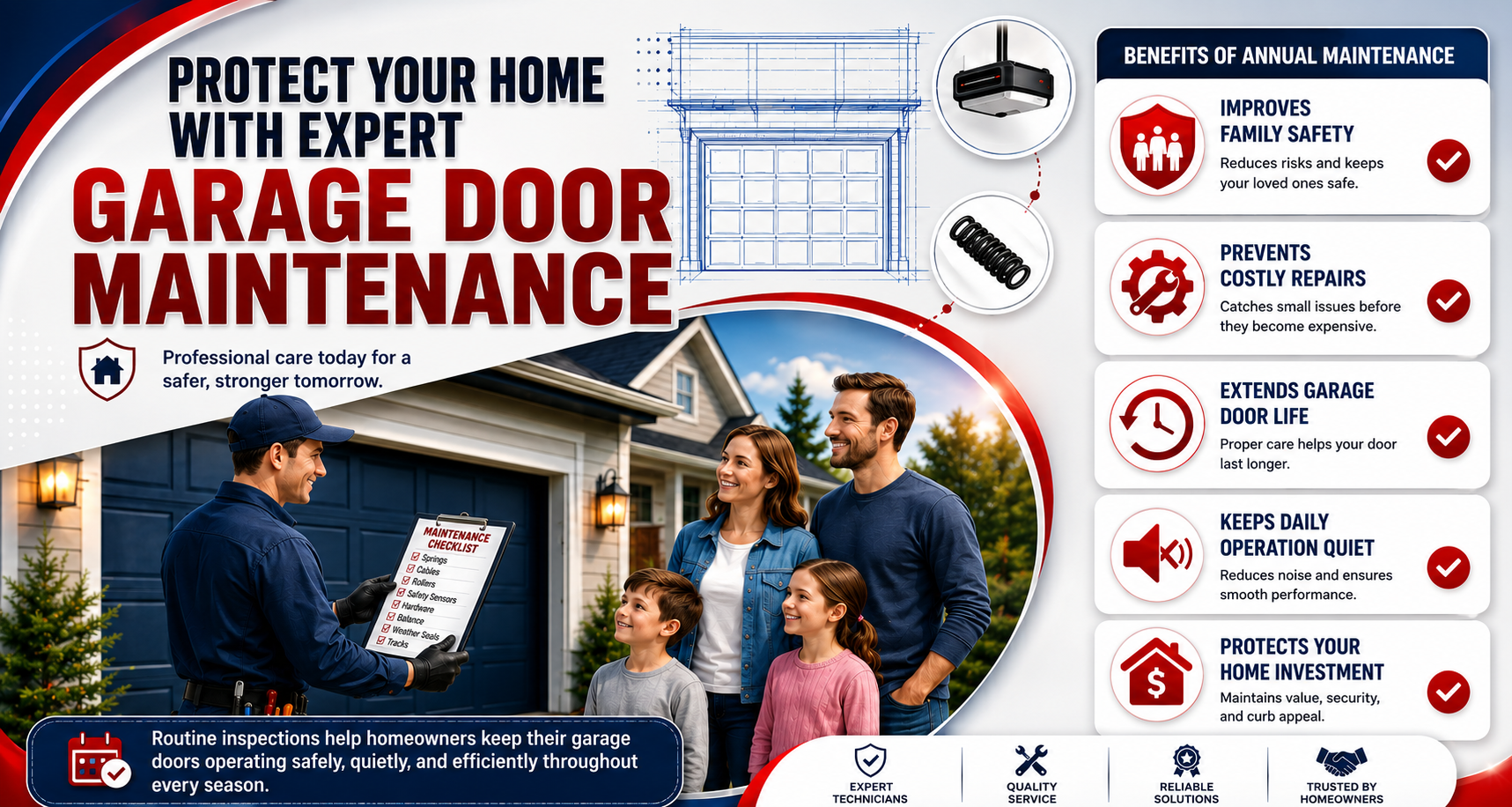
  • Improves family safety.
  • Reduces repair costs.
  • Extends the life of your garage door.
  • Keeps daily operation smooth and quiet.
  • Maintain your home’s value.

For homeowners looking for dependable garage door maintenance Virginia services, scheduling an annual inspection is a smart long-term investment.

Garage door maintenance guide

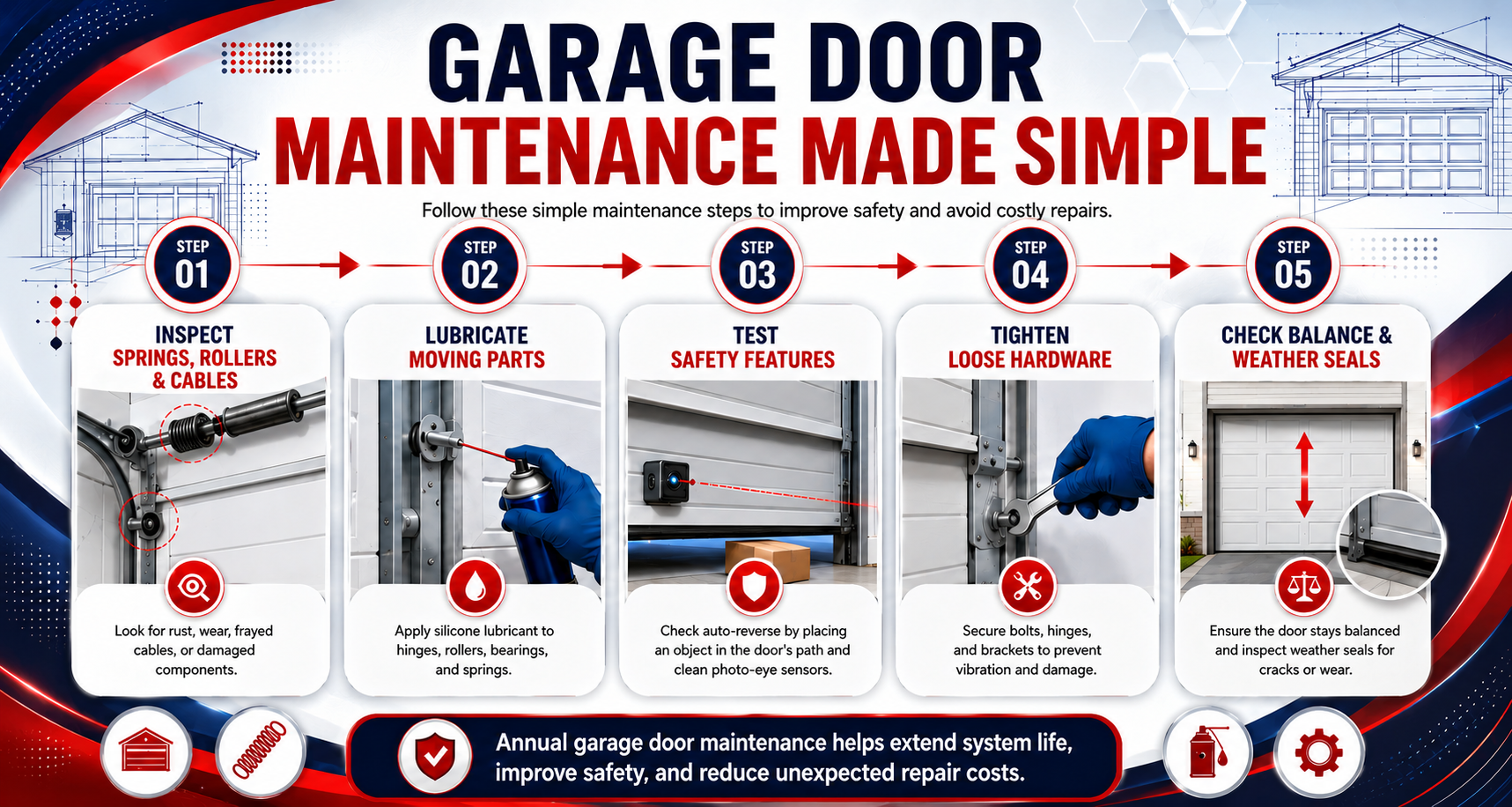
Essential Garage Door Maintenance Checklist: 

Inspect Springs, Cables, and Rollers:

Look for rust, frayed cables, cracked rollers, or damaged springs. These parts experience constant tension and should only be repaired by trained professionals.

Lubricate Moving Parts:

Use a silicone-based or garage-door-approved lubricant on hinges, rollers, bearings, and springs. Proper lubrication reduces friction and helps eliminate unnecessary noise.

Test Safety Features:

Check the auto-reverse function by placing a small object beneath the door. The door should immediately reverse after making contact. Also, clean the photo-eye sensors to ensure they detect obstacles correctly.

Tighten Loose Hardware:

Daily movement causes bolts, hinges, and brackets to loosen over time. Tightening hardware improves stability and helps prevent vibration-related damage.

Check Door Balance:

Disconnect the opener using the emergency release handle and lift the door halfway. If it stays in place, it is properly balanced. If it moves up or down, professional adjustment is recommended.

Inspect Weather Seals:

Damaged weather stripping allows moisture, dust, insects, and outside air into your garage. Replace cracked or worn seals to improve protection and energy efficiency.

Clean the Tracks:

Remove dirt and debris using a clean cloth. Avoid lubricating the tracks, as rollers need a clean surface for proper movement.

Key Takeaway:

A few minutes of seasonal garage door maintenance can prevent expensive repairs and keep your family safe.

Expert garage door maintenance service

When to Schedule Professional Garage Door Maintenance:

While homeowners can perform routine inspections, annual professional servicing provides a more thorough evaluation. Experienced technicians can identify worn components before they fail and safely adjust springs, cables, and opener settings.

If you notice loud grinding noises, uneven movement, slow operation, or broken parts, it’s time to call a professional.

Adams Garage Doors LLC offers comprehensive garage door inspections, repairs, installations, and maintenance services throughout Virginia, helping homeowners keep their garage doors operating safely and efficiently.

For additional garage door safety guidance, homeowners can also review recommendations from the International Door Association and the U.S. Consumer Product Safety Commission.

Keep your garage door operating safely and efficiently with expert service from Adams Garage Doors LLC. 

Contact us today to schedule your annual garage door maintenance and prevent costly repairs before they happen.

FAQs:

How often should garage door maintenance be performed?

Homeowners should perform a visual inspection every three to six months and schedule professional garage door maintenance once a year to keep the system operating safely and efficiently.

What are the signs that my garage door needs professional maintenance?

Common warning signs include loud noises, slow or uneven movement, worn rollers, broken springs, frayed cables, and a garage door that doesn’t stay balanced when opened manually.

Can I perform garage door maintenance myself?

Yes. Homeowners can safely lubricate moving parts, inspect weather seals, clean tracks, and test safety sensors. However, spring, cable, and torsion system repairs should always be handled by trained professionals due to the high tension involved.

Final Thoughts:

Routine garage door maintenance is one of the easiest ways to avoid expensive repairs and improve home safety. By inspecting key components, lubricating moving parts, testing safety systems, and scheduling professional service once a year, homeowners can extend the life of their garage door while ensuring reliable performance through every season.

Year-Round Garage Door Maintenance Guide for Virginia Homes

Most people don’t schedule garage door maintenance.

They remember it.

Not on a calendar. Not in a checklist.

They remember it the day the door refuses to open… or the morning it makes a sound they’ve never heard before.

That’s how this usually begins.

Not with a plan. With a disruption.

And for homeowners across Virginia, that disruption is rarely random. It’s the result of months, sometimes years, of small shifts inside a system that works quietly in the background. That’s where the regular garage door maintenance steps in.

So instead of another checklist you might skim and forget, let’s look at this differently.

Let’s follow what actually happens to your garage door over time, season by season, moment by moment.

It Starts With Something Small:

At first, it’s almost nothing. A slight delay when you press the remote. A softer thud turning into a sharper sound. A movement that feels just a bit heavier than before.

You notice it. Then you move on. Because the door still works.

That’s the pattern. Garage door maintenance isn’t ignored because it’s unimportant. It’s ignored because nothing feels urgent… yet.

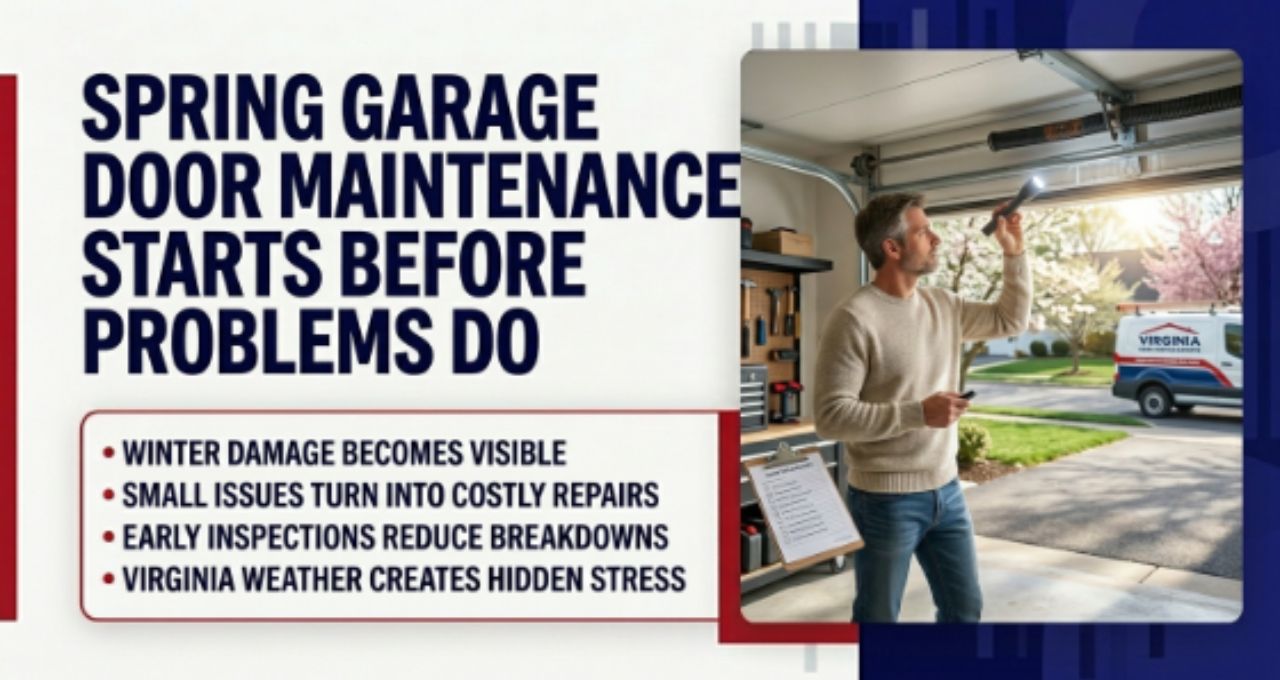
Spring: When Problems Wake Up

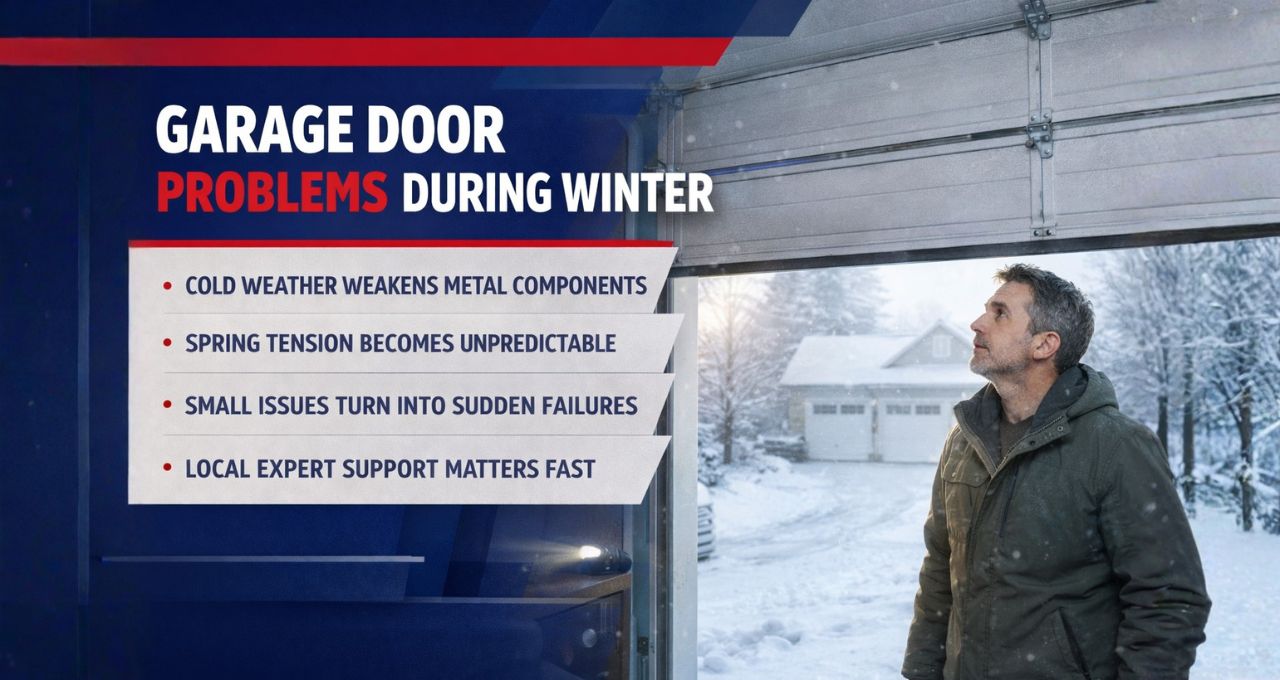
Winter doesn’t always break your garage door.

It weakens it.

Cold temperatures tighten metal. Moisture settles into small gaps. Components lose flexibility. But most of this stays hidden while the system continues to operate.

Then spring arrives.

Warmer air returns. Parts expand. Movement becomes easier again.

And that’s when subtle issues start to show themselves.

You might notice:

  • A slight grinding sound that wasn’t there before
  • A delay between pressing the button and the movement
  • Minor rust appearing along springs or tracks

This isn’t new damage. It’s old stress becoming visible. Spring is not just a fresh start. It’s a reveal.

Summer Garage Maintenance

Summer: When Stress Builds Quietly

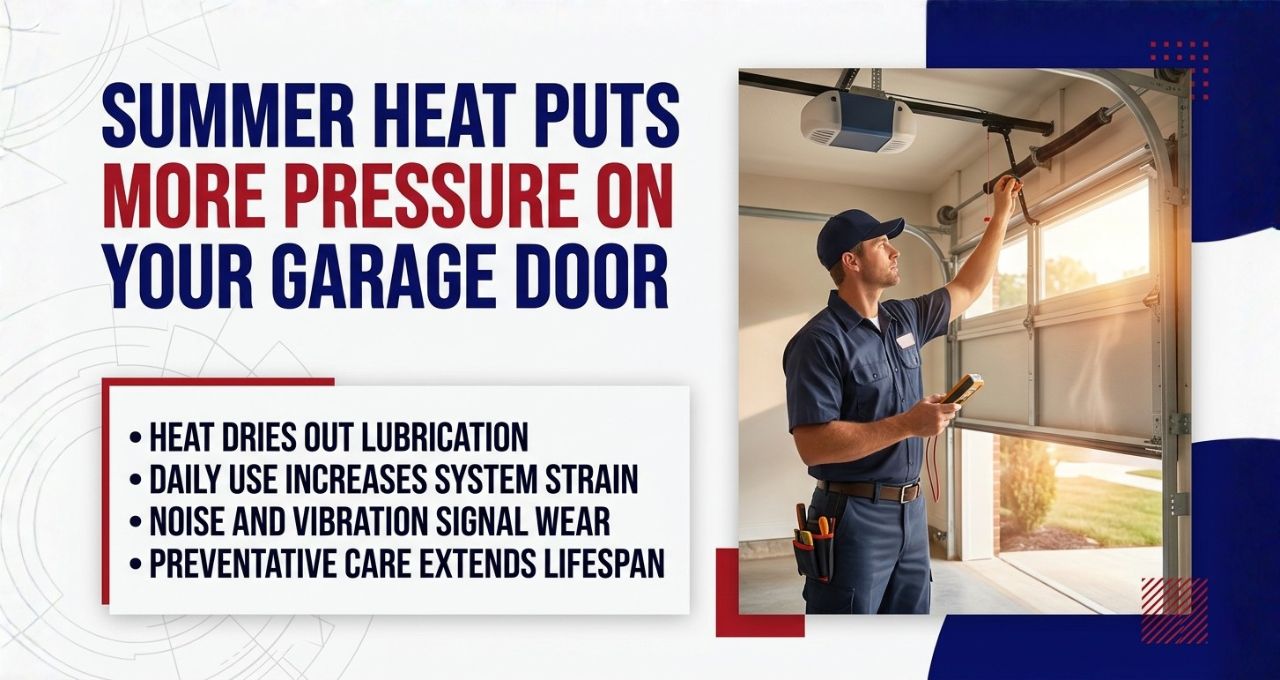
Summer feels easy on the surface. There’s no freezing. No stiffness. Everything moves more freely.

But underneath, a different kind of pressure builds. Heat expands metal components. Lubrication dries faster. Daily usage increases as routines shift.

And slowly, the system begins to compensate.

You may not see it immediately, but you might feel it:

  • The door sounds louder than usual.
  • Movement is smooth… but not consistent.
  • The opener seems to work harder.

Nothing stops working. But something is changing.

This is where garage door maintenance matters most, because summer problems don’t look like problems. They look like normal use.

Fall: The Season Most People Skip:

Fall is quiet. There are no extreme temperatures. No obvious failures. So most homeowners do nothing. And that’s exactly why fall matters. 

Because this is the last window before winter puts pressure on everything.

Leaves and debris begin to collect. Small misalignments go unnoticed. Worn parts continue operating without attention. The system is preparing for stress… without support.

Fall is not a passive season. It’s a missed opportunity.

Winter: When Everything Shows Up at Once

This is where it all comes together.

The minor delay from spring. The subtle strain from summer. The overlooked adjustments from fall.

Winter doesn’t create these problems. It exposes them. Cold temperatures make metal brittle. Springs lose flexibility. Moisture freezes. Movement becomes harder.

And suddenly:

  • The door hesitates
  • The opener struggles
  • A loud snap echoes through the garage

That’s the moment most people remember.

Not the months that led to it.

The Pattern Most Homeowners Don’t See:

Garage doors don’t fail randomly. They follow a progression.

  • First, a small change in sound or movement
  • Then, a slight imbalance or resistance
  • Then, increased strain on key components
  • Finally, a complete stop

Each stage gives you time to act. But only if you recognize it. That’s what garage door maintenance really is. Not a checklist. A pattern you learn to notice.

Reading the Signs Before They Turn Into Repairs:

Your garage door is always communicating. The problem is, most of the signals are easy to ignore.

Here’s how to read them differently:

  • A louder-than-usual sound isn’t just noise. It’s friction building.
  • A slower response isn’t just a delay. It’s an increasing strain.
  • A slight shake isn’t random. It’s alignment shifting.
  • A heavier feel isn’t normal. Its support is weakening.

Each of these is an early message. And each one is easier to handle early than later.

The Moment Maintenance Turns Into Repair

There’s a clear line. But it’s not always obvious. As long as adjustments restore normal function, you’re still in maintenance.

But when:

  • Problems keep returning.
  • Parts show visible wear.
  • The system feels unstable.
  • Movement becomes unpredictable.

…you’ve crossed into repair territory. And at that point, continuing to wait usually makes things worse.

Why Virginia Homes Face More Wear Than Expected

Not every region puts the same pressure on garage doors.

Virginia is different.

  • Summers bring humidity that encourages rust
  • Winters introduce freeze-thaw cycles that weaken metal
  • Seasonal shifts cause constant expansion and contraction

This creates a cycle of stress that repeats every year. So even a well-functioning system experiences gradual wear. That’s why a generic approach to garage door maintenance often falls short here.

Local conditions change everything.

Spring Garage Inspection

The Difference Local Experience Makes:

When problems appear, most homeowners don’t want theory. They want clarity.

That’s where Adams Garage Doors LLC becomes part of the conversation. Not because every issue requires service. But because knowing when it does matters.

Our team works with systems exposed to Virginia’s conditions every day.

We understand:

  • Which signs matter immediately
  • Which issues can wait
  • Which patterns lead to failure

We offer:

  • Same-day service when needed
  • Licensed and insured technicians
  • Straightforward pricing
  • Practical recommendations without pressure

It’s not about selling a fix. It’s about helping homeowners understand what they’re dealing with.

A Different Way to Think About Maintenance:

Instead of asking: “What should I check?”

Try asking: “What has changed?”

Because change is the first signal. And noticing it early is what keeps maintenance simple. You don’t need a perfect routine. You need awareness.

  • Notice when the door sounds different
  • Notice when it moves differently
  • Notice when it feels different

That’s the real checklist.

A Simple Way to Stay Ahead (Without Overthinking It):

If you still want a structure, keep it minimal:

  • Spring: Look for what winter affected
  • Summer: Listen for stress building
  • Fall: Prepare before cold returns
  • Winter: Pay attention to performance changes

That’s it. No long lists. No complicated routines. Just stay aware of how your system behaves over time.

Frequently Asked Questions:

How often should garage door maintenance be done?

Twice a year is a good baseline, but staying aware of changes matters more than strict timing.

Why does my garage door act differently in winter?

Cold temperatures affect metal components, making them less flexible and more prone to stress.

Can small issues really lead to major repairs?

Yes. Most major failures begin as small, manageable problems.

Is professional maintenance necessary?

For high-tension components, yes. Safety and accuracy matter.

What’s the first sign something is wrong?

Usually, a change in sound, speed, or balance.

Final Thought:

Garage door maintenance doesn’t have to be complicated.

But it does require attention.

Because your garage door doesn’t fail without warning.

It changes.

Quietly. Gradually. Consistently.

And if you learn to notice those changes, you won’t be reacting to problems.

You’ll be staying ahead of them.

And when something does feel uncertain, having a trusted local expert like Adams Garage Doors LLC gives you a clear next step without the guesswork.